Service area · Mesa, AZ
Mesa, AZ Landscaping
We serve Mesa and the cities around it. Tell us what your yard needs, and someone from our team will call you back to plan the project.
Last updated
Landscaping in Mesa often comes down to which half of the city the yard is in: older streets on the west side tend to have shade and small lots, and newer subdivisions on the east tend to have bare ground and bigger parcels. The plan changes with the half you are in.
01How it works
What does landscaping in Mesa involve?
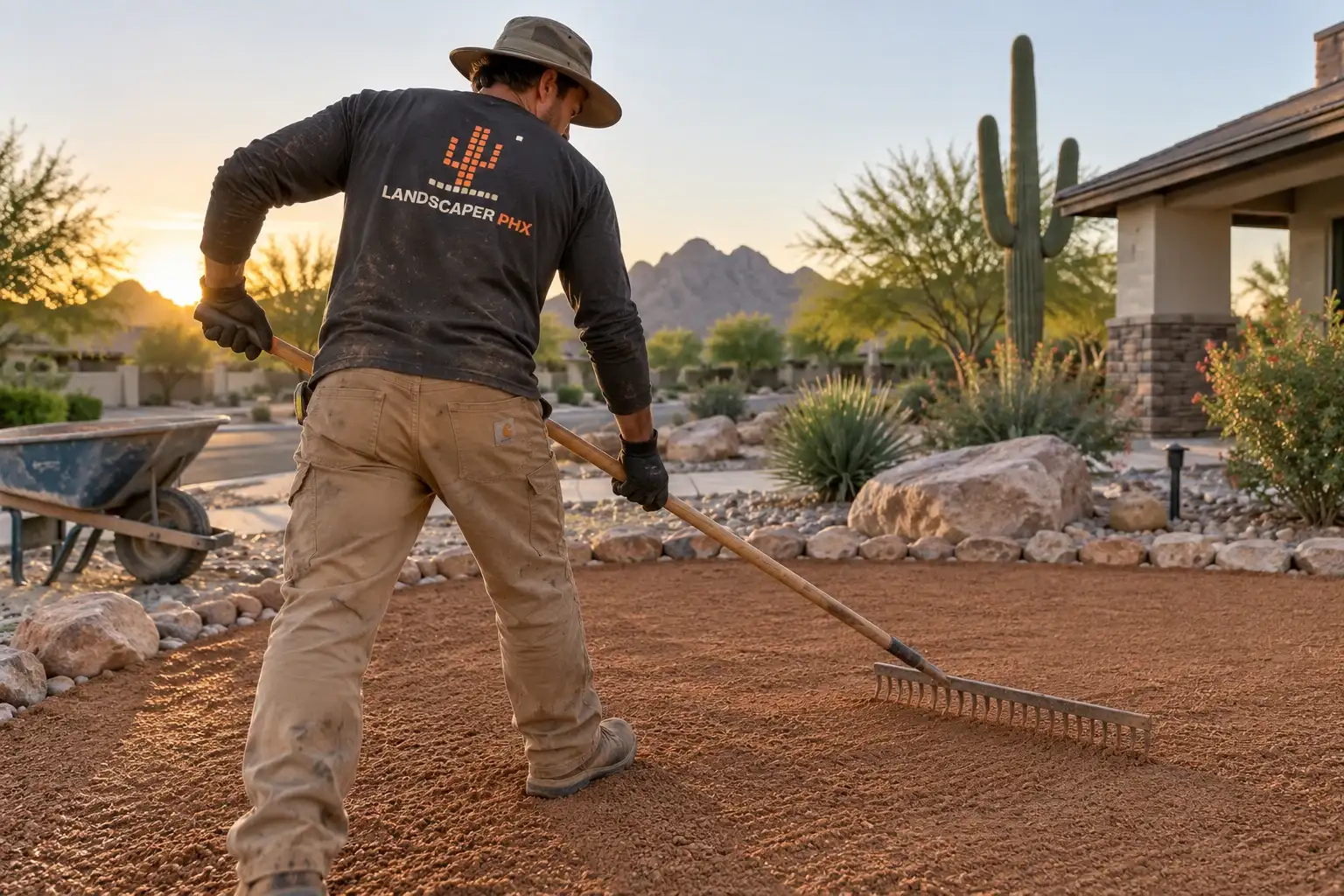
Landscaping in Mesa begins with working out which version of the city you live in. West of the center, the housing is older, the lots are smaller and the trees have had time to grow, so the work is often a repair and a refresh: new drip under an established canopy, a patio replaced, a lawn narrowed. East of the center, the subdivisions are newer and the back yards often start as graded ground with a wall around them, which means a full install from the soil up. Both halves can share the same ground conditions, with caliche showing up in some places as a layer that restricts roots and drainage. Probing the soil before pricing helps, because a shallow layer changes the planting plan. Much of the Phoenix area sits in USDA zone 9b or 10a, and Mesa falls in the same range, so the plant list can be similar on both sides of the city. USDA plant hardiness zone map (opens in a new tab)
02Good to know
What do yards in Mesa usually need?
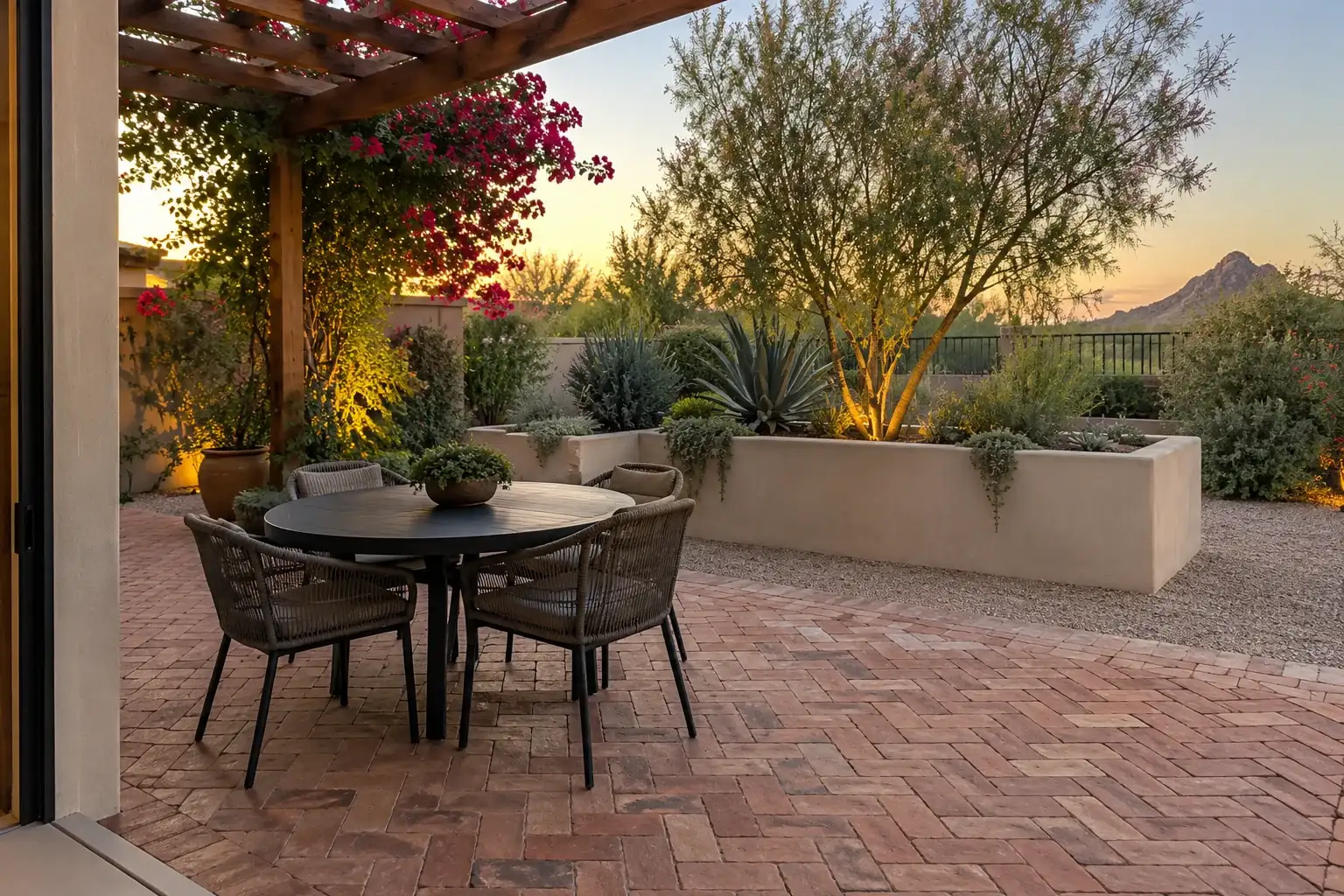
Many Mesa yards need shade and a watering system that matches the planting, in that order. West side lots often have shade already, so the money goes into irrigation and hardscape repair. East side lots often have neither, so a tree on the west wall comes first and the rest of the yard is designed around the shade it will cast in a few years. Foothill properties add a slope problem, because water running off a graded pad can find the lowest corner of the wall and sit there. In every case the irrigation works better in zones by plant group, because a single schedule for trees and groundcover wastes water on one and starves the other. The fall across the lot matters too, because a yard that slopes toward the wall needs a drain before it needs plants.
03Rules
Which ZIP codes do you cover in Mesa?
We serve Mesa ZIP codes 85201, 85204, 85207, 85209, 85212, 85213 and 85215. That spread runs from the older grid near downtown, through 85204 and 85213, out to the newer subdivisions in 85212 and the foothill communities in 85207 and 85215. The distance between the western and eastern codes is many miles, and the soil, the lot size and the age of the walls can all change across it. Give the ZIP code and the cross street to narrow down which plan fits. The eastern codes include newer growth, and some streets there can still be bordered by open ground on one side.
04Rules
What rules affect a yard project in Mesa?
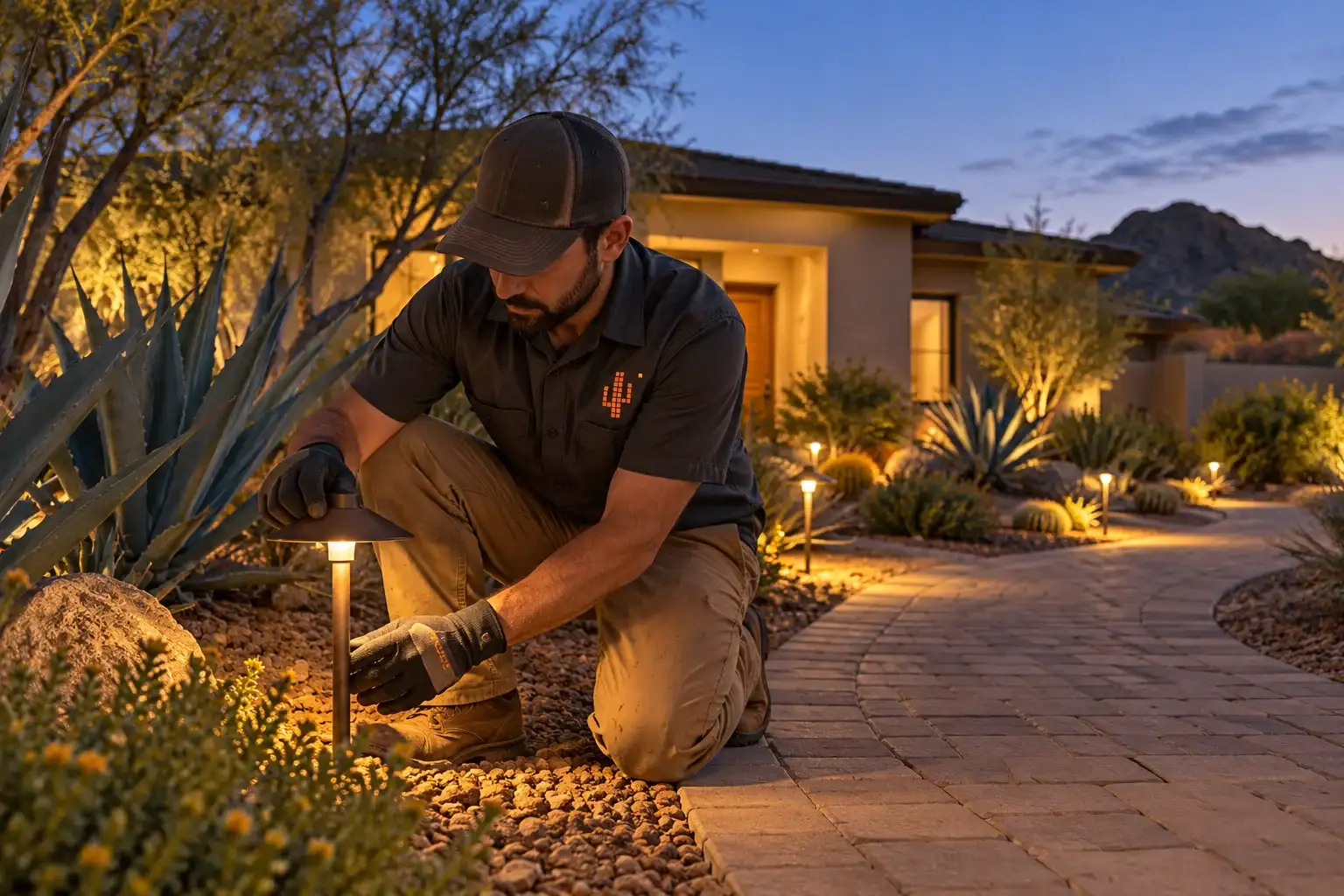
Mesa sets its own rules, so start with the city rather than with a Phoenix program. The city or utility holding the account sets the watering schedule, so get the present one from them before you reprogram a controller. Walls, covers and other built structures can need a city permit, so ask the city before buying material. Homeowner associations add their own design rules on top in many of the newer subdivisions.
05Services
Which services are available in Mesa?
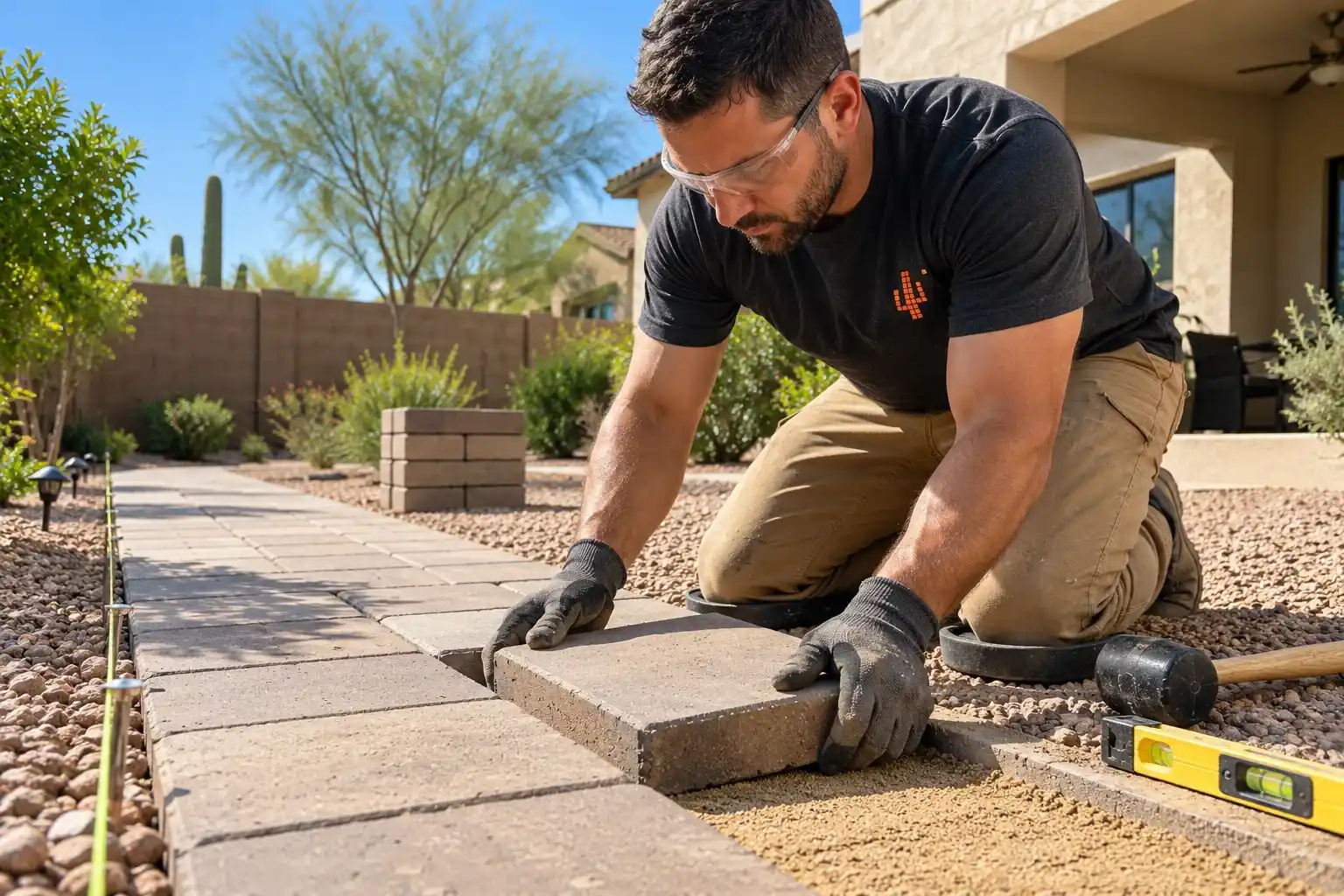
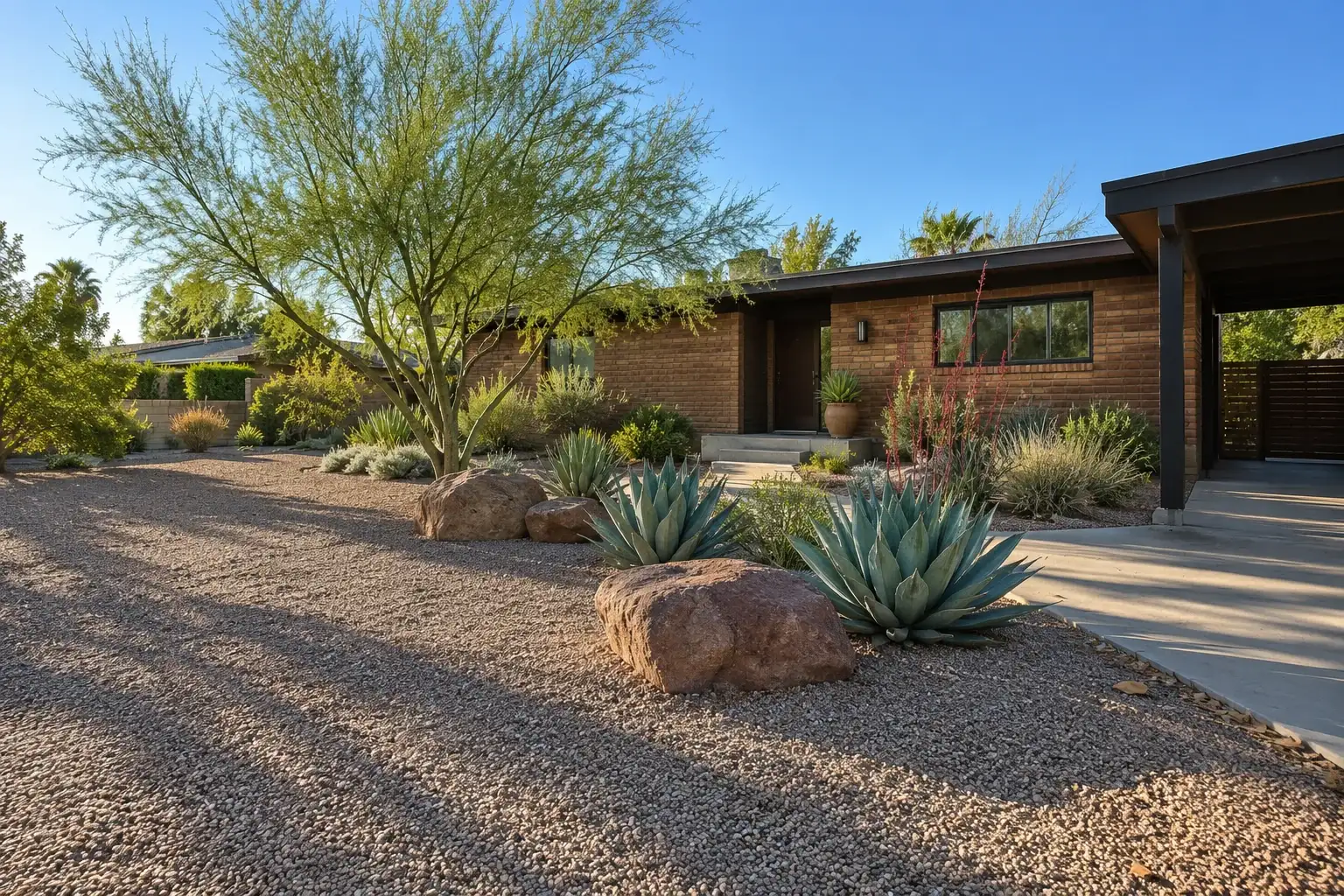
All 5 services apply across the city. Landscape design handles the plan for a bare east side lot or a west side refresh. Artificial turf can suit smaller lots where a lawn is more work than it is worth. Pavers and hardscape covers patios, walkways and the retaining walls that foothill lots need. Sprinkler repair is a common need on the older side, where valves and heads have been in the ground a long time. Desert landscaping converts a lawn to planting. Many projects pair 2 of these, such as a patio with new turf, or a sprinkler rebuild with a lawn conversion, because the trenching is shared. Send the address and a photo through contact, and someone from our team will call you back.
06Service area
Which neighborhoods are covered?
We serve the whole city. On the west side that includes the streets around downtown. In the middle, the Superstition Springs area and the housing around it are included. East, 85212 takes in Eastmark and the newer streets toward the city limit. The foothills include 85207 and 85215, with Las Sendas and Red Mountain Ranch, where driveways climb and the walls step with the grade. If your street is not named here but sits inside one of those codes, it is still covered. The foothill streets are the ones where a quote can change most, because access and grade decide how much hand work a back yard needs.
07Costs
What does landscaping cost in Mesa?
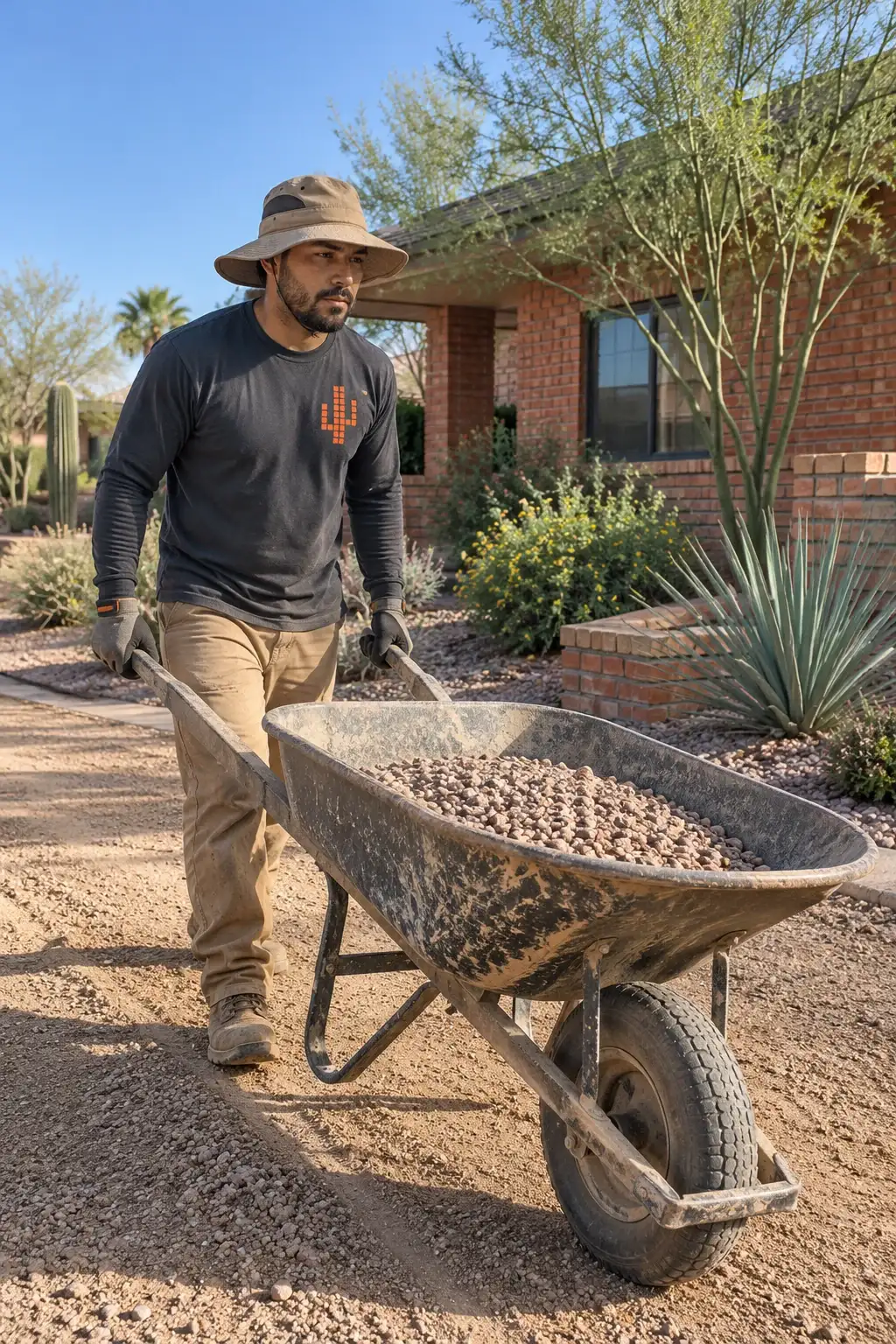
The range is wide because the housing is. A national cost guide's 2026 figures put a front yard at $1,500 to $5,000 and a full backyard renovation at $15,000 to $50,000, with a typical project at $3,516 and most between $1,248 and $6,068. On a west side lot the repairs can land in the lower half of that band, while a bare east side back yard can push toward the top. Turf runs $3,244 to $8,714 installed, with materials at $2 to $8 per square foot. Sprinkler repair averages $278, with most repairs between $137 and $422. Paver patios run $480 to $22,500, or $8 to $50 per square foot, with about $3,800 covering 280 square feet. A second national cost guide puts a 2 person crew at $50 to $100 per hour. These are published national ranges, not a quote. The final price is set after an on-site assessment.
083 questions
Questions people ask
Still have a question? Call (747) 243-2089 and describe the yard.
01Is west Mesa really different from east Mesa?
Yes, and the difference shows up in the estimate. A west side yard often has shade, mature trees and an irrigation system that needs repair. An east side yard often has none of those, so the budget goes into base work, walls and a full planting. Same city, different job.
02Do foothill lots always need a retaining wall?
Not always, but they often need something to slow water down. A slope that drops toward the house can move soil and mulch in a storm. A low wall, a stepped path or a planted terrace can solve it. The lower cost answer is often a shallow swale rather than masonry, and both are worth pricing before choosing one.
03How quickly can a sprinkler problem be found?
A single visit can often find it. Stuck valves, broken heads and line leaks show up under pressure, and a controller fault shows up at the panel. Testing each zone, noting the pressure and marking the breaks narrows it down. Parts availability can decide the repair date, because some older heads are no longer stocked.
09Keep reading