Service 05 of 05 · Phoenix, AZ
Desert Landscaping in Phoenix, AZ
Planning desert landscaping in Phoenix? Tell us about your yard, and someone from our team will call you back to talk it through.
Last updated
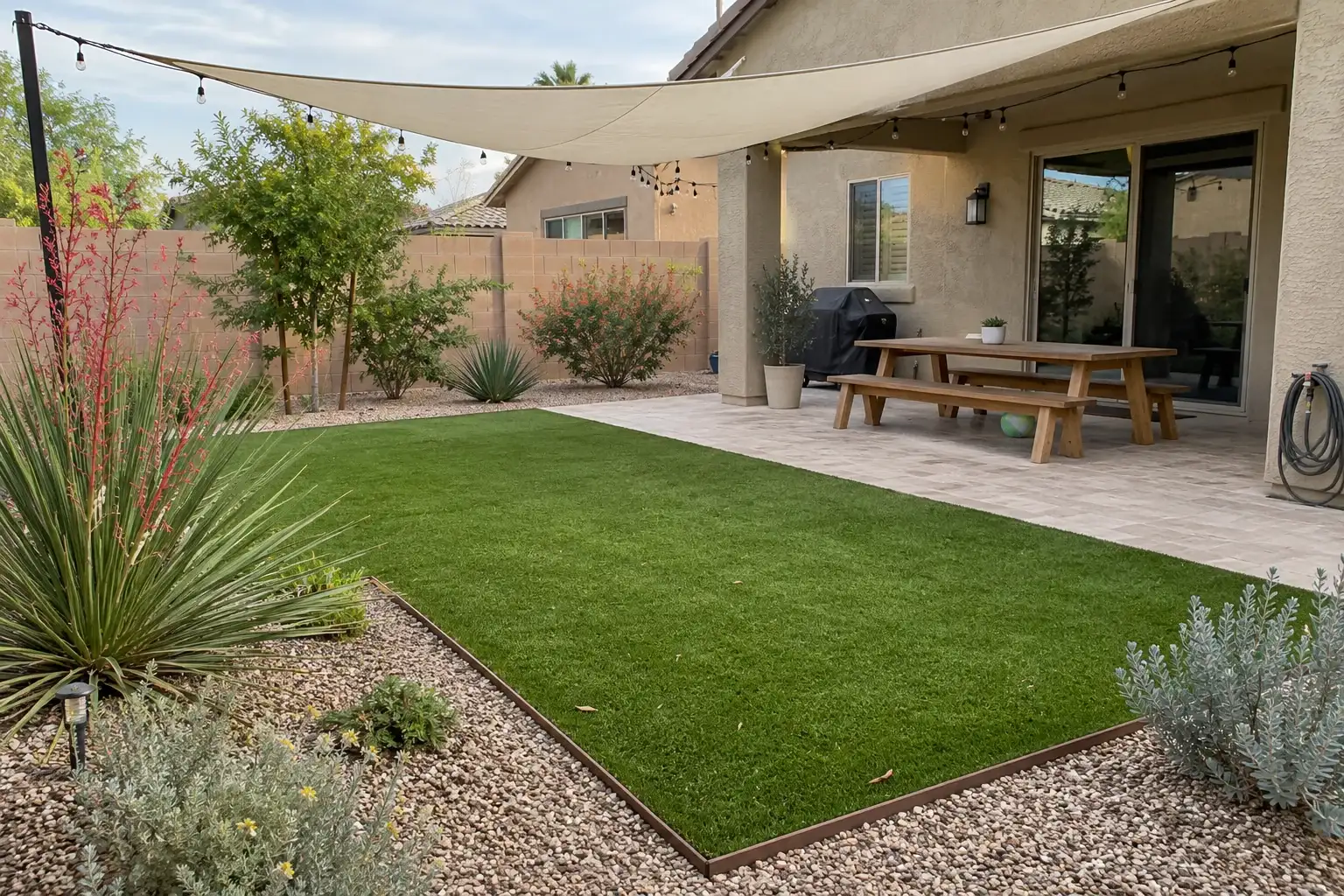
Desert landscaping in Phoenix swaps a lawn for gravel, drip irrigation and plants that already live in this heat. A conversion involves the grass removal, the city paperwork and the planting, and the finished yard can run on a fraction of the water a lawn drinks.
01Planting
What does desert landscaping include?
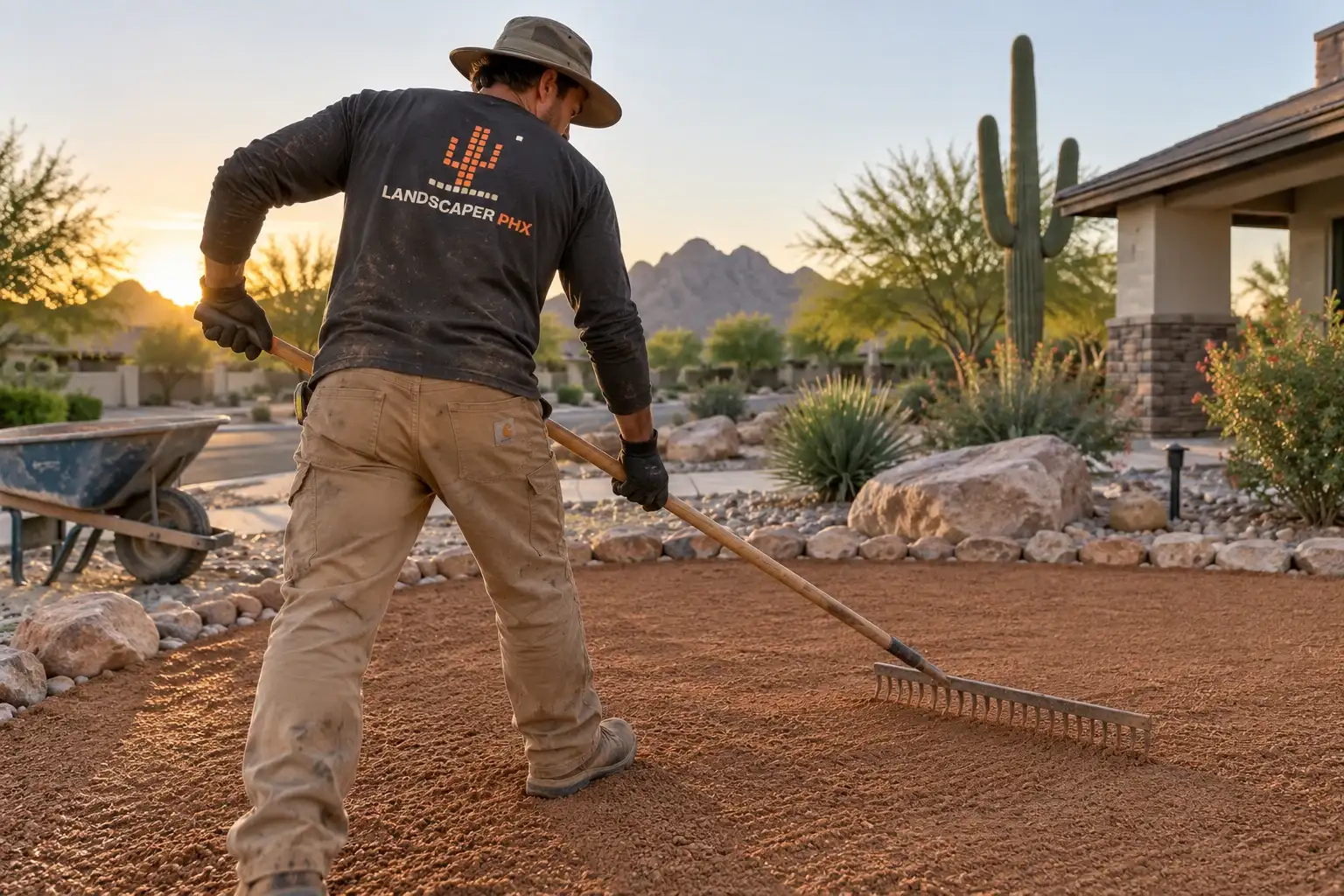
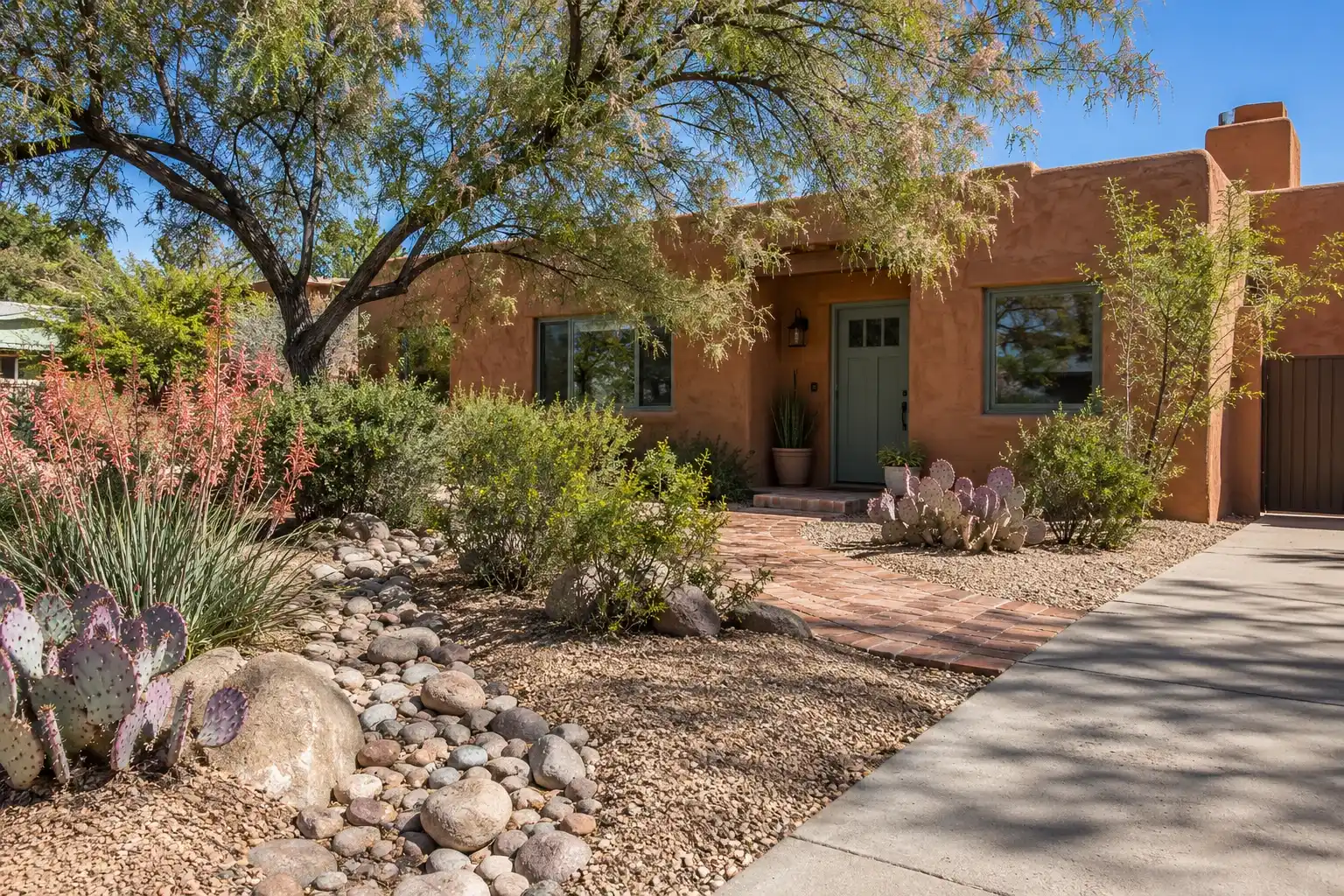
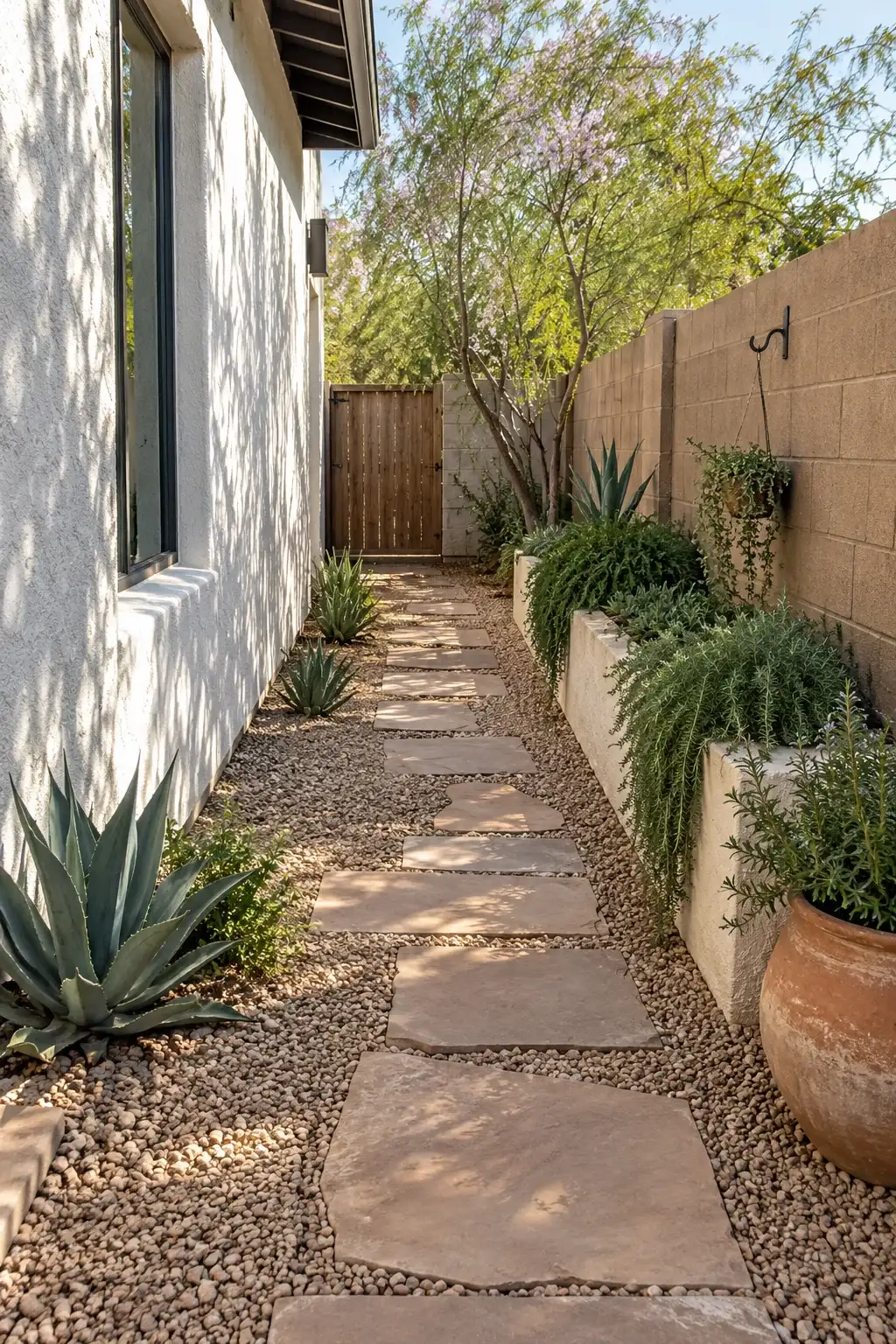
Desert landscaping is a ground plane, a water system and a plant list that fit the site. That means gravel or decomposed granite over a weed barrier, boulders where the grade changes, a drip line to every plant, and trees and shrubs picked for the sun and the heat that bounces off the wall.
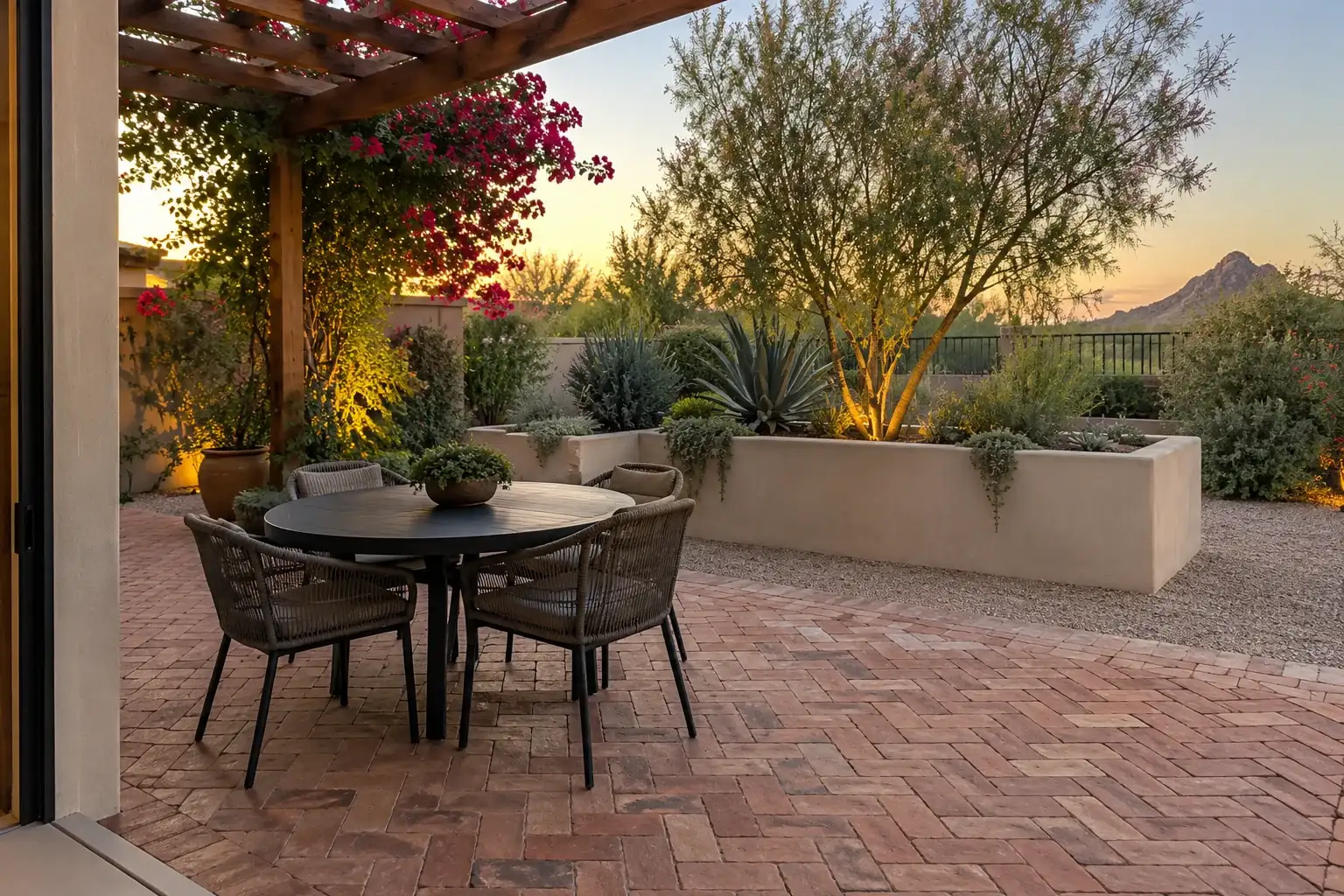
Layout comes first. Plants are grouped by water need so one valve does not drown a cactus while it starves a palo verde. Gravel is held back from the foundation and below the stucco line, and openings are left in the paving for trees that will grow into them.
The last piece is the edge. Steel, concrete or stone edging keeps the gravel out of the sidewalk when the monsoon runs.
02Costs
What does a grass to desert conversion cost?
The price depends on how much grass comes out and how much goes back in. Landscape work is published at $4.50 to $12 per square foot, with front yards at $1,500 to $5,000 and full backyard renovations at $15,000 to $50,000, according to a national cost guide. A gravel yard with a few plants can sit at the low end. A yard with trees, boulders, grading and new irrigation can sit at the high end.
Phoenix also pays $2 per square foot through its Residential Grass Removal Program to eligible Phoenix Water Services customers (Phoenix Water Services (opens in a new tab)). That payment is an incentive, not the full cost of the work.
The cheaper version of this job is a smaller planted area with more gravel and fewer trees. Call (747) 243-2089 or send the form with the square footage, and someone from our team will call you back.
These are published national ranges, not a quote. The final price is set after an on-site assessment.
03Turf
How does the Residential Grass Removal Program work?
Phoenix pays $2 per square foot, and the steps are strict. The applicant must own the home and be a Phoenix Water Services customer who receives a water bill or city services bill from the City of Phoenix. A minimum of 250 square feet of grass must be removed. You apply and get pre-approval before any grass comes out, and the city then issues a Notice to Proceed. Removal starts only after that notice is in hand, and the work has to be finished within 6 months of it.
Review can take up to 3 weeks, so the application is the first task on the list, not the last. The grass has to be alive and healthy at a minimum of 75 percent density of the area to be removed, dormant grass included, which rules out a lawn that died over the summer.
The same program notes that desert plants can lower outdoor water use by 85 percent compared with grass. Nothing about the yard changes the sequence: apply, get pre-approval, receive the notice, then remove.
04Rules
What happens if the grass comes out before approval?
The project does not qualify. That rule is easy to trip over, because removal looks simple and a neighbor with a skid steer offers to start on Saturday morning.
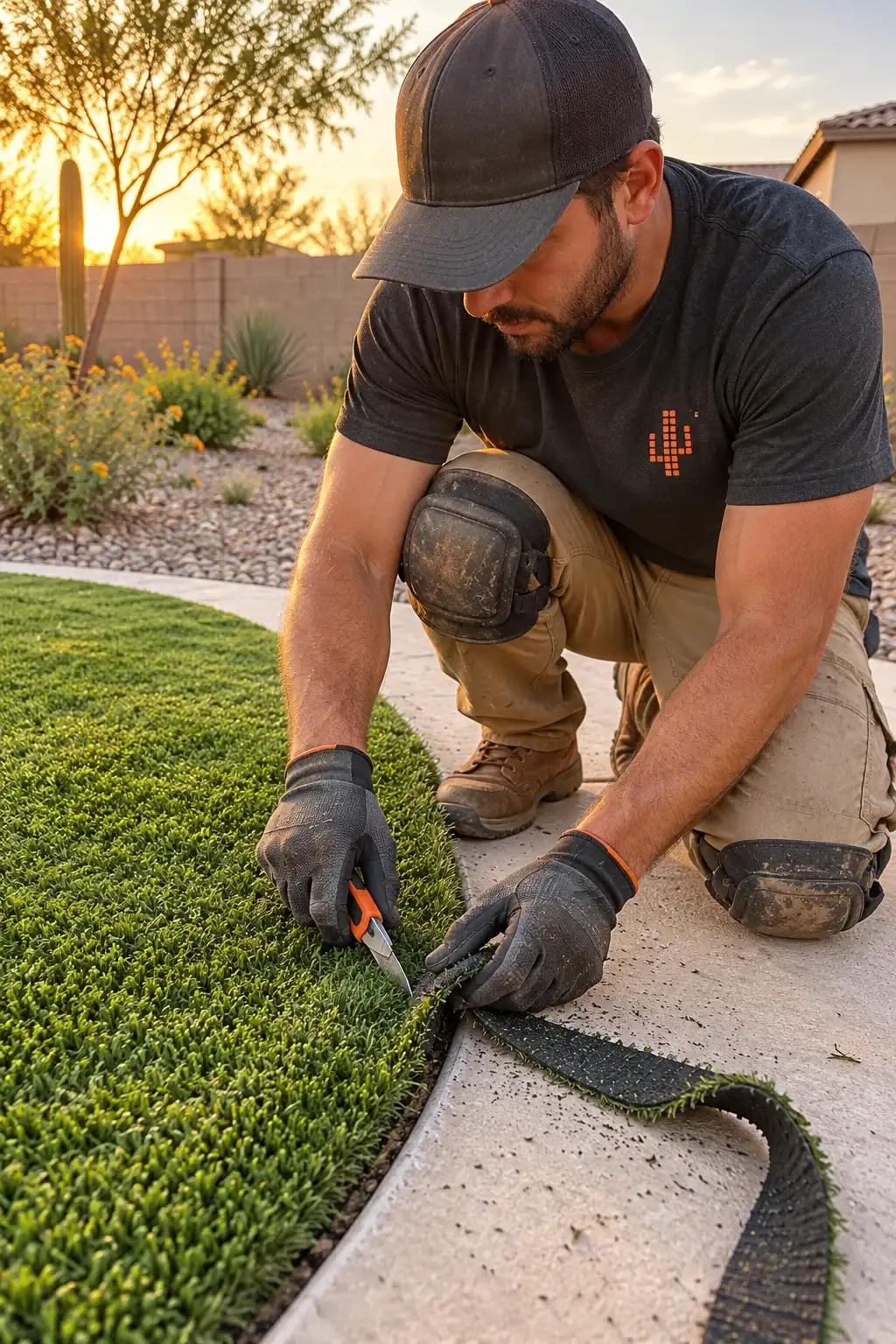
Removal means the turf, the roots and enough of the surface to plant into. If the yard is scraped first and the application goes in afterward, there is no live grass left to show at 75 percent density.
Wait for the paperwork. A few weeks of waiting costs less than losing $2 per square foot across a 1,000 square foot lawn. The application asks for 2 photos of the grass from different angles, and the bill that matches the address belongs with the file.
05Contact
What happens from the first call to a finished desert yard?
The job starts with a site walk and a water plan. The grass area is measured, and the slope, the shade, the walls and the existing valves are noted along with what the city file needs. Then the application goes in and the wait for the Notice to Proceed begins.
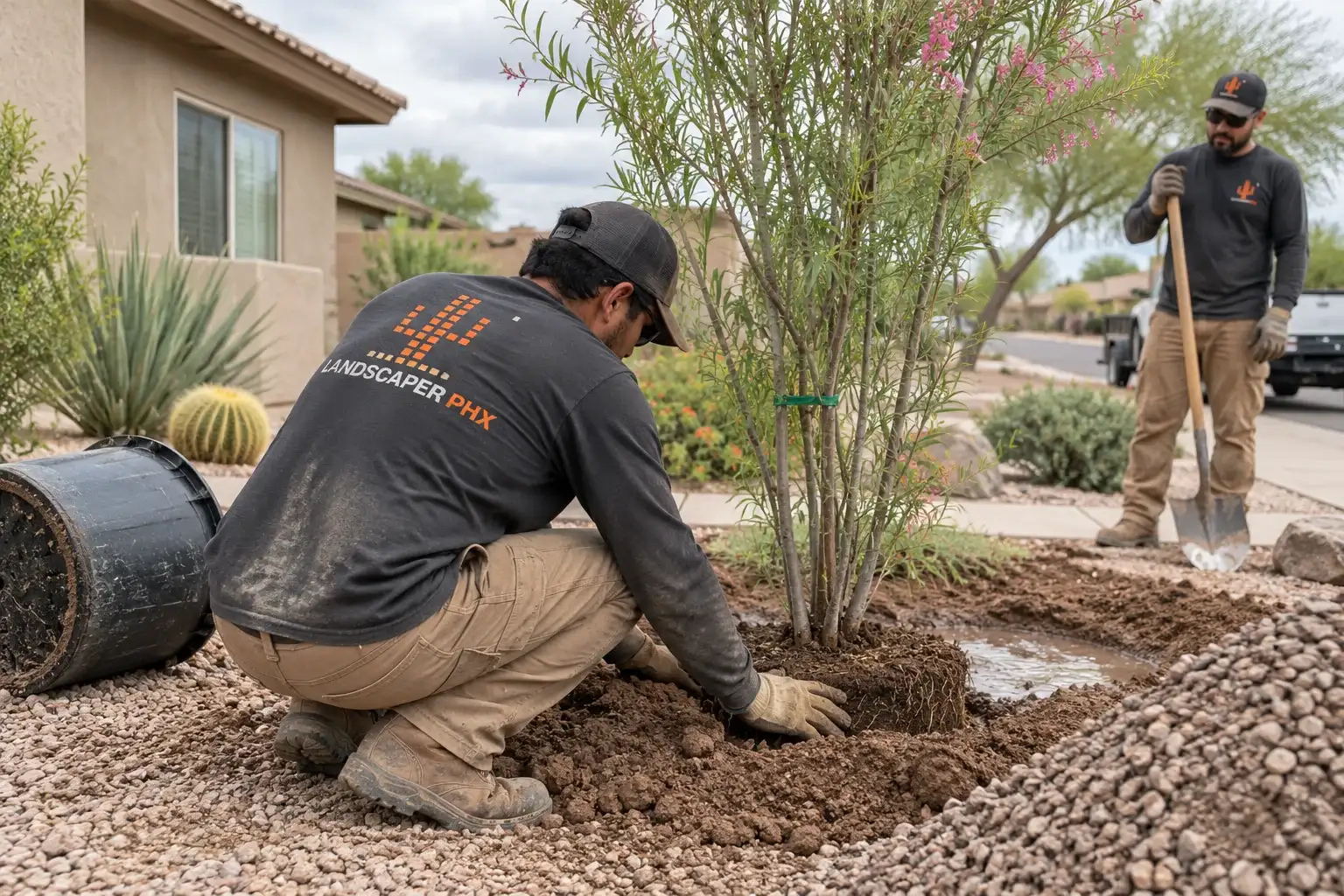
After approval the turf is stripped and hauled out, the ground is graded and the edges are set. Gravel goes down over fabric, drip lines run to each plant group, and the trees go in first so they get the deep watering that helps them root.
The last visit is a controller set and a walkthrough covering which valve feeds which zone and how to change the run times as the seasons turn.
06Planting
What is different about planting in Phoenix?
The Phoenix area sits in USDA zones 9b and 10a on the 2023 map, with an average annual extreme minimum of 25 to 30 F in 9b and 30 to 35 F in 10a. That winter range matters less than the summer, which is long, bright and hot against a west wall.
The ground is the second difference. Southern Arizona soils often have a cemented layer called caliche, which can restrict roots and water movement (UA Extension, managing caliche (opens in a new tab)), so a planting hole can fill like a bucket. The extension guidance is a hole no deeper than the root ball and up to 3 to 5 times as wide, dug completely through the caliche layer so water can drain.
Reflected heat is the third. A plant that thrives in open desert can scorch against a stucco wall that faces west, so the same species may want afternoon shade on one side of the yard and full sun on the other.
07Planting
Which plants and trees work in a desert yard?
Start with trees, because they do a lot of the shade work. Palo verde, mesquite and desert willow are desert trees that can take deep, infrequent water once they root.
For structure, use ocotillo, red yucca, desert spoon and agave. They carry the shape of the yard through the year and ask for little beyond a slope that drains. For color, brittlebush, Texas sage, lantana, fairy duster and bougainvillea flower through the warm months without a lawn schedule, though bougainvillea is frost sensitive (AMWUA, bougainvillea (opens in a new tab)).
Golden barrel cactus and other small barrels work in a gravel field or at the edge of a patio, where reflected heat is worst.
Skip anything that wants regular water and deep shade. It can survive one summer and then struggle, and the irrigation added to keep it alive defeats the purpose.
08Timeline
How does drip irrigation replace a lawn schedule?
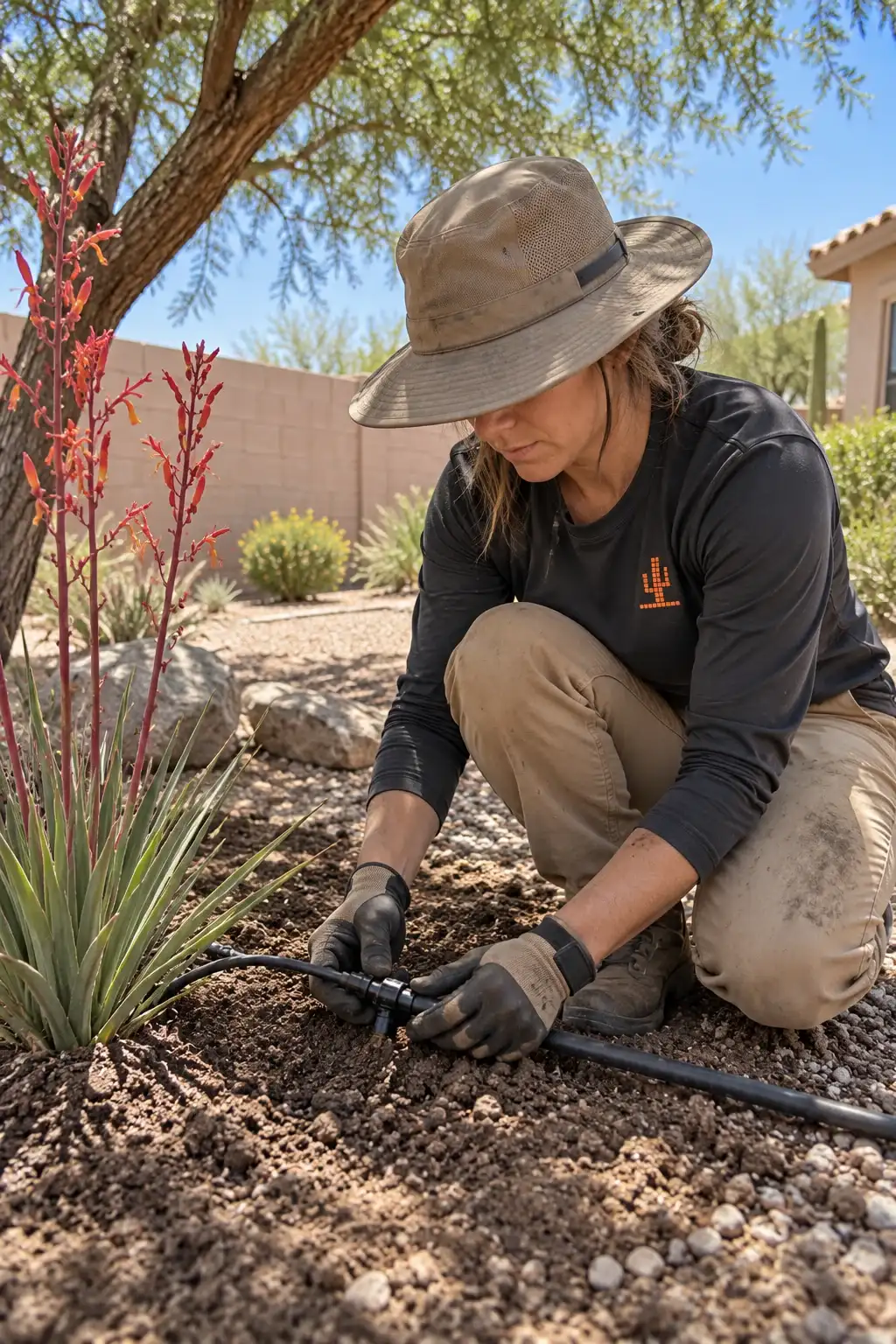
A drip system replaces the lawn schedule with a slower, deeper soak. Phoenix notes that on average up to 70 percent of the water used at home goes outdoors, and that giving plants the water they need saves money and keeps them healthy (Phoenix Water Services (opens in a new tab)).
Old valves can be converted rather than abandoned. Each valve becomes a zone with its own filter, pressure regulator and flush cap, and the tubing runs in loops so a break at the end does not starve the middle. Emitters are sized to the plant, not to the pipe.
New trees keep a separate schedule while they establish. After that the run times can drop and the roots sit deeper, which is a big reason a desert yard uses less water.
09Planning
What should I have ready before work starts?
Have the water or city services bill ready before the application, since the program is for a homeowner who receives a City of Phoenix water or city services bill. The program page also lists forms to sign, so it is worth reading before anything is submitted.
Clear the yard of furniture and pots, and note anything that has to stay, such as a shed or a dog run. Note where the water line enters, where the pool equipment sits and where the cleanouts are.
Decide the look before the gravel order. Gravel color sets the tone of the whole yard, and a load that arrives wrong is expensive to move. Photos of yards you like are more useful than a description.
Call (747) 243-2089 or send the form, and someone from our team will call you back before anything is submitted.
10Turf
What goes wrong with a grass to desert conversion?
The common failure is water in the wrong place. Gravel laid tight against the stucco without a gap can hold moisture on the wall, and the paint or the stucco can fail first. Gravel is kept below the weep screed and sloped away.
The second is a plant in a hole that holds water. In ground with a hard layer, a hole wider than it is deep and dug through the caliche, as described above, lets water drain where a deep narrow one can hold it.
The third is a drip system set once and never touched again. Run times that suit October can overwater plants in January, and a controller left on a summer schedule wastes water all winter.
Weeds in new gravel can show up in the first season, from seed already in the soil.
11Timeline
How long does the work take, and what can be staged?
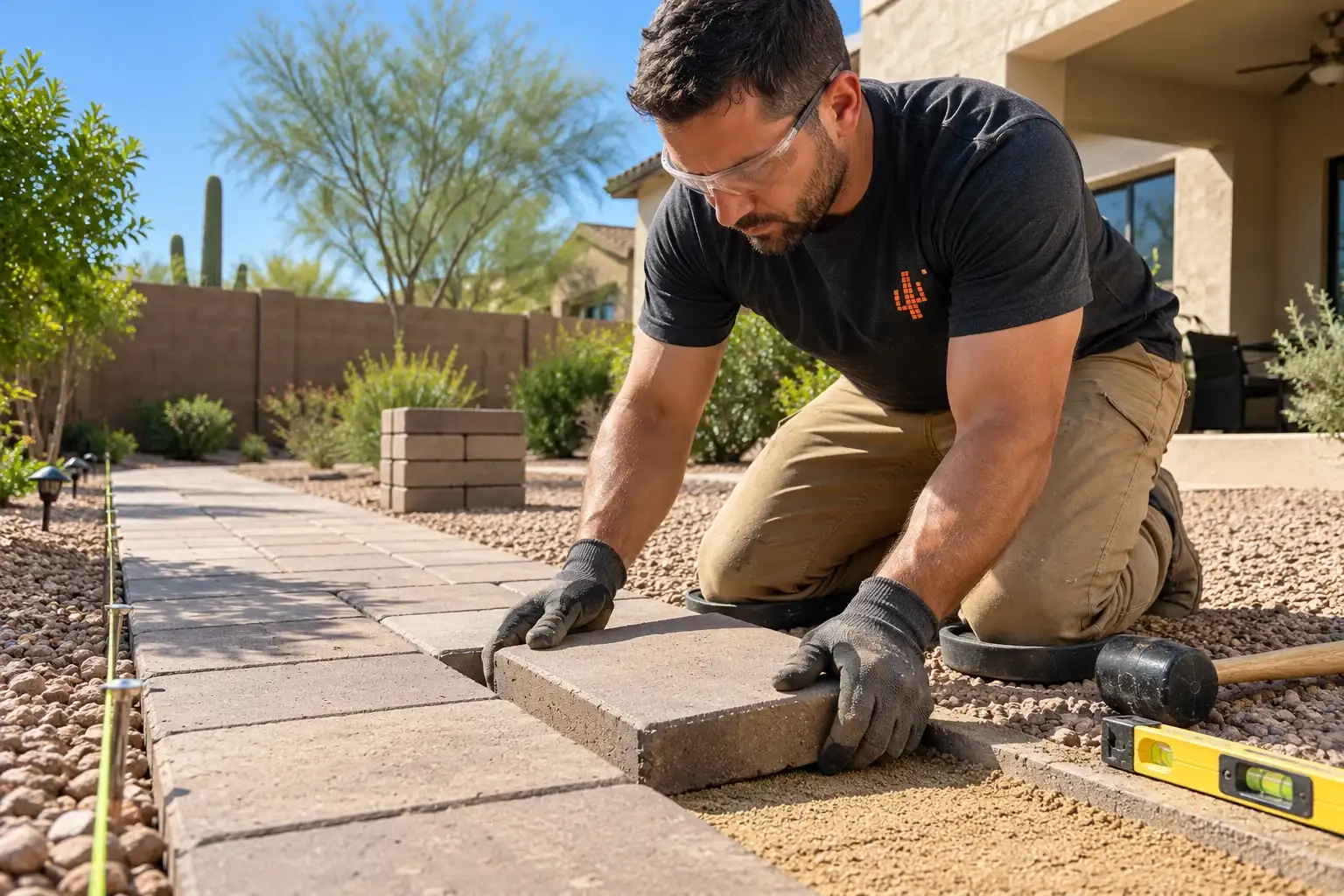
Removal and grading can take a few days on a normal city lot, and gravel and planting a few more, so a full front yard can be a short job once the Notice to Proceed is in hand. The review of up to 3 weeks sits in front of that, so the whole project can run a month or more from application to finished yard.
Staging helps. Do the front yard first, then the back, and put the trees in one phase so they establish together. If the budget is tight, grade and gravel now and plant in the fall, when the heat breaks and new plants lose less water.
Fall is often a better planting window in Phoenix. Roots grow through the cool months, and the plant meets its first summer with a root system under it.
12Costs
How much upkeep does a desert yard need?
Less than a lawn, but not nothing. Run times change at least 4 times a year (AMWUA, controller programming (opens in a new tab)), and the filter on each valve needs a clean out. Walk the lines after the first run of each season and look for a wet spot or a jet at a broken emitter.
Prune trees in the cool months, and keep gravel off the trunks. A mound against the base of a tree can hold moisture and invite rot.
Refill the gravel where it thins, especially at the driveway edge and under the downspouts.
Weeds can need a pass every few weeks in the first year and less often after that. A stiff hoe and a walk with a bucket is much of the work. A desert yard still needs water, and plants can show stress quickly when a line plugs or an emitter falls off.
13Service area
Which areas around Phoenix do you cover?
We serve Phoenix and the towns around it: Ahwatukee and Laveen to the south, Arcadia and Paradise Valley in the center, and Desert Ridge, North Phoenix and Scottsdale to the north. The area also includes Tempe, Mesa, Chandler, Gilbert, Glendale, Peoria, Surprise, Goodyear, Avondale and Tolleson.
Conversions differ by neighborhood. Older central lots often have a lawn that has been there for decades and a mature canopy that changes what will grow beneath it. Newer lots at the edge of the city are often bare dirt with a wall and a slope, and those need grading before anything is planted.
In the other towns, water rules and rebates come from the city or utility that serves the property, so confirm the current schedule before you change a controller. The grass removal program on this page is for Phoenix Water Services customers.
145 questions
Questions people ask
Still have a question? Call (747) 243-2089 and describe the yard.
01Does the grass have to be dead before I apply?
No. The program wants grass that is alive and healthy at a minimum of 75 percent density of the area to be removed, dormant grass included, so a dead lawn can fail the check. Keep watering until the Notice to Proceed arrives, then remove the turf.
02How long does the city take to approve?
The city says to allow up to 3 weeks for review, and an incomplete application can add delay. Apply before booking any work, because the Notice to Proceed has to be issued before any grass comes out.
03Can I keep a small lawn and convert the rest?
Often yes, if the remaining lawn sits on its own valve and you only claim the area you remove. The program pays per square foot of grass taken out, so a partial conversion earns less, and a minimum of 250 square feet of grass must be removed to qualify. Splitting the zones lets the drip run on a different schedule from the turf.
04How much water does a desert yard save?
Phoenix says outdoor water use can drop by 85 percent when desert plants replace grass. The real saving depends on plant choice, emitter sizing and run times. A yard that is mostly gravel with a few trees sits near the low end of water use.
05Do I need to amend the soil before planting?
Not across the whole yard. Desert plants mostly want sharp drainage, so planting in the native soil is common practice. A rich mix can hold water against the roots and do more harm than good.