Service 02 of 05 · Phoenix, AZ
Sprinkler Repair in Phoenix, AZ
Planning sprinkler repair in Phoenix? Tell us about your yard, and someone from our team will call you back to talk it through.
Last updated
Sprinkler repair in Phoenix means finding the part that failed and getting water back to the right zone at the right rate. Common causes are a broken head, a valve that will not close, a leak at a fitting or a controller that runs the wrong schedule.
01Water
What does sprinkler repair in Phoenix include?
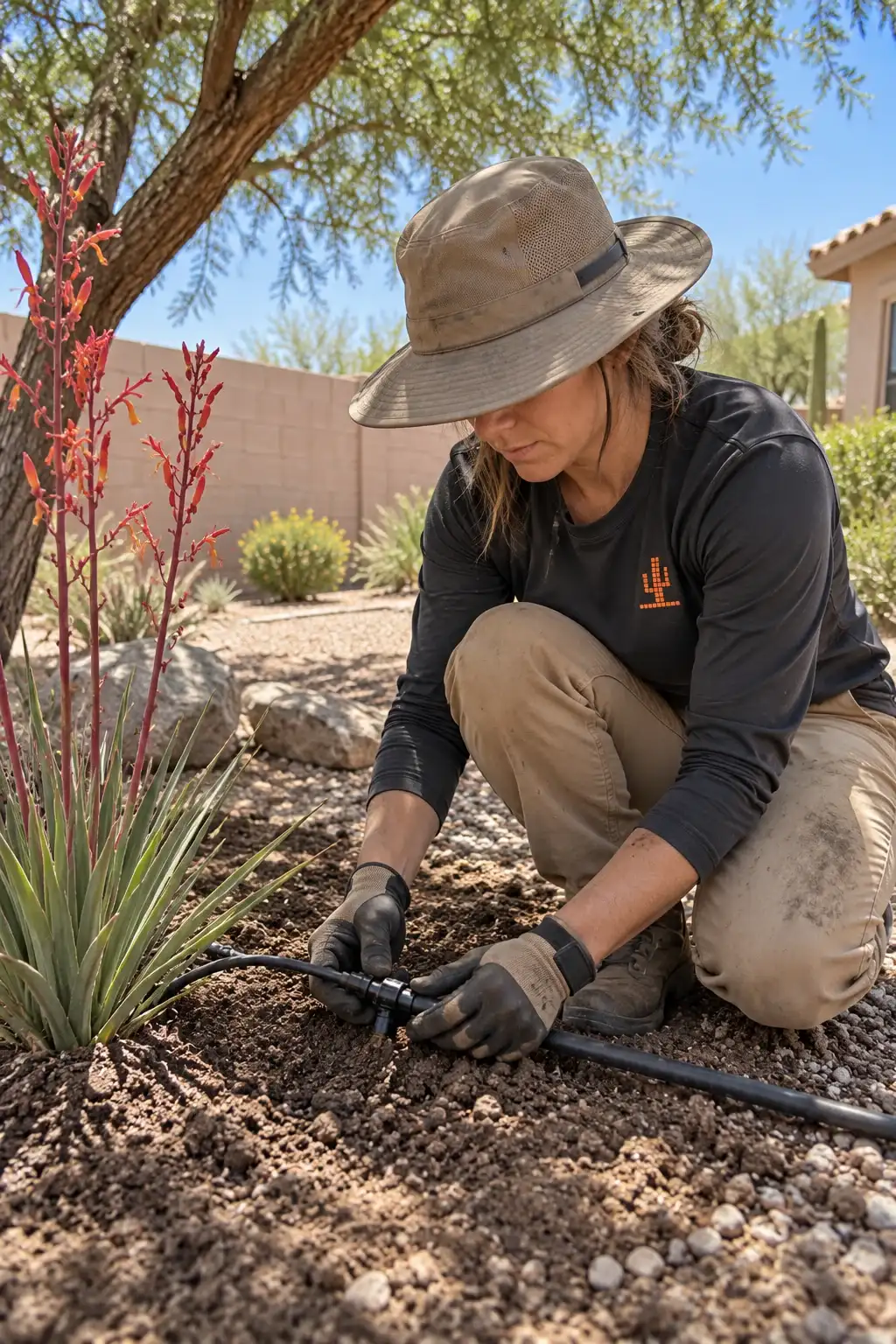
A repair covers diagnosis and the fix, not a list of parts swapped at random. It starts at the controller to see what the schedule is asking for, then each zone is run to watch where the water actually lands. From there head spacing and tilt are checked, geysers and sunken heads are looked for, the valve box is opened to listen for a diaphragm that will not seat, and the line is pressure tested if the symptom points to a break. Drip lines get a flow check at the end cap. The work often means new heads, nozzles, risers, a valve diaphragm or solenoid, a repaired lateral, or a controller reset. The zone is left running so the result can be seen, and marked valves make the next repair start faster.
02Costs
What does sprinkler repair cost in Phoenix?
Published national ranges put sprinkler repair at an average of $278, with most repairs between $137 and $422, based on 36,233 projects in a national cost guide's 2026 data. Where a job lands inside that band comes down to access and how much digging it takes. A head swap at the edge of a lawn is quick. A valve buried under gravel, a lateral cracked beneath a patio edge or a break on the wrong side of a wall takes trenching, and trenching is often the expensive part of a repair. A diagnosis fee can be separate from the repair, so the written estimate should say how the visit is billed. Several zones with the same fault can cost less per zone than 1 zone with 3 separate faults, since the setup is shared. These are published national ranges, not a quote. The final price is set after an on-site assessment.
03Contact
What happens from the first call to water back on?
It starts with a call to (747) 243-2089 and runs in 5 steps. The call covers which zone stopped working, what shows when it runs, and whether the water bill moved. At the property the controller is run through every station, because a second fault can show up once the first one is fixed. Then the valve box is opened and pressure and flow are tested to separate a head problem from a line problem. The repair itself follows, using standard parts for common heads and valves, with a supply run for anything unusual. Last is a full cycle with the owner watching, plus a note on what to check if the zone acts up again. If the controller is the only fault, that is a short visit. If a line is broken under hardscape, that should be explained before anything is cut.

04Water
Why do sprinkler systems fail in Phoenix?
Heat and sun can do much of the damage. Poly pipe and risers sit in soil that bakes through summer, and plastic can get brittle, so a head that was fine in April can snap at the threads in July. High temperatures, dust and rain can clog, crack or damage emitters and lines, according to AMWUA (opens in a new tab). Above ground backflow parts and exposed pipe take the worst of it, and a freezing winter night can crack a fitting that holds water. Mineral buildup can clog nozzles and drip emitters, and the pressure changes that follow can stress a fitting. Tree roots can pinch laterals. A controller left on a spring schedule into August wastes water and can hide a failing zone until the plants show it. A system that was never mapped is also a system where 1 bad valve can look like 3 bad heads, and the wrong part gets replaced first.
05Planning
What should I have ready before a repair visit?
Have the controller model and the zone map if you have one, since a system with 8 stations and no labels takes longer to sort out. Note the 2 or 3 zones that misbehave and what they do, such as a head that stays up, a corner that floods or a valve that hums. Clear the valve box lid of gravel and pots, and leave the side gate open. If you have the last 2 water bills, keep them handy, because a jump in use can point at a leak faster than a visual check does. Any recent trenching, tree removal or paver work is also worth noting, since new roots and cut lines cause some of these faults. Keep pets inside while the system runs, and move anything fragile off the gravel near the valve box so the lid can come off clean.
06Water
What goes wrong if a leak is left alone?
A small leak gets expensive in 2 ways. Water runs where it is not wanted, so the zone it belongs to starves and the plants on that zone decline while the ground near the break stays wet. On a slope or next to a wall, that water can undermine the base and shows up later as a cracked patio edge or a settled walkway. A leak also keeps the meter moving, and outdoor use is a large part of the bill, since on average up to 70 percent of home water is used outdoors according to Phoenix Water Services (opens in a new tab). A valve that will not close does the same thing on a bigger scale, because the zone keeps running after its station has ended. Fix the cause, not just the wet spot. A leak that is capped without finding the source can return a few feet down the same line, and by then the soil around it is soft and the repair is larger.
07Timeline
How long does a sprinkler repair take?
Many single fault repairs can be finished in 1 visit. A head or nozzle swap is minutes once the zone is running. A valve rebuild takes longer because the box has to be pumped and the manifold opened. A lateral break under gravel or soil takes the longest, since the line has to be exposed, cut and coupled before it is buried again. Diagnosis is the part that varies, because an intermittent fault may only show on the third cycle. If a job needs a return visit for a part, the system can be left off or isolated so it does not run unattended overnight. A second visit is often quicker than the first, because the fault is already narrowed down.
08Water
What maintenance keeps a sprinkler system running?
A short walk each season can head off many repairs. Run every zone briefly and watch for a head that does not pop, water at the base of a head, or a nozzle spraying the wall instead of the bed. Clean the screens at the valve and the filter on drip lines, since mineral grit can clog emitters. Change the controller schedule at least 4 times a year instead of once (AMWUA, controller programming (opens in a new tab)), because the water a bed needs in March is not what it needs in June. Trim grass away from heads so the spray is not blocked. Check the backflow and any exposed pipe before the first cold night. Write the valve numbers on the inside of the box lid so the next person can find them. Photograph the controller screen after each seasonal change, because a schedule is easier to restore from a photo than from memory.
09Water
How do I stage irrigation repairs over time?
Fix what wastes water first. A valve that will not close or a break on a mainline runs continuously and drives the bill, so those come before cosmetic issues. Next come the zones that water unevenly, since a tilted or sunken head wastes water and damages plants at the same time. Controller upgrades and new nozzles can wait a season if the schedule is being adjusted by hand. If 3 or more valves have failed in a year, a comparison between piecemeal repair and a staged replacement of that manifold is worth pricing. Keep a record of what was replaced and when, because a part that fails twice in 1 season can point to a pressure problem rather than to bad parts. A pressure reading at the hose bib is quick and can explain repeat failures.
10Costs
What is the cheaper version of a sprinkler repair?
Repair the part that failed and leave the rest alone. A cracked riser does not mean a new head, and a diaphragm that will not seat does not mean a new valve body, so the smallest fix that solves the fault is the place to start. Swap nozzles instead of whole heads when the body is sound. Cap a zone that waters an area you no longer plant rather than paying to rebuild it. Adjust the controller schedule before buying a smart controller, since a correct schedule on an old timer can beat a fancy one set wrong. If the system is beyond patching, price a drip conversion for the beds only, and keep the lawn zones as they are. A diagnosis in writing with the parts named keeps the scope clear, instead of a vague description of the fault.
11Service area
Which areas around Phoenix do you cover?
We serve Phoenix and the towns around it. That includes Arcadia and the older central streets, North Phoenix and Desert Ridge in the north, and Ahwatukee south of South Mountain where slope and drainage can make a leak harder to trace. The area also includes Scottsdale, Paradise Valley, Tempe and Mesa. Water rules come from the city or utility that serves the property, so confirm the current schedule before changing a controller. If the property is outside those areas, call with the ZIP code or send the form, and someone from our team will call you back.
125 questions
Questions people ask
Still have a question? Call (747) 243-2089 and describe the yard.
01Can a sprinkler repair be done without digging up the yard?
Often, yes. Heads, nozzles, risers and most valve parts are reached from the box or the head itself. A broken lateral needs soil opened, but a narrow trench and a replaced damaged section can be enough, rather than redoing the whole run.
02My system runs but the grass is still dry. Why?
That often points to coverage rather than supply. Heads may be tilted, sunken or spaced too far apart, or the run time may be too short for the root depth. Run a zone and watch where the water lands before replacing parts.
03How do I know if a valve is stuck open?
The zone keeps running after the controller moves to the next station, or the ground stays wet when the system is off. A humming valve that will not close often needs a diaphragm or solenoid, not a new controller.
04Is it worth repairing an old system or replacing it?
Repair while the valves and mainline hold. When 3 or more valves fail in a season, or the mainline breaks in new places each year, a staged replacement can cost less than repeat visits. Pricing both options shows the difference.
05Can drip lines be repaired as well as spray heads?
Yes. Drip repairs cover clogged emitters, split tubing, broken barbed fittings and end caps that will not seal. The line gets flushed before it is closed, because grit left inside can clog the new emitters.