Guide 02 · 5 min read
Xeriscape in Phoenix, AZ
Xeriscape is a planted yard that lives on the rain and the water its plants actually need, and Phoenix pays $2 per square foot to remove a lawn for homeowners who qualify. The order of the paperwork decides whether the payment arrives.
Planting
What is xeriscape in Phoenix?
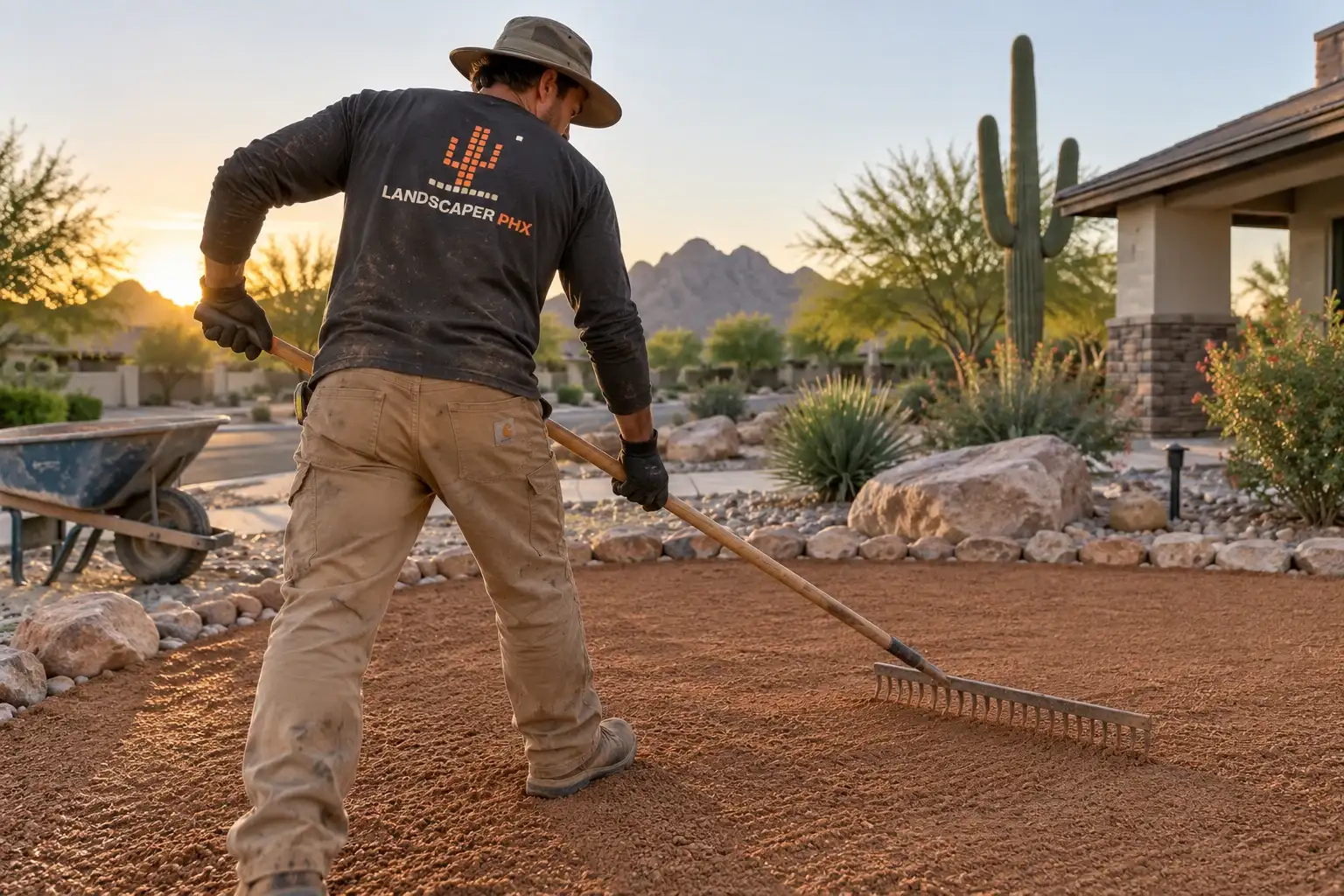
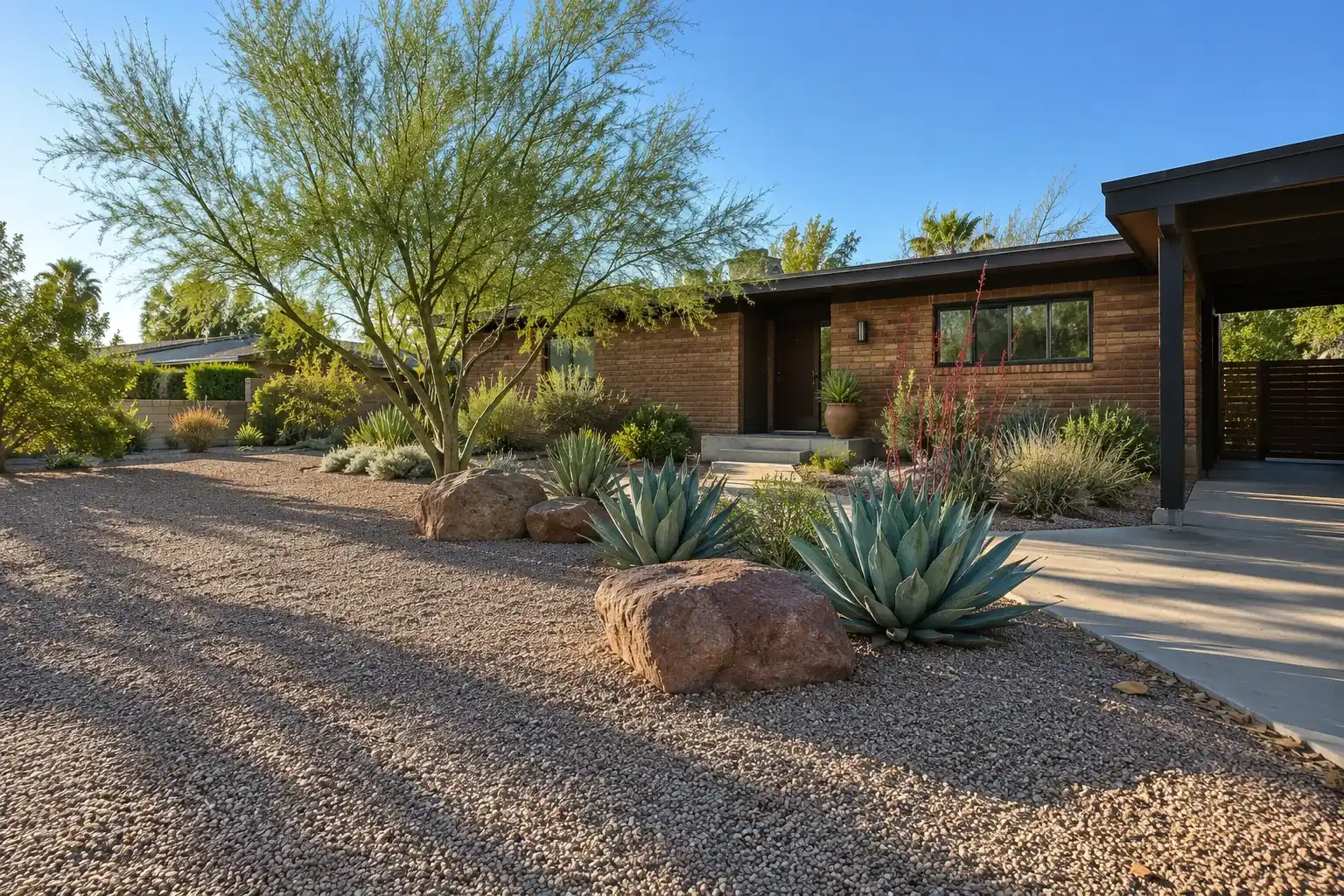
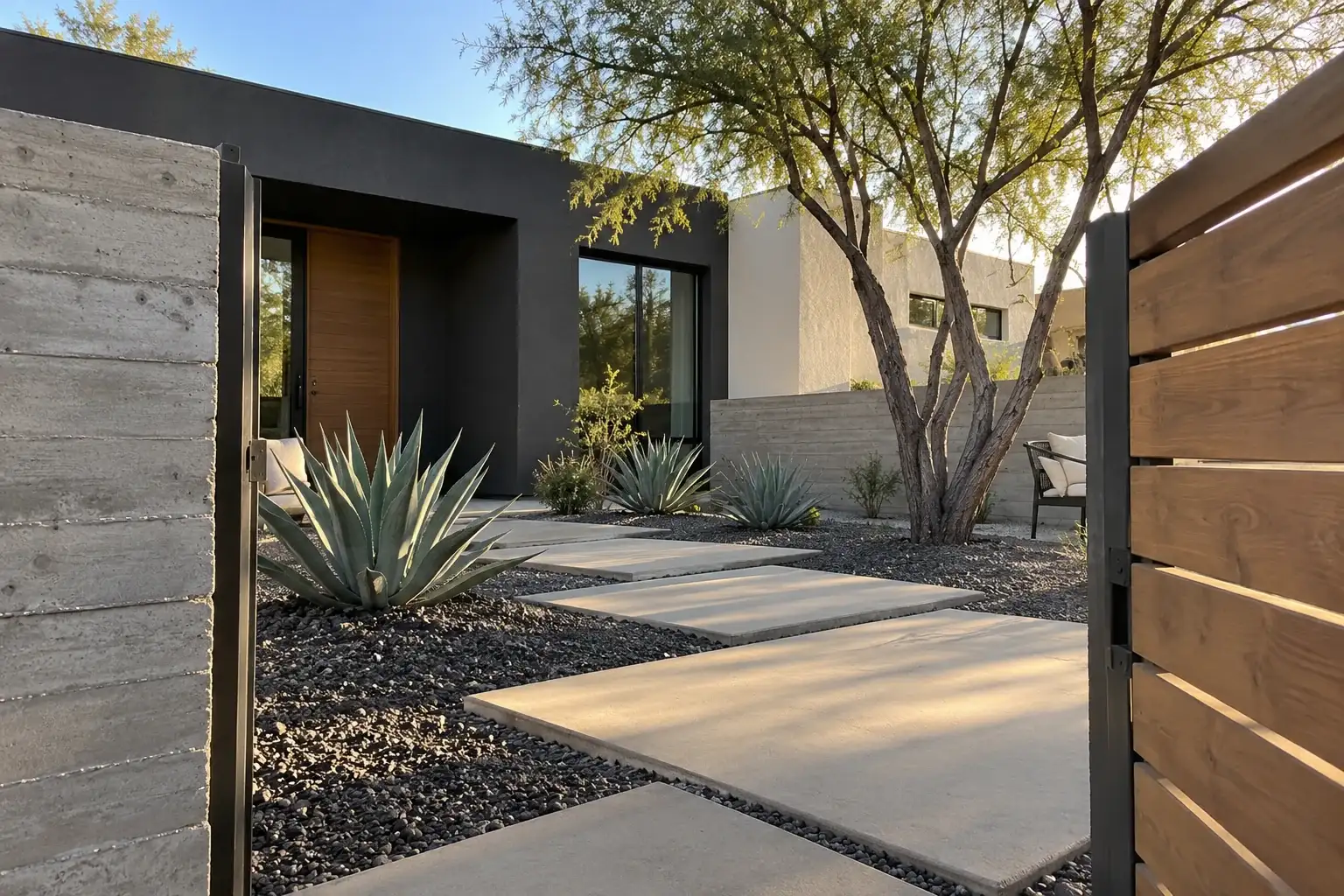
Xeriscape is not zero water and it is not a yard of bare rock. It is a design that groups plants by how much water they want, puts that water at the root with drip, and covers the soil so the sun does not bake it dry. The word covers a range: a full desert palette, a small low water lawn, or a mix of gravel, shrubs and a small patch of green. What separates xeriscape from a rock yard is the planting plan and the irrigation. A rock yard with 3 shrubs and no drip is not xeriscape, it is pavement with plants. A xeriscape yard has structure at eye level, shade over the west wall, and a surface that holds still in wind. The city's program rules describe what it pays for.
Costs
How does the $2 per square foot program work?
Phoenix pays $2 per square foot through its Residential Grass Removal Program (opens in a new tab), and the steps matter as much as the rate. The applicant must be the current owner and receive a water bill or city services bill from the City of Phoenix. Apply first, with the details the city asks for, and wait for review, which can take up to 3 weeks. If the application is approved, the city issues a Notice to Proceed. Work cannot start until that notice is in hand. Then the grass comes out and the new landscape goes in. The owner has 6 months from the notice to finish, then emails at least 2 photos of the completed project and a copy of the notice to the city. Staff review the final photos, and the payment is processed after final approval as a check in the mail, so allow 1 to 2 billing cycles. The rate is set per square foot of qualifying grass, so a 1,000 square foot lawn points at a $2,000 payment. The city asks for at least 250 square feet of grass to be removed, and projects over 5,000 square feet are approved case by case, funds permitting. Read the current program page for the exact forms, because the city can change a form without changing the rate.
Turf
Why does the grass have to be 75 percent alive?
The 75 percent rule is the one that catches people. Grass must be alive and healthy at a minimum of 75 percent density in the area to be removed, and the city counts dormant grass. Areas of bare soil or weeds must be less than 25 percent. A lawn that is half dead, or one that has been sprayed out already, does not meet the bar, and the city does not count before and after photos of grass that was already removed. That means the order is fixed: apply, get approved, keep watering the grass, get the Notice to Proceed, then remove. If the grass dies while the application sits in review, it may no longer meet the 75 percent rule when the city checks the photos. The city asks for 2 photos of the existing grass from different angles, so take them before you start, and keep the lawn alive until the notice arrives.
Costs
What does the conversion cost after the payment?
After the payment, the conversion is priced like any landscape: a national cost guide lists $4.50 to $12 per square foot. A front yard typically runs $1,500 to $5,000, and the $2 per square foot payment offsets part of that on the grass area. On 1,000 square feet, the payment is $2,000, which covers a real share of planting and drip but may not cover the whole job. The rest goes to removal, grading, drip lines, plants and stone. Keep the receipts and the city's approval emails together, because the payment follows the paperwork. Price the irrigation before the plants, since a desert yard with no drip can be a dead yard by August.
Turf
What goes in after the grass comes out?
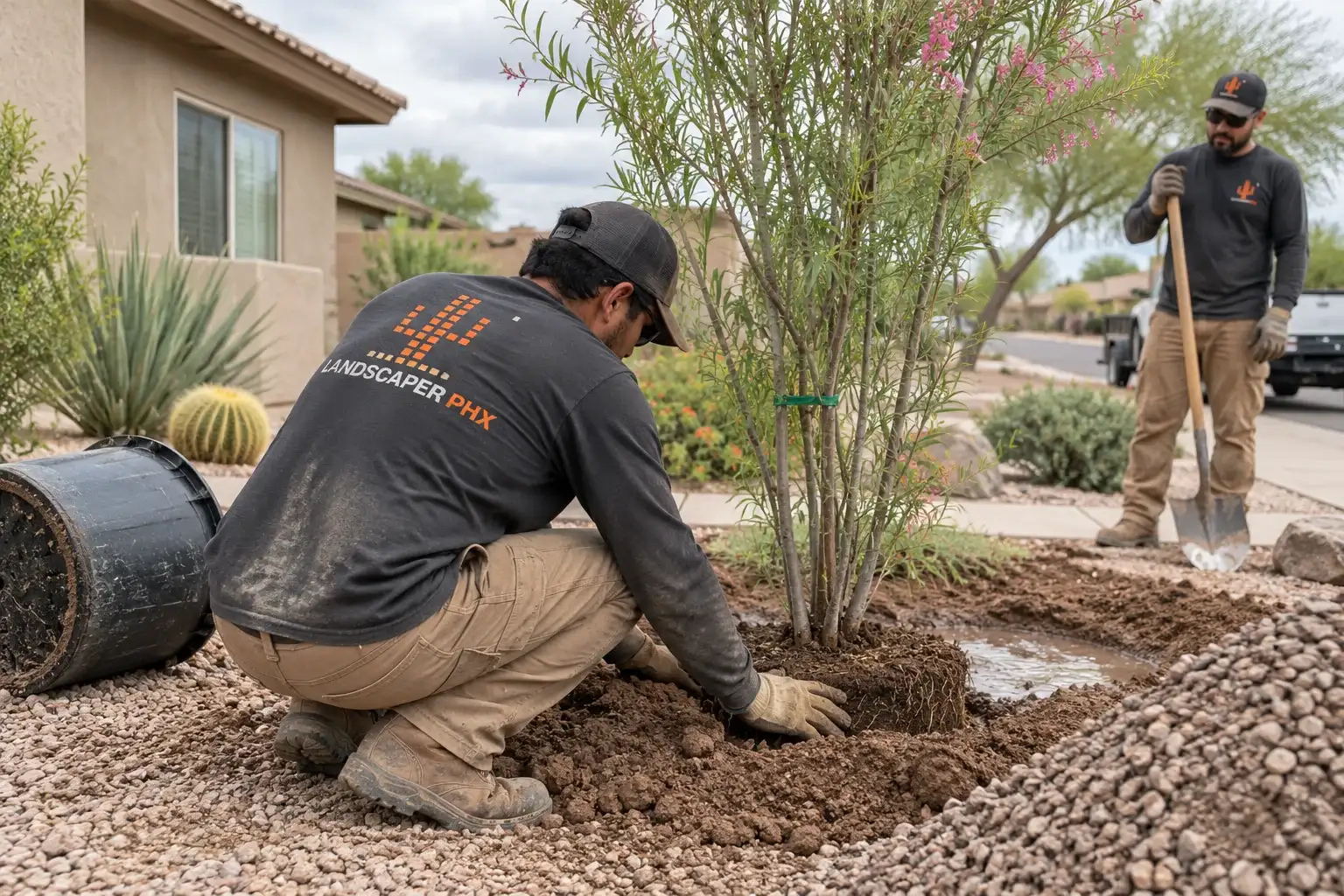
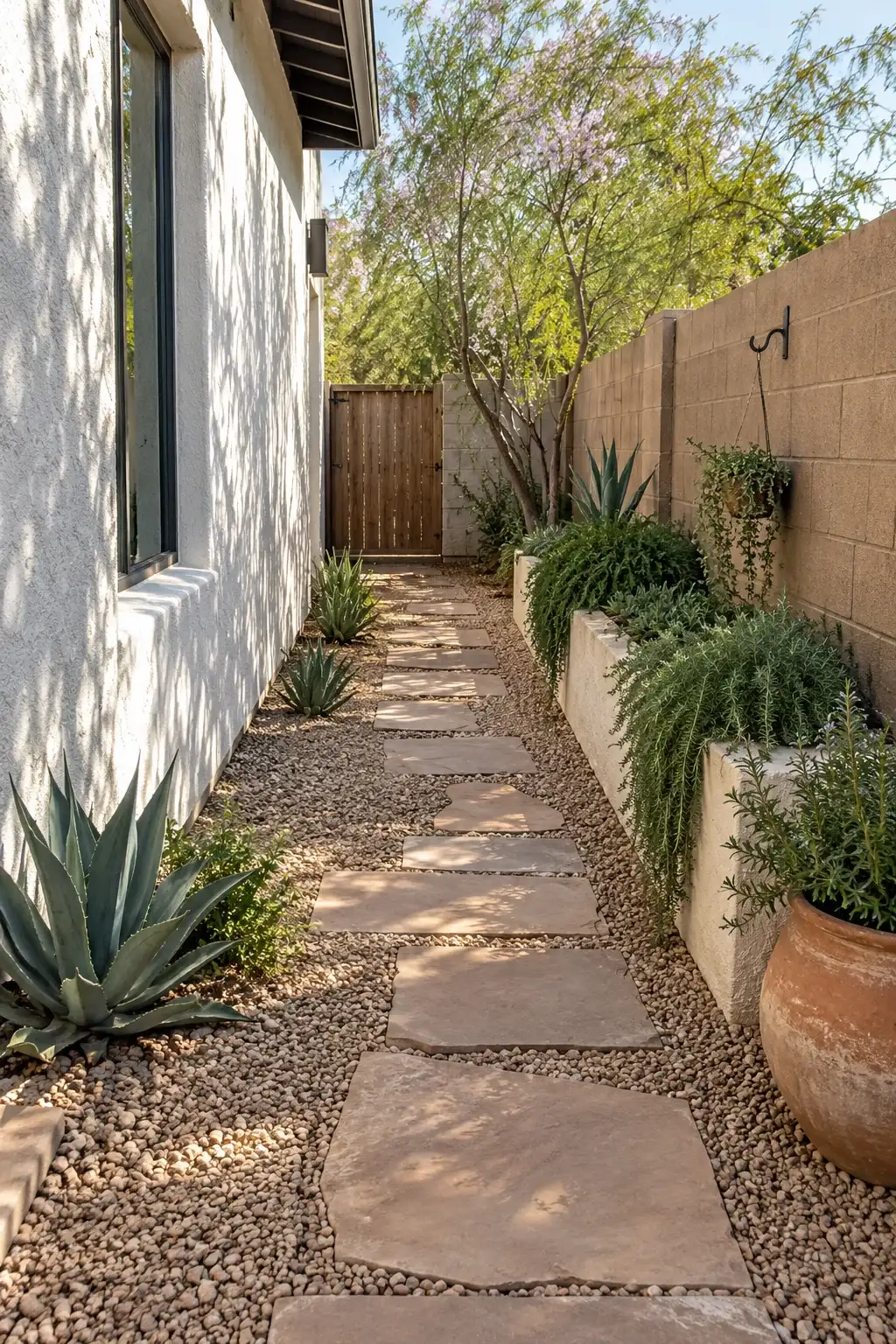
What goes back in decides whether the saving shows up. Desert plants can lower outdoor water use by 85 percent compared with grass, according to the city's program page, but only if the palette and the irrigation match. Trees for shade, shrubs for mass, succulents for structure, and a groundcover that spreads rather than one that needs replacing every year. Drip on separate zones for trees, shrubs and groundcover. Decomposed granite or gravel over the soil, not plastic. The city prohibits bare soil, water features and pools in the area where grass was removed. Keep a small lawn only if you will use it, and expect it to be the thirstiest part of the yard. The city's watering guidance (opens in a new tab) is worth reading before you set a controller, because it explains how much of the water at home goes outdoors.
Costs
Which mistakes void the payment?
The common failures are procedural, not horticultural. Starting the removal before the Notice to Proceed arrives is the big one: work completed before the notice is not eligible for the payment. Letting the lawn die or thin out before the city reviews the photos is the second, since the rule requires at least 75 percent density of live, healthy grass, with dormant grass counting. A third is applying without owning the home or without a water bill or city services bill from the City of Phoenix, which fails the eligibility test. A fourth is leaving bare soil in the area where grass was removed, or installing a water feature or pool there, which the city prohibits. Keep the approved plan and the finished yard aligned, photograph both, and send the completion photos and a copy of the notice to the city as soon as the work is done. Call (747) 243-2089 before a start date is set if any step is unclear.
3 questions
Questions people ask
Still have a question? Call (747) 243-2089 and describe the yard.
Can I do the work myself?
The program page does not say who must perform the work, so check with Phoenix Water Services before you buy material, then keep every receipt and dated photo. The city says applicants are subject to inspection at any time.
How long does the payment take?
Review can run up to 3 weeks before a Notice to Proceed is issued, and the payment is mailed as a check after final approval, so allow 1 to 2 billing cycles. Once the notice is issued, the city allows 6 months to finish the work. Plan the work around that calendar rather than booking a crew first and hoping the timing lines up.
Does artificial turf qualify?
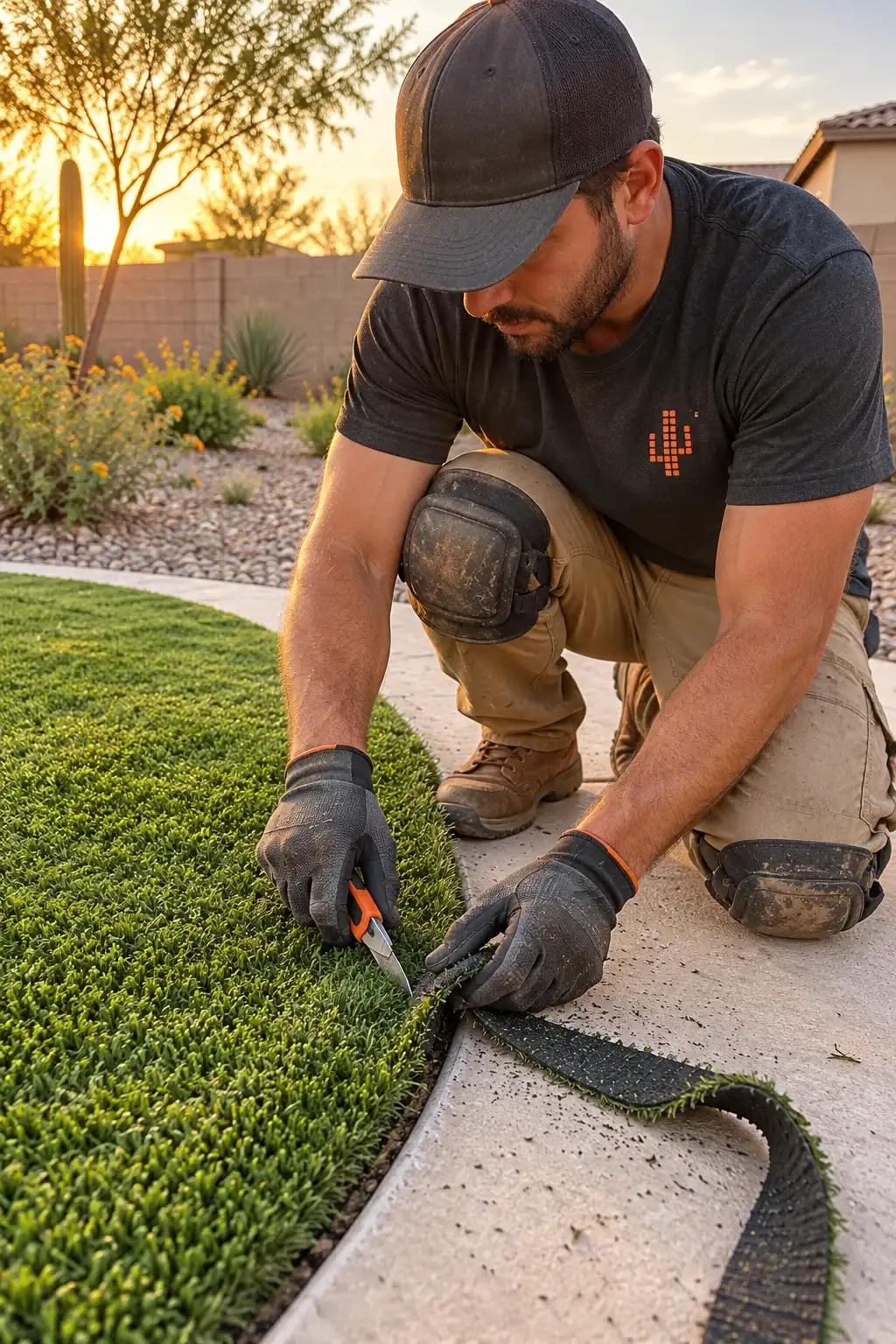
It can, as far as the city page shows. The program page does not exclude artificial turf: it mentions replacing grass with some artificial turf as one option, and the application asks what will replace the removed grass. Confirm with Phoenix Water Services before planning turf for the area.
Keep reading