Guide 05 · 4 min read
Desert Landscaping in Phoenix, AZ
Desert landscaping replaces lawn with plants that already live here, plus stone and drip that keep them alive through July. Done well it looks fuller than grass, not emptier.
Planting
What is desert landscaping in Phoenix?
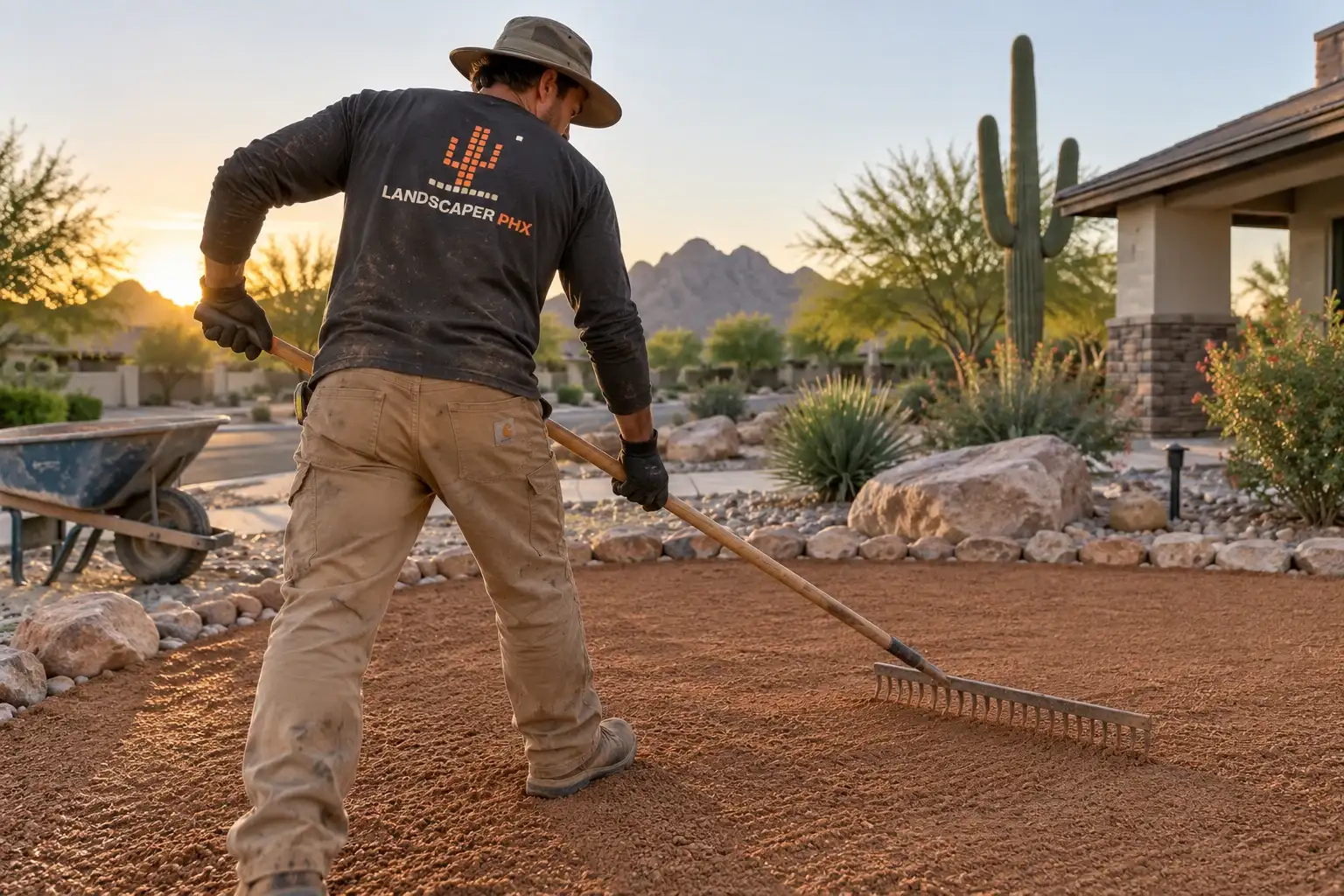
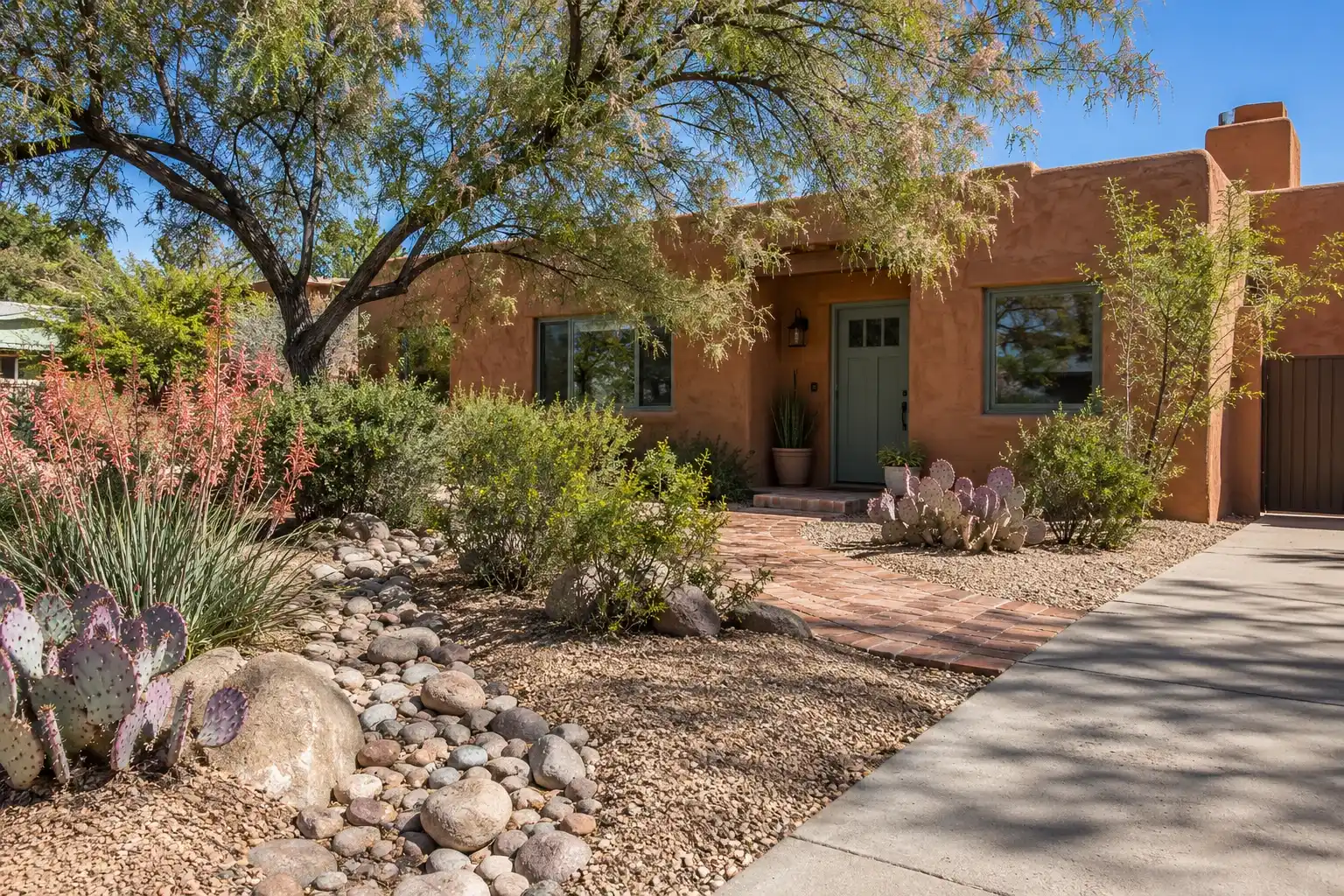
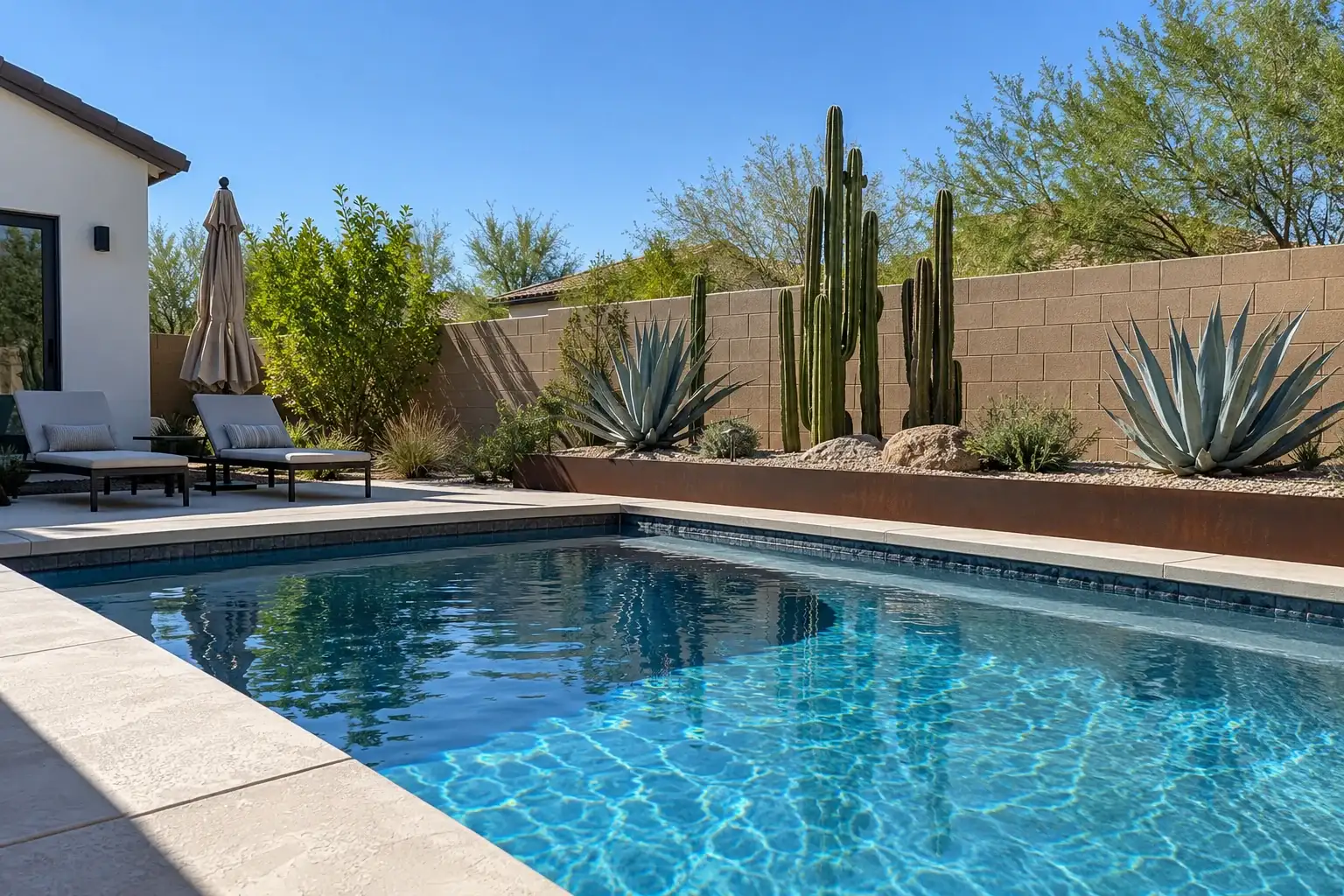
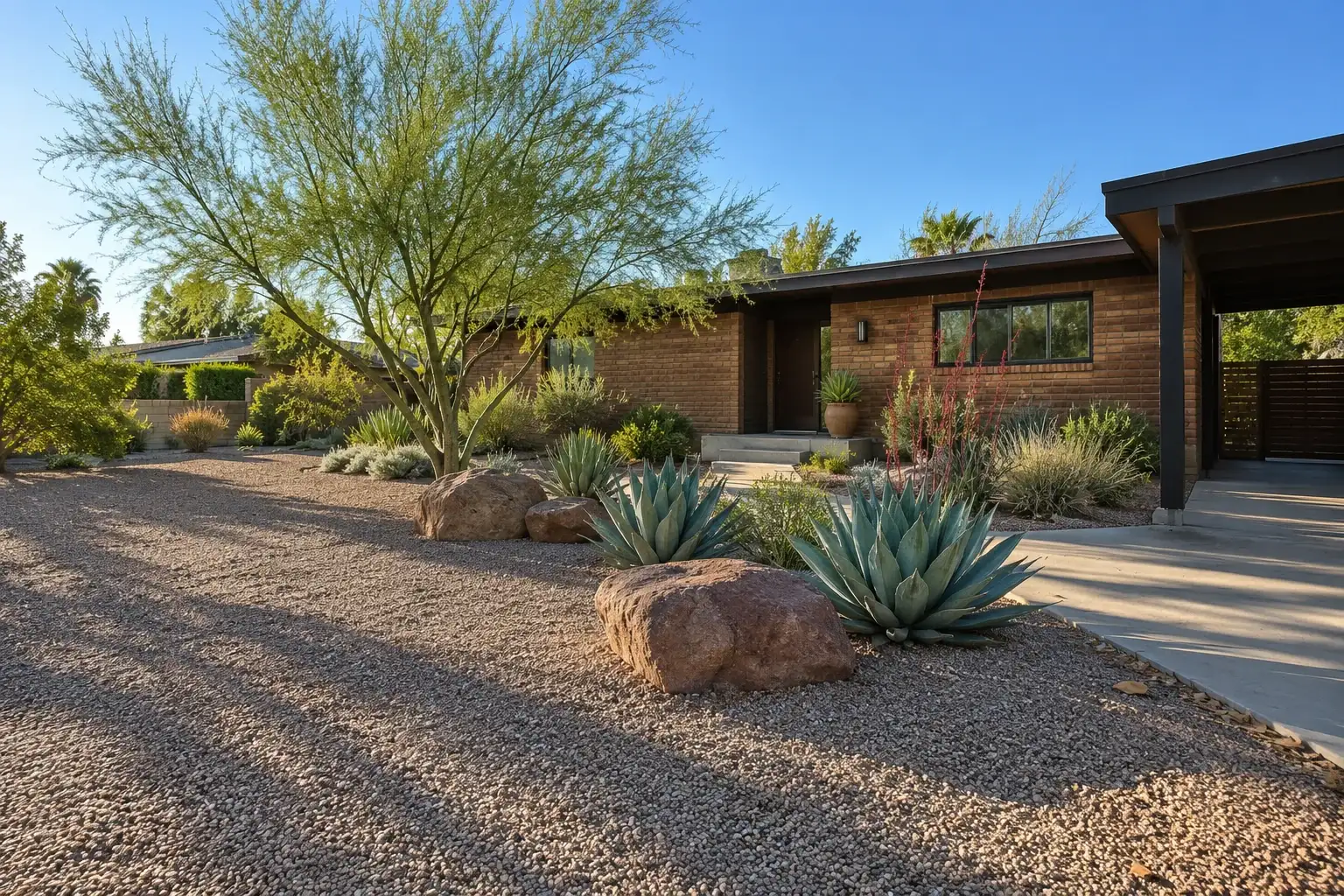
Desert landscaping means a yard built around plants that already live here, with gravel, mulch and stone doing the work that lawn used to do. The goal is not a bare yard. It is a yard that looks full in August without water it does not need. In practice that means a palette of desert trees, shrubs, succulents and accent grasses, a drip system zoned to those plants, and a surface of decomposed granite, gravel or mulch. It also means thinking about shade, because afternoon sun in July is the hardest condition a plant faces here. A well planned desert yard costs less to run than grass and takes less weekend work. It does not cost less to install, since the plants, the drip lines and the stone all carry a price.
Climate
Which plants handle Phoenix heat?
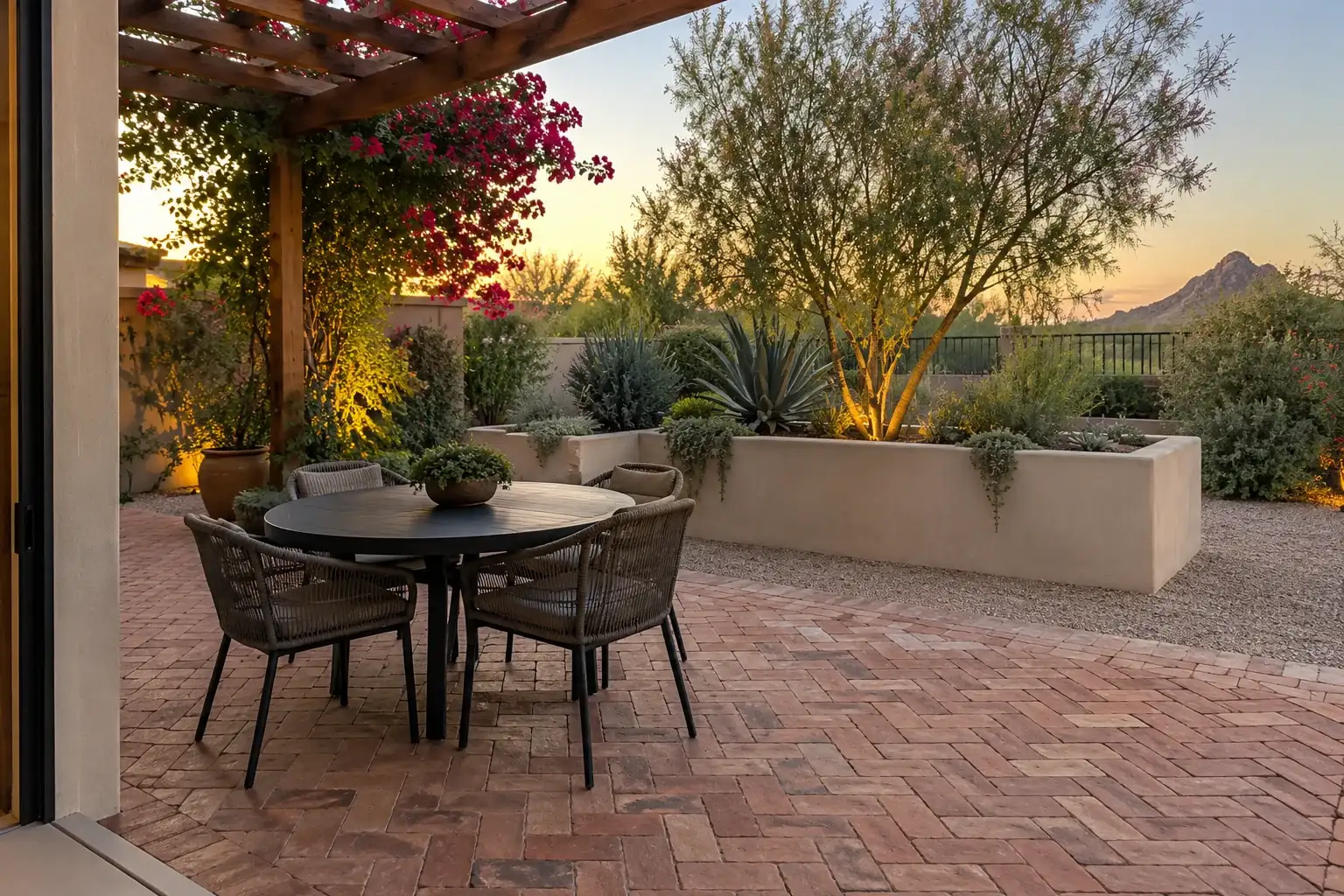
Most of the Phoenix area sits in USDA zone 9b or 10a, with an average annual extreme minimum of 25 to 35 F on the 2023 USDA map (opens in a new tab), which tells you what survives a cold snap rather than what survives July. Heat is the harder test. Palo verde, mesquite, desert willow and palo brea take full sun and reflected heat from a wall. For shrubs, look at Texas sage, fairy duster, creosote, jojoba and desert milkweed. Agave, ocotillo and yucca carry the structure, and damianita or desert marigold fill in between. Fall planting suits most of these plants, because roots get months of mild soil before summer arrives. Give every plant room to its mature width, because a shrub set tight against a wall can need hard cutting back within 2 years.
Costs
How much water does a desert yard save?
Water is the reason most people make the change. Phoenix's own watering guidance (opens in a new tab) notes that up to 70 percent of the water used at home goes outdoors, and that watering to plant need saves money and keeps plants healthier. A desert palette cuts that outdoor draw sharply; the city's grass removal page (opens in a new tab) says desert plants can lower outdoor water use by 85 percent compared with grass. The saving comes from three changes, not one. The plants ask for less, the drip system puts water at the root instead of in the air, and the stone surface evaporates almost nothing. A controller set to a schedule you never touch gives back part of that saving. So does a broken head that runs a zone for an hour. Fix the leaks first, then plant, then set the timer to the season.
Water
How does drip irrigation work on a desert yard?
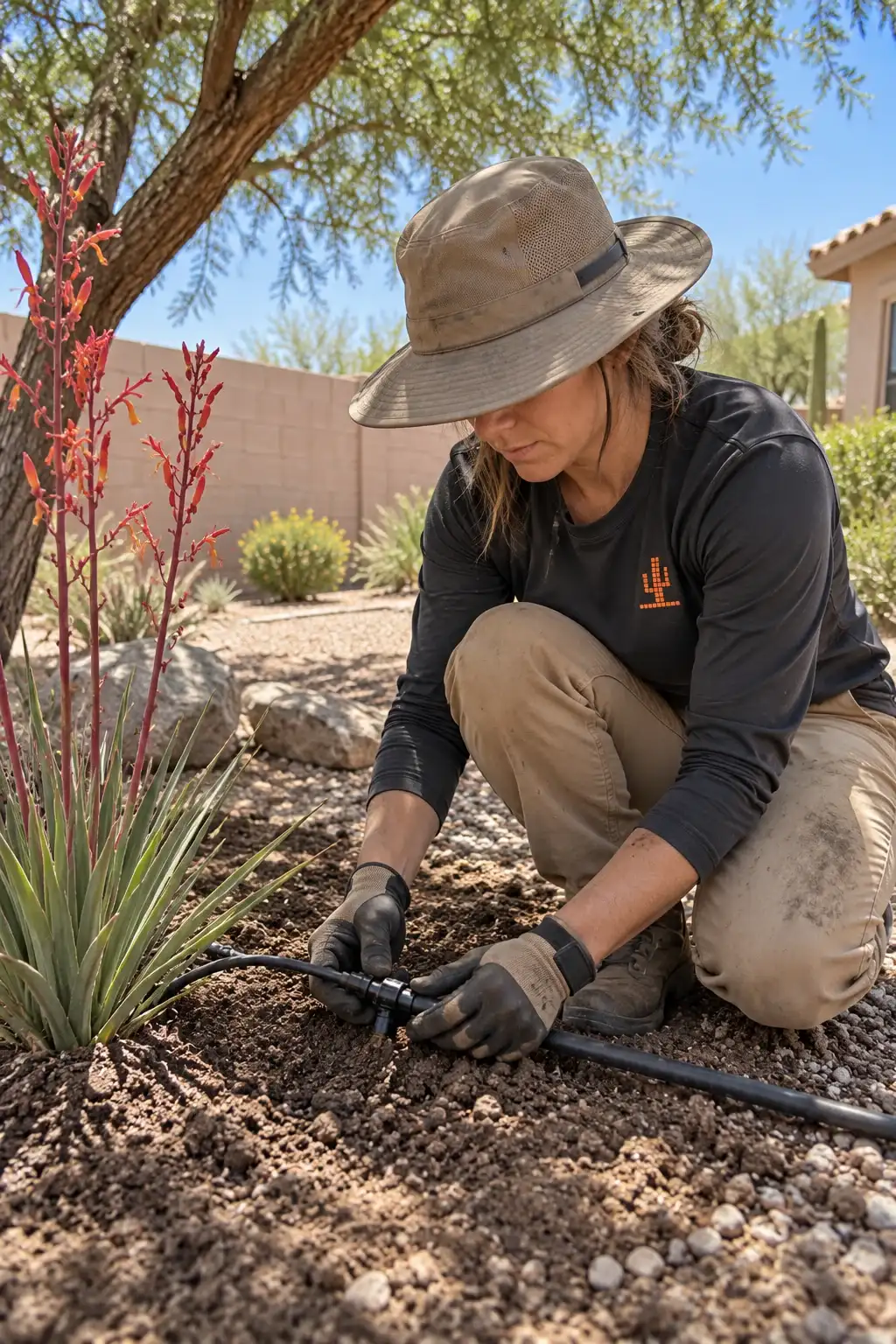
Drip is the right delivery for a desert yard, and the layout matters more than the hardware. Run a main line from the valve, then thinner tubing to each plant group, with emitters sized to the plant rather than to the row. A tree on the same zone as a 4 inch groundcover will drown or starve. Give trees their own zone, shrubs a second, and groundcover a third. Bury the lateral lines a few inches deep where they cross a walkway, and leave them on the surface under mulch elsewhere so a leak is visible. Flush the lines before you close them, or grit from the trench plugs the emitters. Deep, infrequent watering builds roots better than a short daily pass, and the right schedule depends on the plant type and the season, which the city's watering guide covers.
Good to know
What should I skip in a desert yard?
Skip the plants that need shade and constant water: ficus, hibiscus, most ferns, and anything sold as tropical. They survive a mild year and die in a hard one. Skip lawn shapes that leave odd strips of grass along a wall, because the strip costs as much to water as the middle and looks worse. Skip a yard that is all rock and no plants, since bare stone heats the wall behind it and throws heat back at the house. Skip gravel over plastic sheeting, which keeps soil from breathing and makes every weed pull a fight. And skip the urge to fill every square foot on day one. Space plants for their mature size, then fill the gaps with annuals or fast groundcover while you wait.
Costs
What does a desert conversion cost?
A desert conversion is priced like any other landscape: $4.50 to $12 per square foot, with a front yard usually between $1,500 and $5,000. Removal is the part people forget. Grass has to come out, roots and all, and the debris has to leave the property. Phoenix runs a grass removal program for Phoenix Water Services customers that pays $2 per square foot for a qualifying conversion of at least 250 square feet, which changes the math on a large lawn. The program requires pre-approval and a Notice to Proceed before work starts, so read the rules before anyone lifts a shovel. On a 1,000 square foot lawn, that payment is $2,000. The program does not pay for work done before the Notice to Proceed. If the rules are unclear, call (747) 243-2089 before anyone books a removal.
3 questions
Questions people ask
Still have a question? Call (747) 243-2089 and describe the yard.
Do I have to remove all the grass?
Not always. A small patch can stay if you will use it and can water it properly. A small lawn on its own valve, watered to plant need, uses far less water than a full one.
How long does a desert yard take to fill in?
Trees take a few years, shrubs look settled after a couple of seasons, and groundcover fills a bed in one. Planting in fall gives everything a head start before the first summer.
Will a desert yard look bare?
Only in the first year. Density comes from spacing and groundcover, and a yard planted for mature size looks thin at first and full by the third summer. Resist the urge to double up.