Guide 01 · 5 min read
Artificial turf vs real grass in Phoenix, AZ
For most Phoenix yards, real grass wins where people and pets walk, and artificial turf wins where the space is small, hot, and mostly looked at. Everything after that comes down to the base, the water bill, and the HOA's plant list.
Good to know
The short answer
Real grass keeps a yard walkable in summer but costs water and weekly mowing. Artificial turf kills the water bill and the mower but turns into a hot plate on July afternoons, and a badly built base turns it into a weed patch. Neither one is maintenance free, whatever the brochure says. The right pick depends on the soil, the shade, the water situation, and what the yard is for, not on which option photographs better.
Turf
Artificial turf: what it actually is
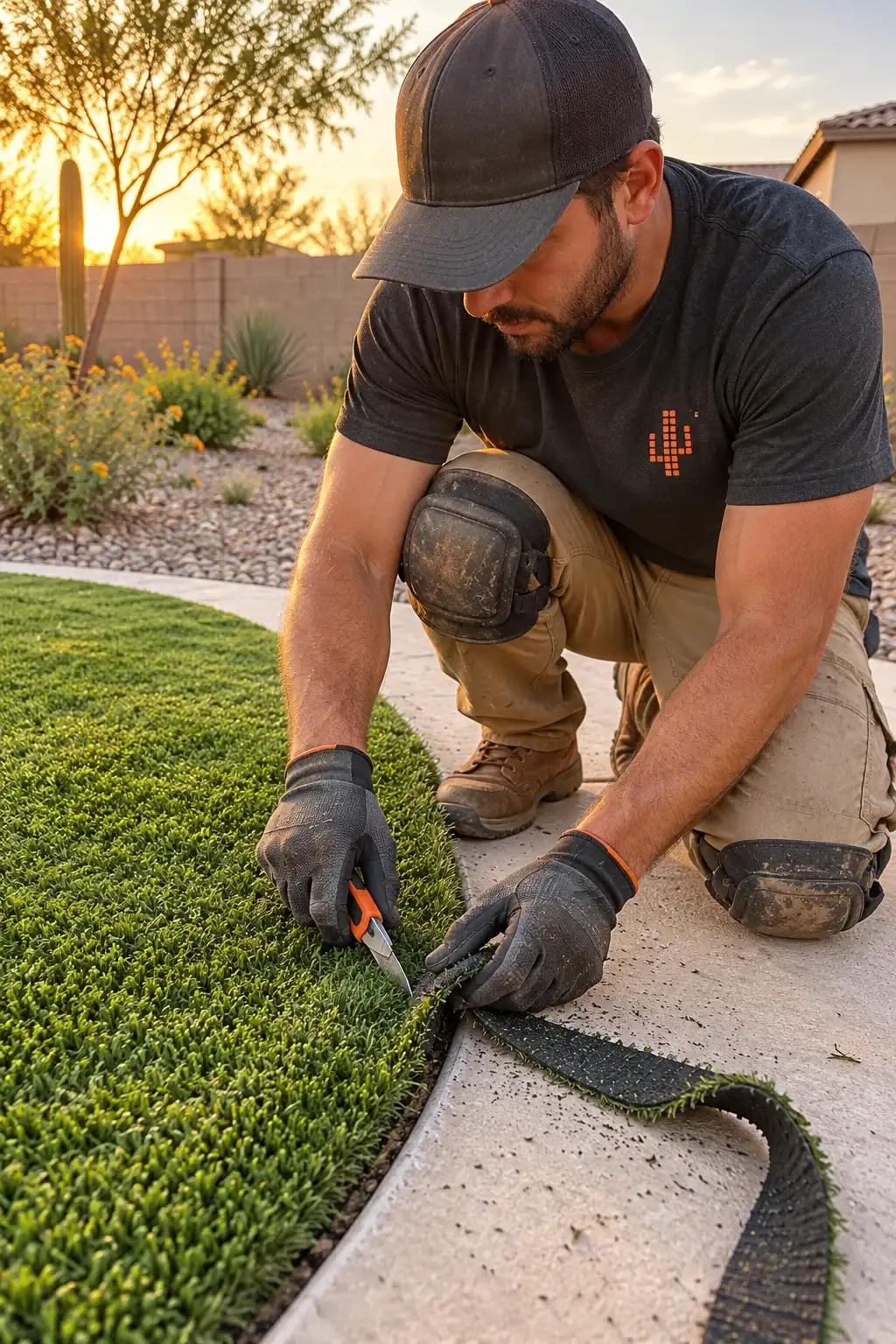
A manufactured carpet. Plastic blades, usually polyethylene, stitched into a polyurethane or latex backing, with a layer of sand or crumb infill raked across the top to weigh the product down and hold the blades upright. The part nobody sees does the real work. A proper install excavates several inches of existing ground, lays crushed rock or road base, compacts it in lifts, and only then rolls the turf over the top. Skip that base and two things happen. Weeds find the seams, and water has nowhere to drain. Turf needs no water, no mower, no fertilizer. What it does instead is absorb sun all day and give it back as heat, long after the air cools.
Turf
Real grass: what it actually is
A living layer that cools itself. In Phoenix the realistic option is warm season grass, almost always hybrid Bermuda. Bermuda greens up hard in April, spreads by runners, and survives the heat by transpiring: pulling water out of the soil and releasing it through the blades. That evaporation is why a living lawn stays near air temperature while a manufactured surface does not. The price of it is the work. Summer mowing is weekly. Fertilizer runs a few times a year. Water runs on a schedule, and hard water leaves scale on the irrigation heads that deliver it. The winter is its own season too. Mild Phoenix winters send Bermuda dormant, and a tan lawn through January is the price of a green one through June. Some owners overseed with a cool season grass for winter color, which means more water, more mowing, and a third season of work. Grass also never stops moving. Runners creep into the beds, edges need re-cutting, and a bare patch fills with weeds by the next irrigation cycle.
Turf
Where artificial turf fails here
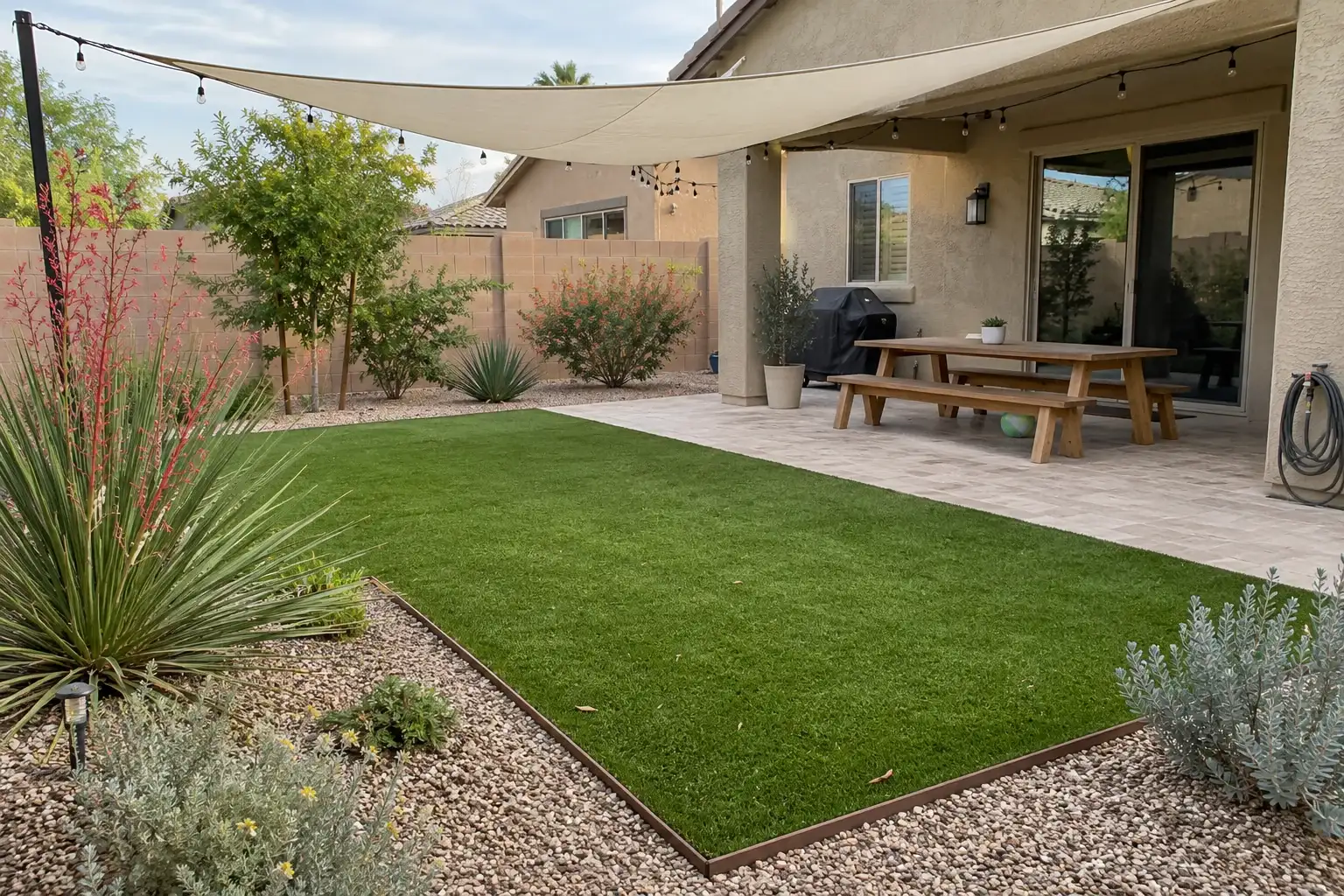
Phoenix sees the hottest surface temperatures in the Valley, so turf failures here are mostly heat and water stories. Turf laid over compacted caliche with no drainage becomes a hot plate. The blades heat up, the backing traps the heat, and by late afternoon the surface runs far above air temperature. Dogs and barefoot kids notice immediately. Weeds come through the seams when the base was not excavated, and caliche is exactly the excuse people use to skip the excavation. If the heat problem matters to your yard, the full mechanism is covered here. Then the monsoon arrives. A short, hard burst of rain hits a surface that absorbs nothing, water sheets across the backing, and whatever drains toward the house pools at the foundation. Older central Phoenix neighborhoods add a twist. Lots there still carry flood irrigation, and that water keeps arriving on a schedule whether the yard has turf or not. If the drainage was never planned, an irrigated lot turns a turf install into a standing puddle.
Turf
Where real grass fails here
Water is the whole story. Real grass in Phoenix lives or dies on its irrigation, and the usual death is slow. Hard water scales the heads until coverage gets patchy, one side of the yard starves, and the homeowner overcorrects by running the timer longer. Caliche under the topsoil stops water from infiltrating, so roots stay shallow, and a shallow-rooted lawn cooks in the first hard heat wave. Zone 9b gives two growing seasons, which sounds generous until you realize it means two stretches of mowing and fertilizer with a brutal summer in between. Flood irrigated lots in central Phoenix are the exception that proves the rule: there the water arrives every few weeks all at once, and a lawn has to be graded so it spreads instead of pooling. Most Phoenix lawns were never graded for anything. The timer hides the last failure. A schedule set once in March runs the same minutes through September, when the heat has doubled the lawn's thirst, so the same setting overwaters in the cool season and underwatered in the hot one. Sod versus seed is the next question once you commit to real grass, and the answer changes with the season.
Costs
What it costs and what drives the number
Turf costs more per square foot to install than grass does. Grass costs more every month after. That is the honest split, and the details move the number. The turf price moves with the excavation: caliche that needs jackhammering, a base built deep enough to drain, and access. Central Phoenix alleys are tight, which often means material moved by hand instead of dumped from a truck, and that shows up in the quote. The grass price moves with the water bill, the mowing schedule, and how often the irrigation needs service. Both ranges swing with square footage, and neither one is a set-and-forget purchase in this climate. Start with the Phoenix landscaping guide for the whole yard picture, or the home page for the map of everything this site covers. The full cost picture is here, with the drivers broken out.
Good to know
What good work looks like in Phoenix
- Checking the irrigation first. A conversion or a new lawn lives or dies on what waters it, so the water plan comes before the surface choice.
- Specifying the base depth before anything is ordered. Excavation over caliche is the single biggest line item, and it is also the one that decides whether weeds come through the seams.
- Planning monsoon drainage before planting or rolling anything. Where the storm water goes matters more than what the yard looks like in March.
- Reading the HOA plant list before the first truck shows up. A turf limit or a grass requirement changes the whole conversation, and it costs nothing to know it early.
6 questions
Artificial turf vs real grass: your questions
Still have a question? Call (747) 243-2089 and describe the yard.
Is artificial turf really too hot to walk on in Phoenix?
In summer, yes. The blades and infill absorb heat all day and the surface runs well above air temperature, which is why dogs and kids avoid it in the afternoon.
Does real grass use too much water in Phoenix?
It uses the most water of any option, and the bill is real. Well designed irrigation and a warm season grass keep it reasonable, but it will never be zero.
Can artificial turf go over caliche?
It can, but only with real excavation and a built base underneath. Turf laid directly on compacted caliche does not drain, and it holds heat all summer.
Which one survives a Phoenix summer with less work?
Turf survives with less work, assuming you can accept the heat. Grass needs weekly mowing and scheduled water but stays walkable.
What happens to artificial turf in the monsoon?
Water sheets across the backing instead of soaking in. Without a drainage plan the runoff pools against the house or the wall, and weeds push through any seam over a thin base.
Does the HOA care which one I pick?
Often, yes. Many Phoenix HOAs control front yard turf and plant lists, and approval comes before the work, not after. Check before you spend.