Guide 07 · 5 min read
Sod vs seed in Phoenix, AZ
In Phoenix, sod gives you a lawn in a day and seed gives you a gamble with the heat. For warm season grass on a summer schedule, sod is usually the safer money, and the season decides the rest.
Good to know
The short answer
Seed is cheap and needs weeks of steady moisture, which is exactly what a Phoenix summer does not provide. Sod arrives as mature grass, costs more, and needs water within hours, but it is already alive. If you want it green this month, sod. If you have a full season and no deadline, seed can work in the right window. The right pick depends on the soil prep, the irrigation, and the time of year.
Good to know
Sod: what it actually is
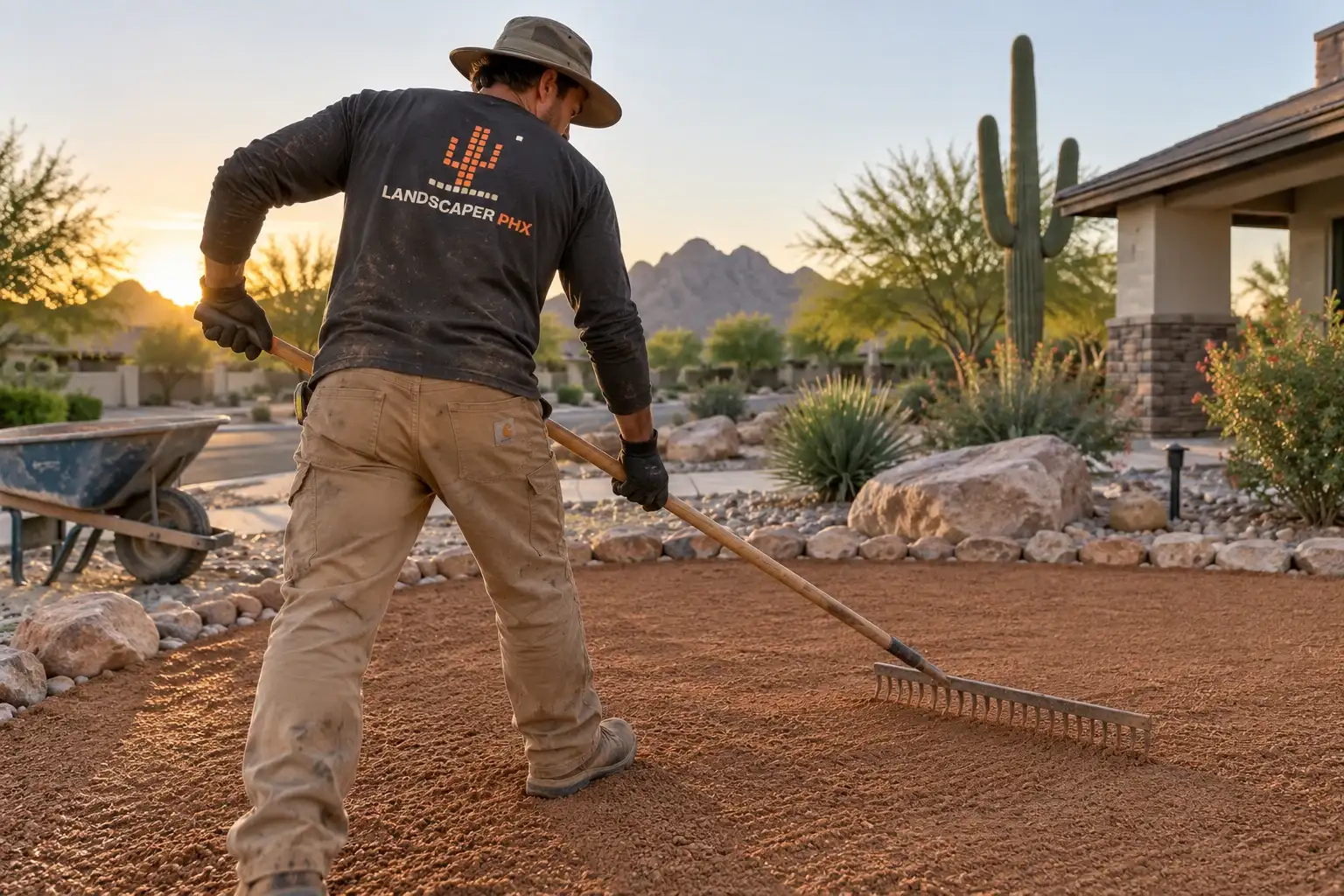
A lawn cut into rolls. Sod is warm season grass, in Phoenix almost always hybrid Bermuda, harvested with its roots and a thin slice of soil, shipped flat on pallets, and laid over ground that has been broken up, leveled, and amended. Watered within hours of going down, the roots knit into the soil below over a few weeks, and the lawn is walkable long before a seeded lawn would be. Sod is not a substitute for soil prep. The roots have to leave the roll and enter the ground, and if the ground is unamended caliche, they stop at the boundary. That is the whole risk in one sentence. Sod also decides the variety for you. You get the Bermuda that was growing on the farm, uniform and mature, where a seed bag gives you a mix you control less than you think.
Good to know
Seed: what it actually is
The slow path. Bermuda seed, broadcast over prepared soil, needs steady, shallow moisture for weeks to germinate, then careful watering through the seedling stage, then a full season before it handles real traffic. The window matters. Zone 9b has two growing seasons, which means seed does best in the shoulder months, spring and fall, when the soil is warm and the sun is not yet murderous. Seed in July is dead seed. It also has to survive everything that eats or moves it: birds, wind, and the monsoon, which washes a fresh seeding into the corners of the yard or straight into the alley. Seed also needs the ground right before it goes down, and right ground in Phoenix means the caliche was broken up and the grade was set, because no amount of seed fixes a bed that sheds water.
Mistakes
Where sod fails here
Sod fails in Phoenix when the ground underneath was ignored, and when the water is wrong. Laid over unamended caliche, the roots never leave the roll. The lawn looks green for a month on the water it shipped with, then browns out in the first hard heat because the roots have nowhere to go. The water schedule is the second failure. New sod needs short, frequent watering to knit, then a switch to deep, less frequent watering to force the roots down. Most systems stay in one mode forever. Hard water scaling the heads quietly ruins coverage while the timer runs the same minutes it always has. Flood irrigated lots in older central Phoenix neighborhoods have their own rule: the lawn has to be graded so the flood spreads and soaks, and a flat lot drowns one corner and burns the other. The install timeline matters more than the calendar. Sod that sits on the pallet through a hot afternoon is sod that started dying before it was laid, and a lawn that starts stressed spends its first year catching up instead of rooting. Turf versus sod covers the manufactured alternative if real grass is not a requirement.
Mistakes
Where seed fails here
Seed fails in Phoenix for every reason a young plant fails in a desert. Summer seeding is the big one: seedlings that catch a hard heat wave in their first weeks die before they root. The monsoon is the second. A storm washes seed off a bare slope, or buries it, and whatever survives ends up in clumps. Birds work a freshly seeded Phoenix yard all morning, because bare seed on bare dirt is the easiest breakfast in the neighborhood. Then there is the competition. Bermuda is aggressive, but so are the summer weeds, and a seeded lawn that establishes slowly loses the race it was supposed to win. The result of all of it is patchy, which means reseeding, which means another season of watching the yard instead of using it. The second window has its own trap. A fall seeding that comes up weak goes into the winter thin, and a mild Phoenix winter lets the weeds fill the gaps the seed left. By spring the yard is half lawn and half the things that were never planted. If the whole grass question is still open, turf versus real grass lays out the options side by side.
Costs
What it costs and what drives the number
Seed is the cheapest material on the list, and that is its entire advantage. What it costs in water, reseeding, weed control, and time usually closes the gap before the lawn is usable. Sod costs more per square foot up front, but the lawn exists on day one. What drives the sod number: soil prep, which in Phoenix often means breaking up caliche and hauling in amendments, plus grading, plus delivery. Central Phoenix alley access matters here too. Rolls come on pallets, and pallets hand carried the last stretch add labor. The water bill is the quiet comparator. A seeded lawn drinks on the timer for weeks before anything is even green, and the sod lawn starts paying back in a month. The landscaping guide walks the whole lawn decision, and the home page covers the rest of the yard. What drives the seed number: how many times it has to be done. The cost page breaks down both sides of the grass decision.
Good to know
What good work looks like in Phoenix
- Timing the job to the season, not to the calendar. Zone 9b gives two windows for seed and a narrow one for sod, and missing them is the most expensive mistake in lawn work.
- Prepping the soil before the grass, whichever form it arrives in. Caliche gets broken up, amendments go in, and the grade gets set for the monsoon and the flood.
- Matching the watering to the stage. Short and frequent while it knits, deep and less frequent once it roots, with a schedule you can actually keep.
- Checking the HOA before the grass arrives. Turf limits and front yard rules decide the size and shape of the lawn, and approval comes first.
6 questions
Sod vs seed: your questions
Still have a question? Call (747) 243-2089 and describe the yard.
Can you plant grass seed in summer in Phoenix?
Not well. Seedlings need weeks of steady moisture and mild sun, and a Phoenix summer provides neither. Spring and fall are the realistic windows in zone 9b.
How long before sod is usable?
A few weeks. The roots knit quickly in warm soil, and most Phoenix sod lawns are walkable long before a seeded lawn would even be covered.
Is seed really cheaper than sod?
The seed itself is cheaper. The water, the reseeding, and the weed control usually close the gap, and sod is the cheaper lawn in the end for most Phoenix lots.
Does sod survive Phoenix heat?
It does, once the roots are down. Sod that never roots because the caliche was left in place dies in the first hard heat wave.
What happens if the monsoon hits a seeded lawn?
The storm washes the seed or buries it, and what remains comes up in clumps. New seed needs protection or it needs to wait until after the storms.
Does the HOA require a lawn?
Some do, and some limit it. Phoenix HOAs often control front yard turf, and the plant list decides what you can seed or sod at all.