Guide 02 · 5 min read
Artificial turf vs sod in Phoenix, AZ
Sod is real grass in roll form, and artificial turf is a manufactured carpet that never drinks a drop. In Phoenix the choice usually comes down to whether the yard gets walked on in summer, because turf runs far hotter than living grass.
Good to know
The short answer
Sod gives you a living lawn in a day, and it costs less up front. Turf costs more to install and then asks almost nothing of you, except that you accept a surface too hot to walk on by midafternoon in July. A yard that kids and dogs use should lean sod. A front yard that exists to look neat from the curb can lean turf. The right pick depends on the soil, the water, and what the HOA allows.
Turf
Artificial turf: what it actually is
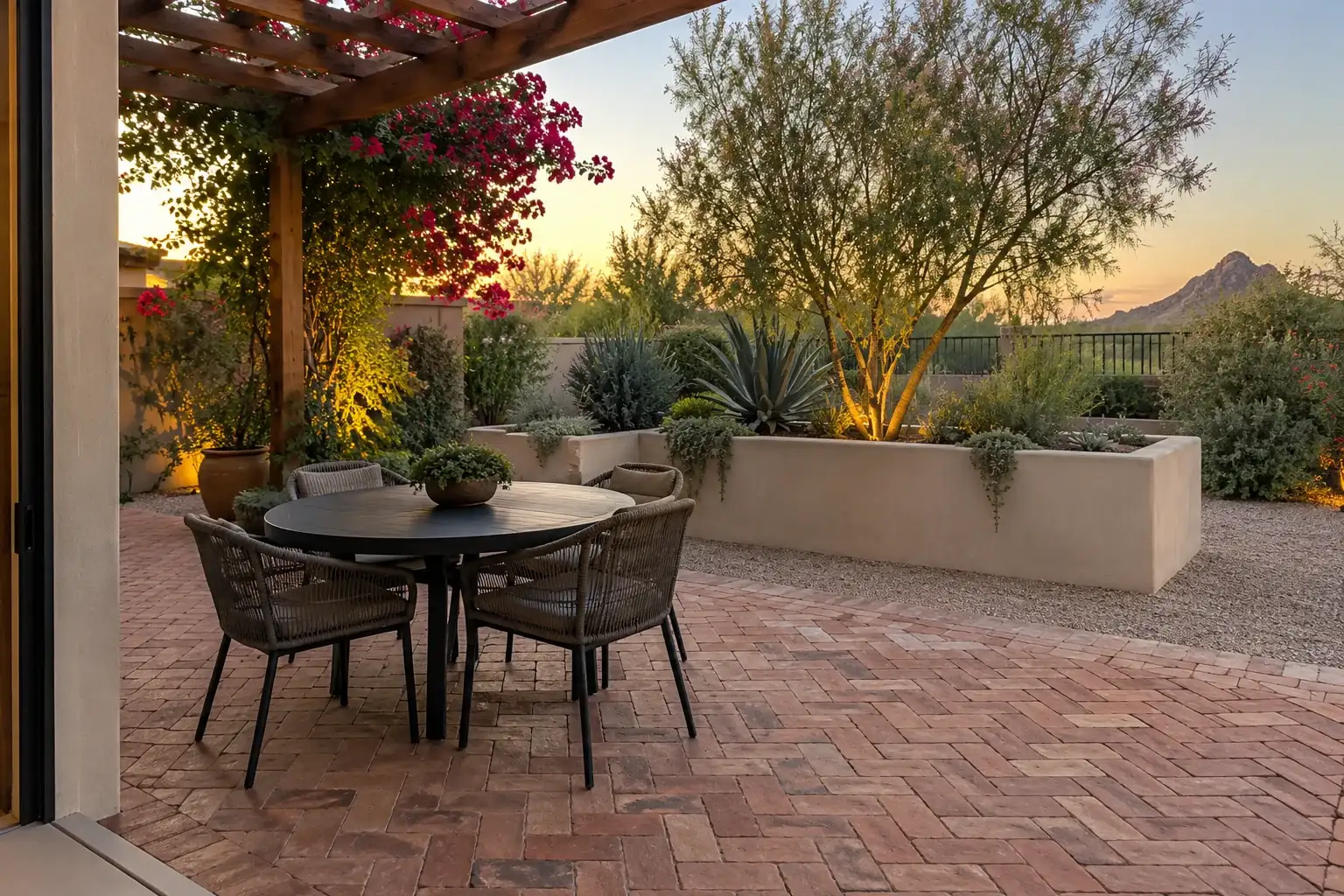
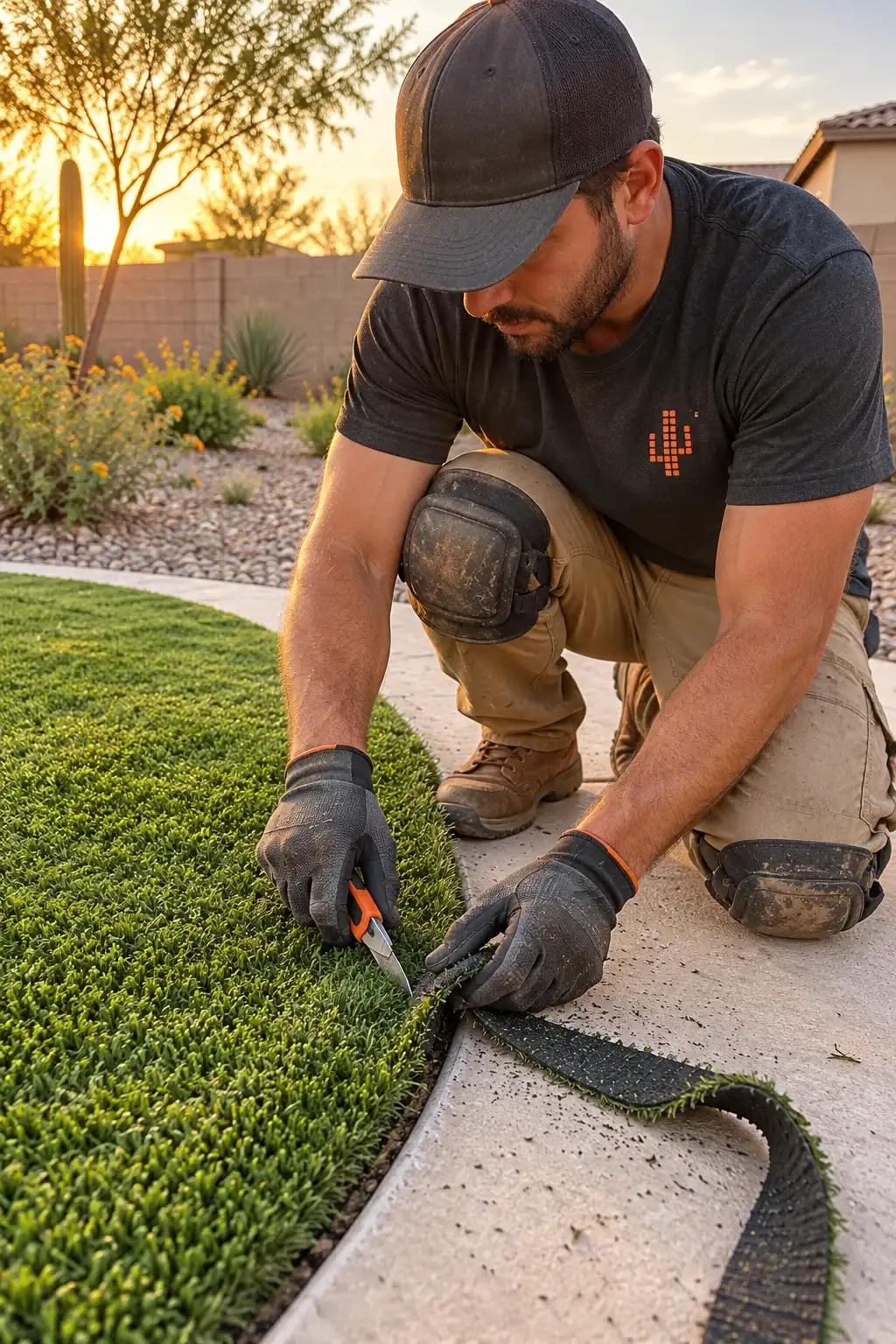
A plastic lawn. Polyethylene blades stitched into a polyurethane or latex backing, held down by a layer of sand or crumb infill and laid over a base of compacted crushed rock. The base is the part that decides whether the install lasts. Excavate deep, compact in lifts, and the turf drains and stays flat. Skip the base, and weeds push through the seams within a season while monsoon water sheets across the surface instead of soaking in. Turf wants no water, no mower, and no fertilizer, and it will look close to the same in five years. It will also absorb sun all day and hand that heat back every afternoon, which is the trade nobody reads about in the brochure.
Good to know
Sod: what it actually is
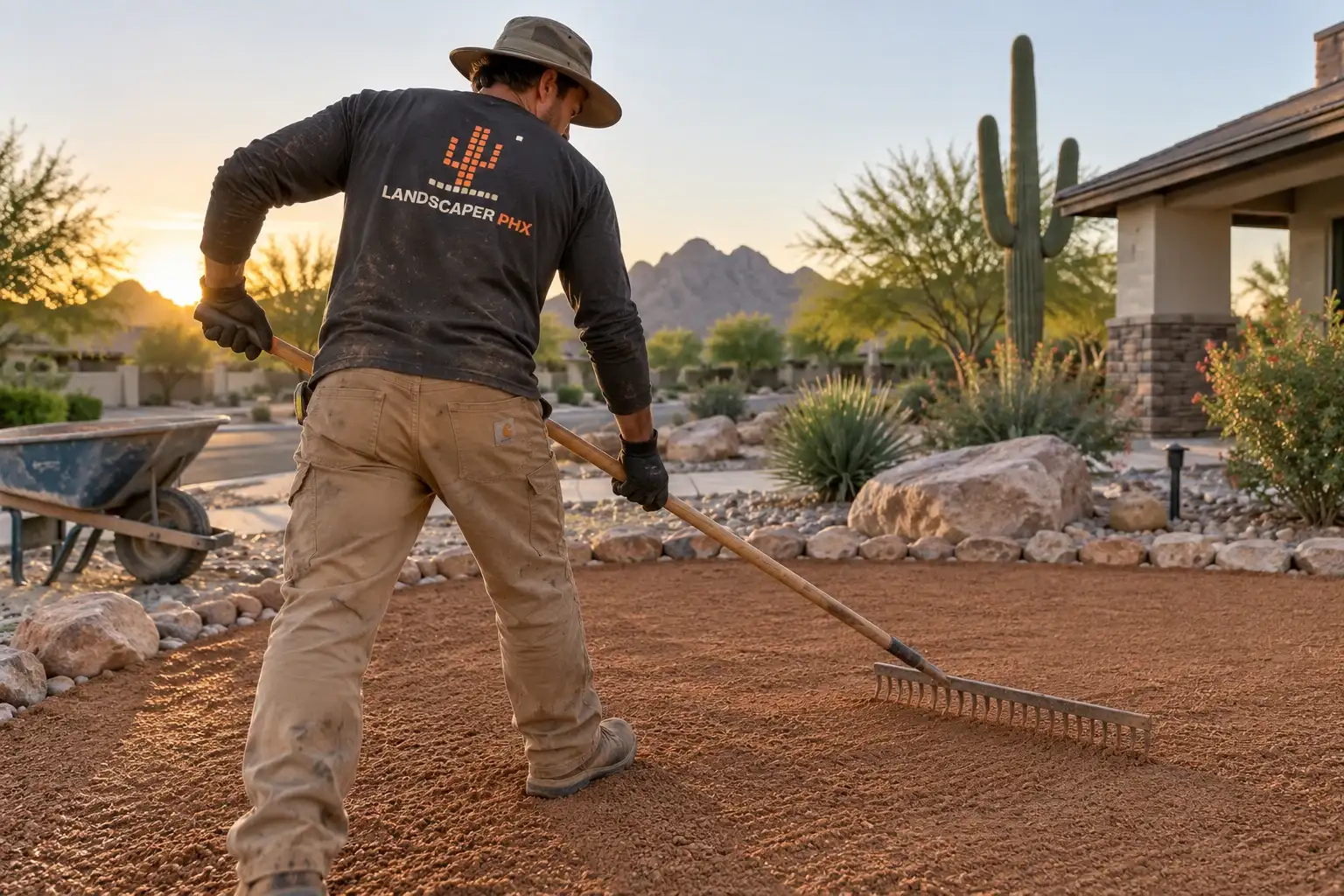
A living lawn cut into rolls. Sod is warm season grass, in Phoenix almost always hybrid Bermuda, harvested with its roots and a thin slice of soil and shipped flat on pallets. It arrives already grown. Laid on prepared soil and watered within hours, the roots knit down into the ground below, and the lawn is established in a few weeks. The catch is what happens before the rolls go down. If the soil underneath is not broken up and amended, the roots knit to the slice of soil they arrived in and stop there, and a shallow-rooted lawn is a dead lawn by August. Sod is not a shortcut past soil prep. It is a shortcut past the seedling stage, and that is all. A pallet of sod is also a deadline. It arrives alive and starts dying the moment it is stacked, so the ground has to be ready before the truck shows up, not after.
Turf
Where artificial turf fails here
Phoenix has the hottest surface temperatures in the Valley, and turf is a heat collector. By late afternoon the blades and the infill run well above air temperature, and the backing holds the heat into the evening. The full heat breakdown is here, including what to check before you blame the product. Over compacted caliche the problem doubles: there is no drainage under the backing, monsoon water pools, and weeds come up through the seams because the base was never excavated. Then the monsoon arrives properly. A short, hard burst of rain hits a surface that absorbs nothing, and the runoff heads for the lowest point. If that lowest point is the house, the foundation takes it. Older central Phoenix neighborhoods add flood irrigation to the equation. Irrigated lots get a scheduled flood whether the surface is grass or plastic, and a turf yard with no drainage plan turns that flood into a pond. The heat does not stop at the surface either. Turf along a west wall sits in reflected heat on top of the direct sun, and it stays too hot to touch well after dark. Alley access matters too. Turf rolls are long and awkward, and tight central Phoenix alleys mean hand carrying where a truck cannot reach.
Mistakes
Where sod fails here
Sod fails in Phoenix when the ground underneath was ignored. Laid over unamended caliche, the roots never leave the roll. The lawn looks green for a month on the water it shipped with, then it browns out in the first hard heat because the roots have nowhere to go. The other classic failure is water. New sod needs frequent shallow watering to knit, then a shift to deep, less frequent watering to root. Most systems do one or the other forever, and hard water scaling the heads quietly ruins the coverage. Flood irrigated lots in central Phoenix have their own rule: the lawn has to be graded so the flood spreads and soaks instead of pooling, and a sod lawn on a flat lot drowns in one spot and burns in another. Timing is the last failure. Sod laid in the middle of a Phoenix summer fights the heat while it tries to root, and the water that keeps it alive through week one is the water it cannot hold once the roots burn. If you are weighing turf against real grass more broadly, the same grading rule applies to both.
Costs
What it costs and what drives the number
Sod is the cheaper install, square foot for square foot. Turf costs more up front and almost nothing month to month after. The sod number moves with soil prep: caliche that has to be broken up, amendments hauled in, and grading. The turf number moves with excavation depth, base material, and access, and central Phoenix alley jobs run higher because material gets hand carried. Both numbers also move with square footage and with the state of the existing irrigation. One more line hides in every quote: removing the old lawn and prepping the ground is the same work whether sod or turf follows, and that line item survives every comparison. Start with the landscaping guide, and the home page links the rest of this site. The cost page breaks down what drives each line item. The honest comparison is not first cost. It is what the yard costs to keep alive through year three.
Good to know
What good work looks like in Phoenix
- Treating soil prep as the main event. For sod, the ground underneath decides the outcome. For turf, the base does.
- Sizing the irrigation for what will live on the yard, not for what is there today. Leaving lawn sprinklers after a conversion is how plants drown on one side and starve on the other.
- Planning for the flood. On irrigated central Phoenix lots, drainage gets designed before anything is rolled out.
- Checking the HOA before any pallet gets ordered, so the approval does not arrive after the work.
6 questions
Artificial turf vs sod: your questions
Still have a question? Call (747) 243-2089 and describe the yard.
Is artificial turf hotter than sod?
Yes, and by a wide margin in summer. Turf surfaces run well above air temperature by afternoon, while living grass stays near it because it transpires.
Does sod need water immediately in Phoenix?
It does. Rolls laid in the heat have to be watered within hours, then kept on a short, frequent schedule until the roots knit.
Can you lay sod over caliche?
Not successfully. The roots need somewhere to go. Break up and amend the caliche first, or the lawn dies in its first summer.
Which is cheaper, turf or sod?
Sod is cheaper to install. Turf is cheaper to live with after year one, but the surface heat is the cost you pay instead of money.
Can I put artificial turf on a flood irrigated lot?
You can, but only if the drainage is designed for the flood. The irrigation water still arrives on schedule, and it still has to go somewhere.
Does the HOA have a say?
Usually. Turf limits and front yard plant lists are common in Phoenix HOAs, and approval comes before the work, not after.