Guide 04 · 5 min read
Landscaping rock vs mulch in Phoenix, AZ
Rock lasts for years and cooks whatever is planted in it. Mulch keeps soil cooler and breaks down in a season. In Phoenix, the choice depends on what you are trying to keep alive, and most rock covered yards are not keeping anything alive.
Good to know
The short answer
Full rock coverage absorbs heat and re-radiates it, and plants set in it usually die in their second summer. Mulch shades the soil and holds moisture, but the sun and the monsoon break it down fast. The right pick depends on the plants, the sun exposure, and whether the yard is flood irrigated, not on which one needs less raking.
Good to know
Landscaping rock: what it actually is
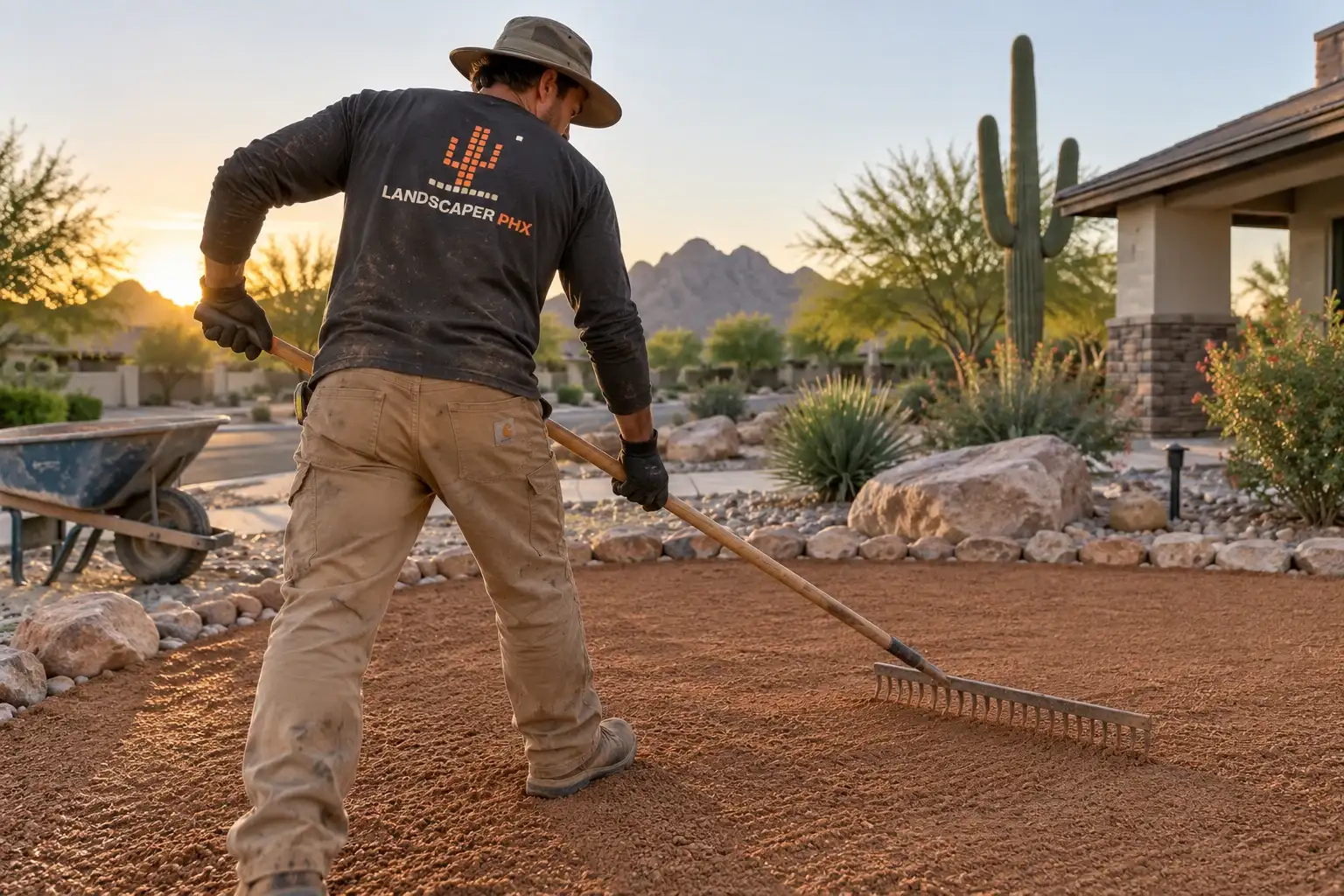
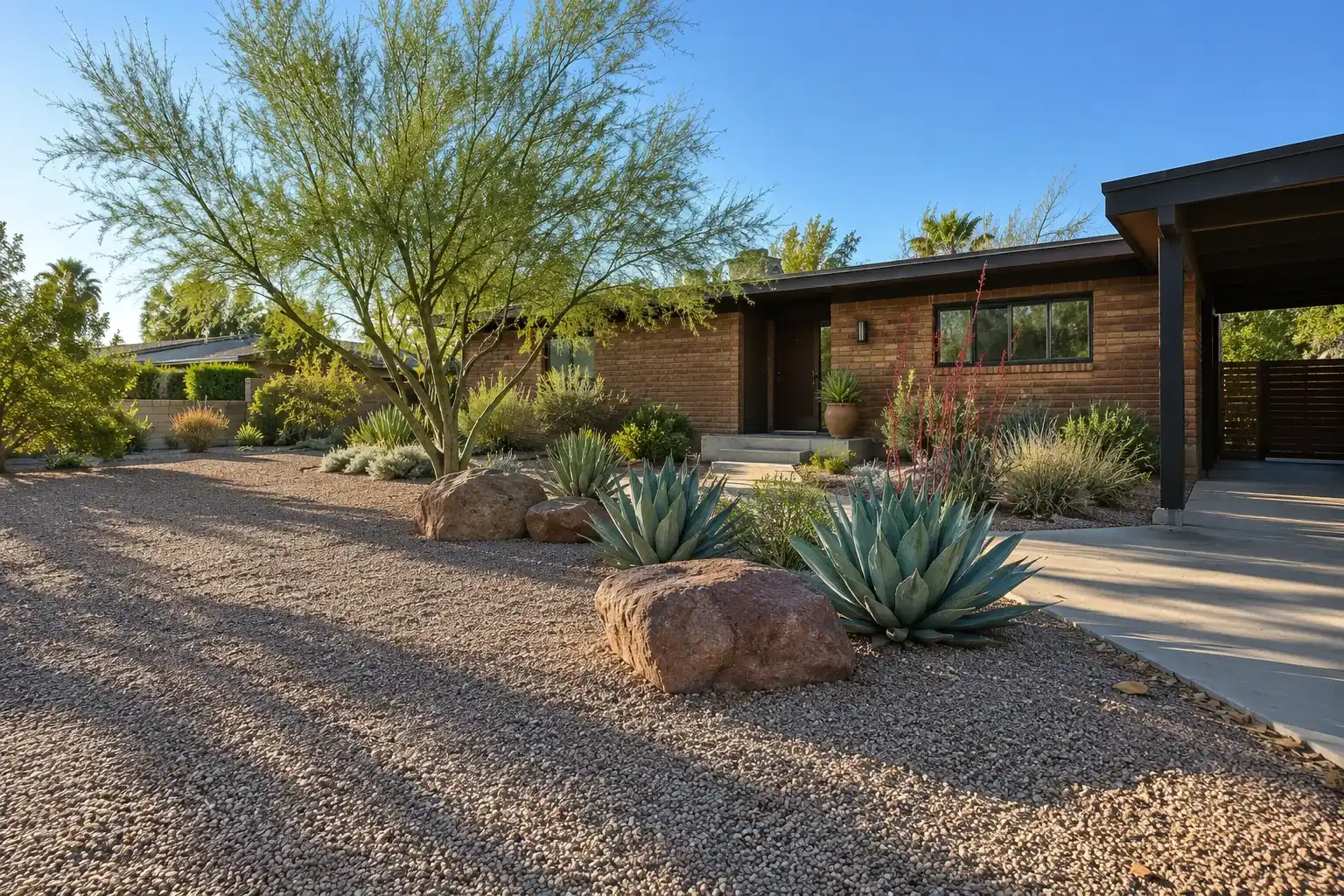
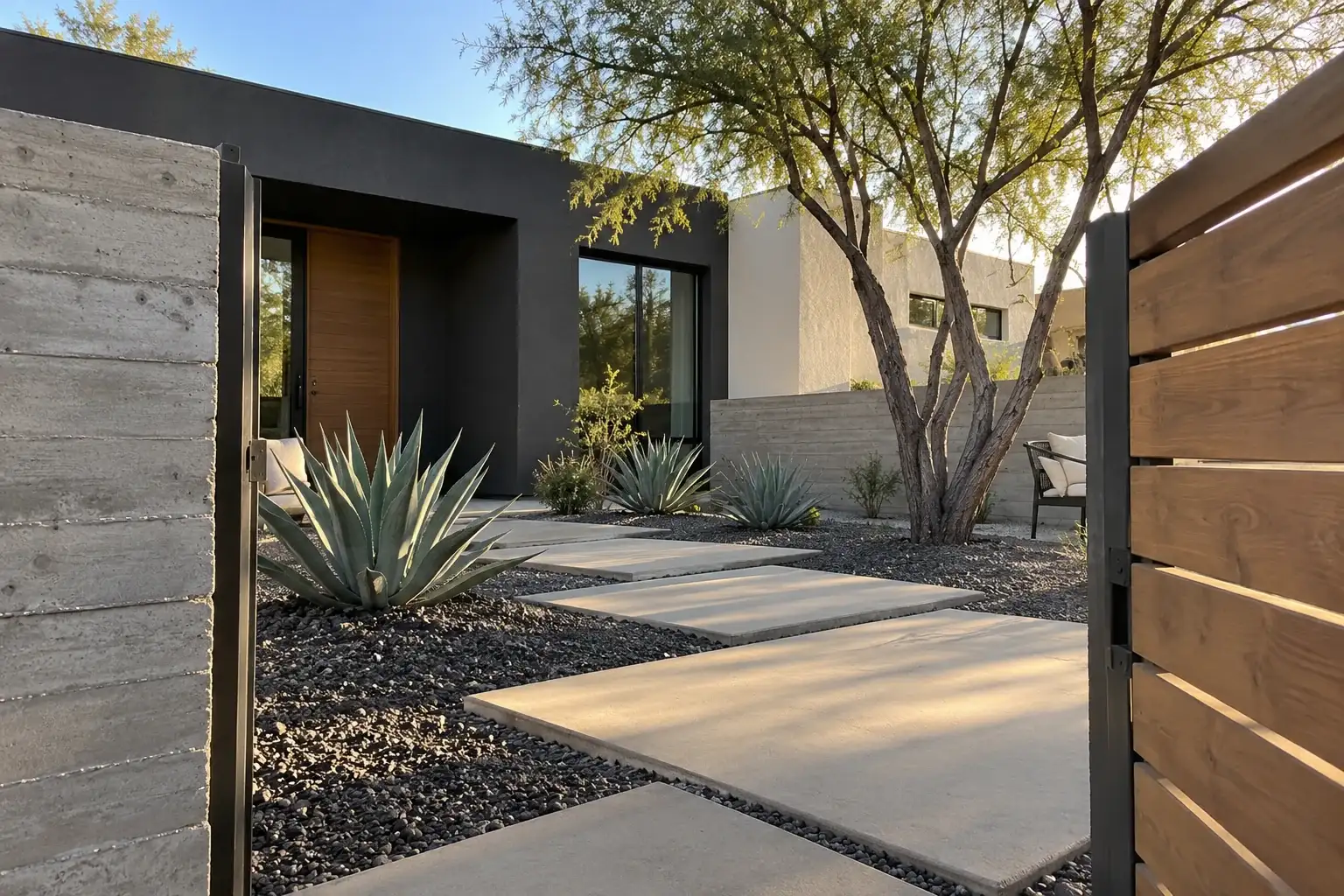
An inert cover. Granite and decomposed granite, screened into sizes, spread a few inches deep over the ground or over landscape fabric. It never rots, never blows away in one piece, and never needs topping off. Weed fabric under the rock is its own argument. Fabric that traps fine dust and debris eventually grows weeds on top anyway, and the fabric becomes a second surface to remove later. It is a heat sink. Rock absorbs solar energy all day and radiates it back into the evening, so the soil under it runs hot, and the air just above it runs hotter. It is also a mover. Decomposed granite especially migrates: down the slope, into the driveway, into the pool, into the neighbor's yard, unless it is edged and compacted. Granite without edging is a slow leak, and every monsoon moves it a little further. It is also permanent until it is not: removing rock means hauling it out by the load, which is why the choice deserves more thought than the price per yard suggests.
Good to know
Mulch: what it actually is
An insulating layer that is supposed to die. Bark and wood chips, spread two or three inches deep, shade the soil, slow evaporation, and keep root zones cooler than bare ground or rock. That shading is the whole job, and it works until the material breaks down, which in Phoenix is fast. Heat and sun bake it gray, monsoon water floats it, and within a season or two the layer is thin enough to be doing nothing. That is not a failure of the product. Mulch is a consumable, and a consumable needs replacing. It has one more job in Phoenix: it keeps the monsoon and the flood from baking the soil bare. A bed left uncovered after the old mulch breaks down crusts over in the sun, and the water that does arrive runs off instead of soaking in. What it buys in exchange is the difference between a plant that survives its second summer and one that does not.
Mistakes
Where rock fails here
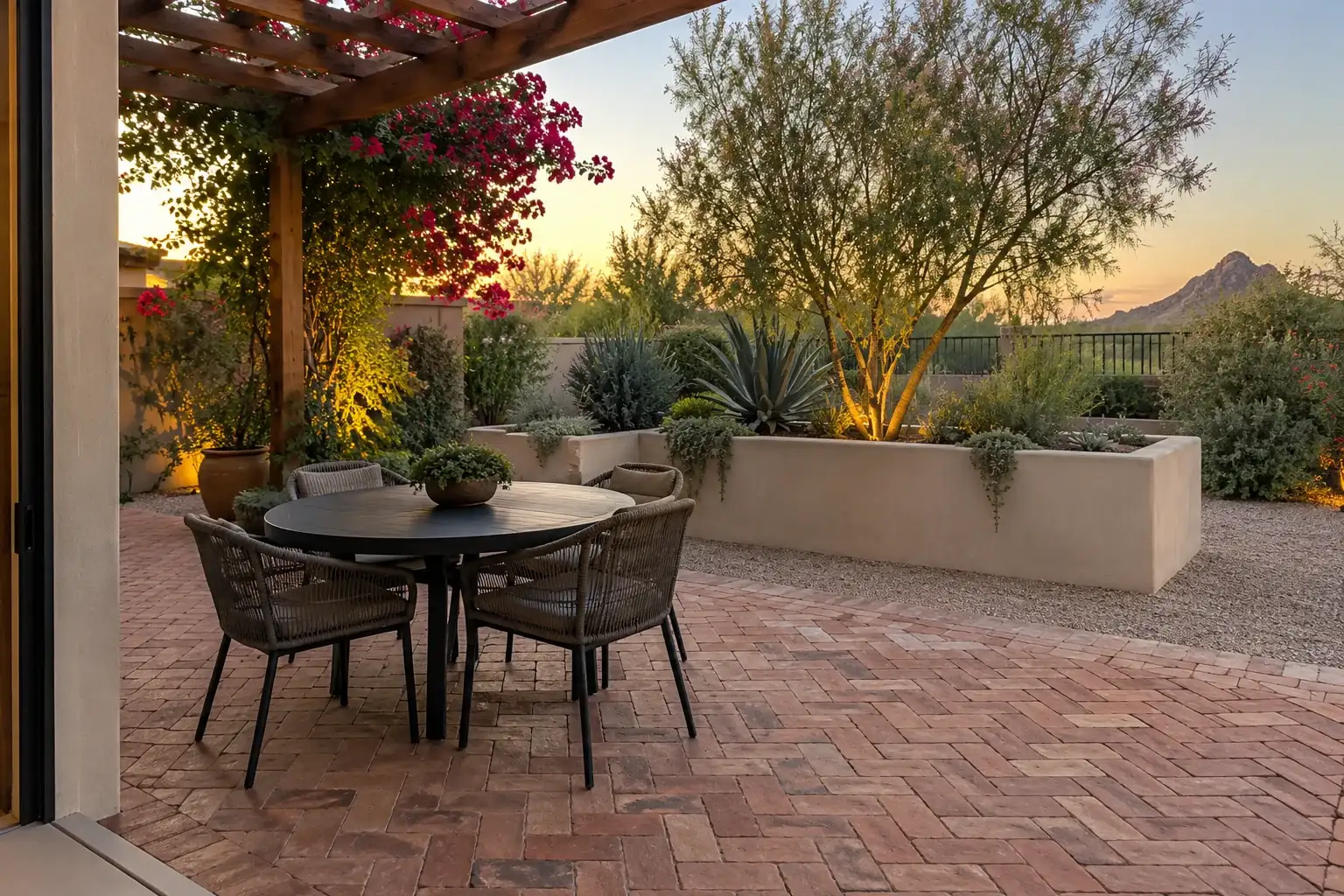
Phoenix sees the hottest surface temperatures in the Valley, and full rock coverage turns a yard into an oven. The rock absorbs heat all day, re-radiates it all evening, and anything planted in it fights reflected heat from below and sun from above. The second summer is the filter: a plant that scrapes through its first year in a rock yard usually dies in the second. Then the monsoon shows up. Storm water hits a rock yard and runs, faster than desert soil can absorb, straight for the low point. If the yard was not graded, the low point is the house or the neighbor. Decomposed granite adds its own failure: without edging and compaction it walks out of the beds, into the pool, across the driveway, and next door, a little further with every storm. On flood irrigated lots in older central Phoenix neighborhoods, a rock yard still gets its scheduled flood, and the water rolls across the rock instead of soaking in. The same runoff rules apply to hard surfaces, which is why pavers versus a concrete patio lives or dies on grading too.
Mistakes
Where mulch fails here
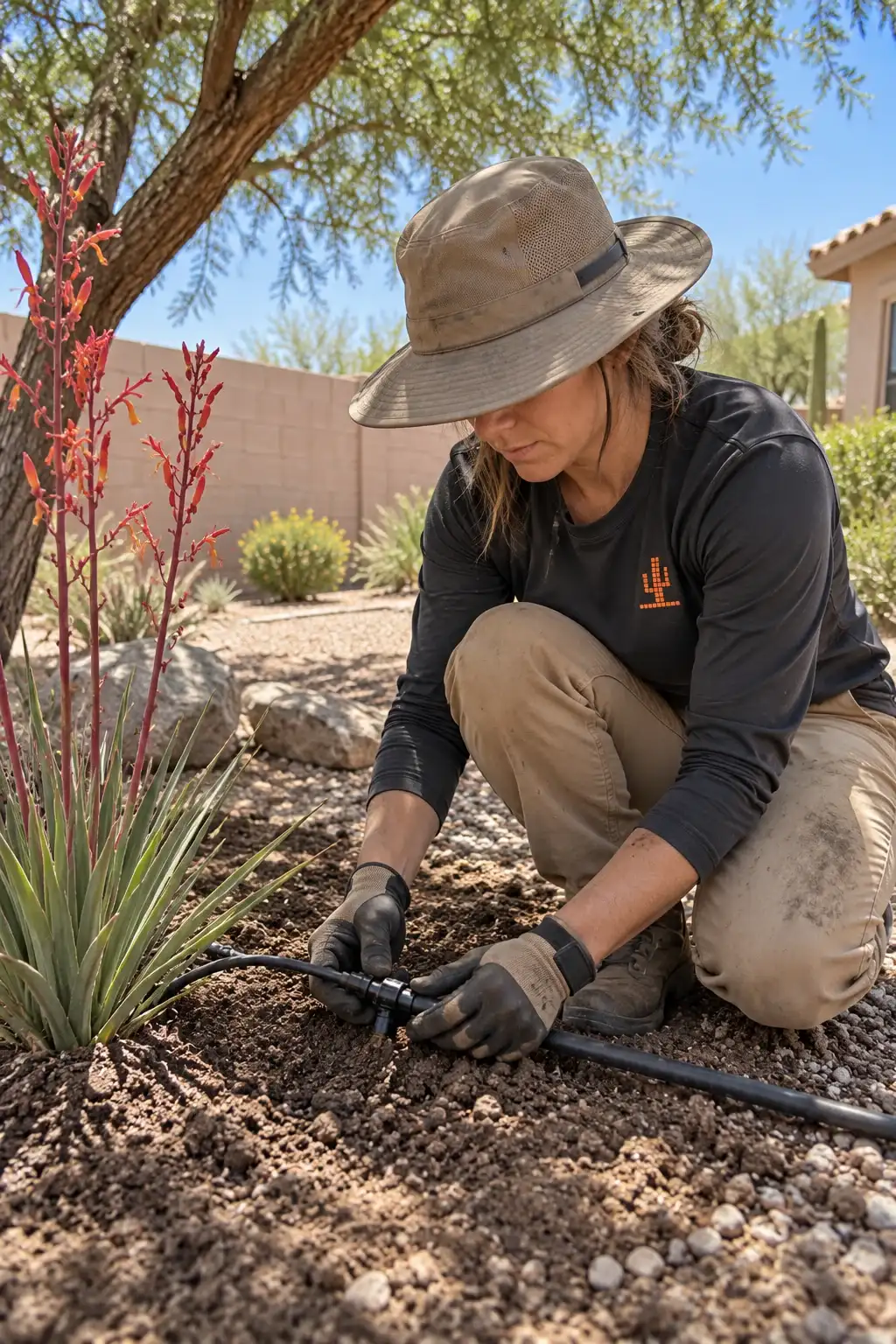
Mulch fails by disappearing. The heat bakes it gray, the monsoon floats it off the beds, and the wind strips the dry edges. Within a season or two the layer is thin, and a thin layer is not doing the shading job it was bought for. Flood irrigated lots make it worse: the flood arrives all at once, lifts the mulch, and carries it toward the fence or the alley, so the beds get stripped on the irrigation schedule. None of this is a mystery. Mulch is a consumable, and Phoenix consumes it faster than most places because the sun and the storms both work on it. The failure is treating it like rock, a one time purchase, and then wondering why the plants are burning by the second August. The fix is not a thicker layer either. Mulch piled too deep against a trunk or a stem holds moisture against the bark and invites rot. Two to three inches is the working depth, replaced on schedule. For the bigger question of xeriscape versus gravel, the mulch answer fits into the same design.
Costs
What it costs and what drives the number
Rock costs more up front and almost nothing after, until it has to be moved, and moving rock out of a yard costs real money. Mulch costs less up front and gets replaced every year or two, which is honest and predictable and still adds up. What drives the rock number: tonnage, which moves with square footage and depth, plus delivery. Central Phoenix alley lots complicate delivery, because the rock arrives by the truckload and the truck cannot always reach the yard. The removal line is the one nobody budgets. Rock removal runs on labor and haul off, and a yard of granite that looked cheap to install looks expensive the day it has to leave. What drives the mulch number: depth, how often it gets replaced, and how much of it the flood carries away. The landscaping cost page has both lines. For the yard as a whole, start with the landscaping guide and come back to the home page for everything else this site covers.
Good to know
What good work looks like in Phoenix
- Matching the cover to the plant list, not the other way around. A yard full of plants that need shade is not a rock yard.
- Edging and compact the decomposed granite. Granite that stays put is a design choice, and edging is the difference between a bed and a slow leak.
- Grading for the flood and the monsoon before the cover goes down, so the water has somewhere to go that is not the house.
- Planning the replacement cycle. Mulch gets budgeted as a consumable, and rock gets budgeted as a removal cost down the line.
6 questions
Landscaping rock vs mulch: your questions
Still have a question? Call (747) 243-2089 and describe the yard.
Does rock make a Phoenix yard hotter?
It does. Rock absorbs heat all day and re-radiates it into the evening, and the soil and plants under it run hotter than they would under mulch.
Will plants survive in a rock yard?
Some will, if they are adapted to heat and reflected light. Most set in full rock coverage die in their second summer, which is why the plant list comes first.
Does mulch attract bugs in Arizona?
The worry is overstated in a dry climate, but mulch does hold moisture, and moist organic matter has its residents. The real problem in Phoenix is that it decomposes fast.
Why does decomposed granite end up in the pool and driveway?
Because it migrates. Granite moves downhill and outward with water and foot traffic, and without edging and compaction it leaves the beds a little at a time.
Does flood irrigation wash mulch away?
It can. The flood arrives all at once, lifts the mulch, and carries it toward the fence or the alley, so irrigated beds need deeper mulch and careful grading.
Which is cheaper over time?
Rock is cheaper if you never move it. Mulch is cheaper year to year but keeps needing replacement, so the answer depends on how long you plan to live with the yard.