Guide 05 · 5 min read
Pavers vs a concrete patio in Phoenix, AZ
In Phoenix, pavers survive the moving soil and the heat better than a poured slab, and a concrete patio costs less up front. The deciding factor is usually whether you can live with cracks, because the ground here does not sit still.
Good to know
The short answer
Pavers are individual units set over a compacted base, so they flex with the soil and can be lifted for a repair. A concrete patio is one continuous pour, cheaper and faster, and it cracks as the ground moves. If you want the patio to look the same in ten years, pavers. If you want the lowest first cost, concrete. The right pick depends on the soil, the base underneath, and where the monsoon water goes.
Hardscape
Pavers: what it actually is
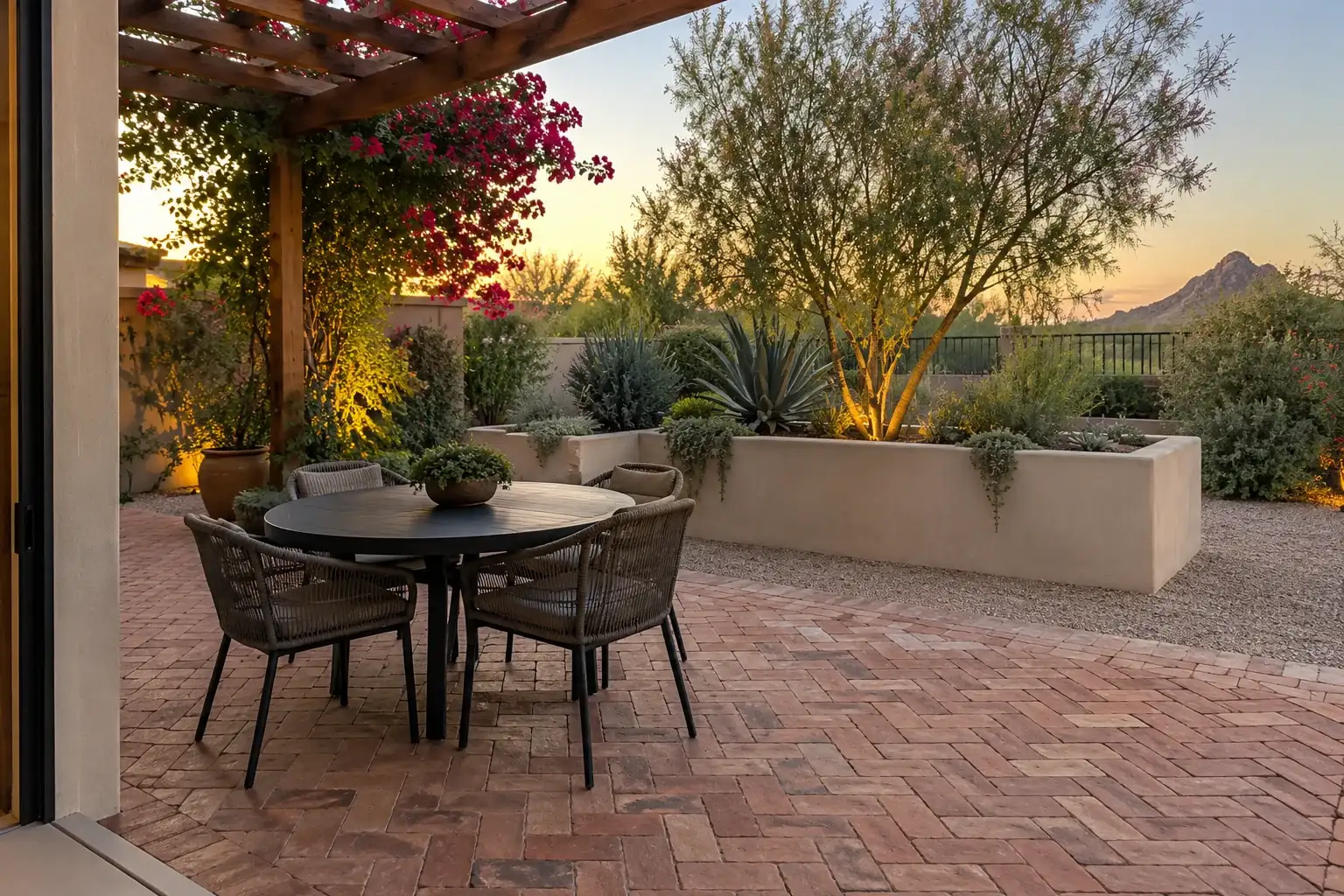
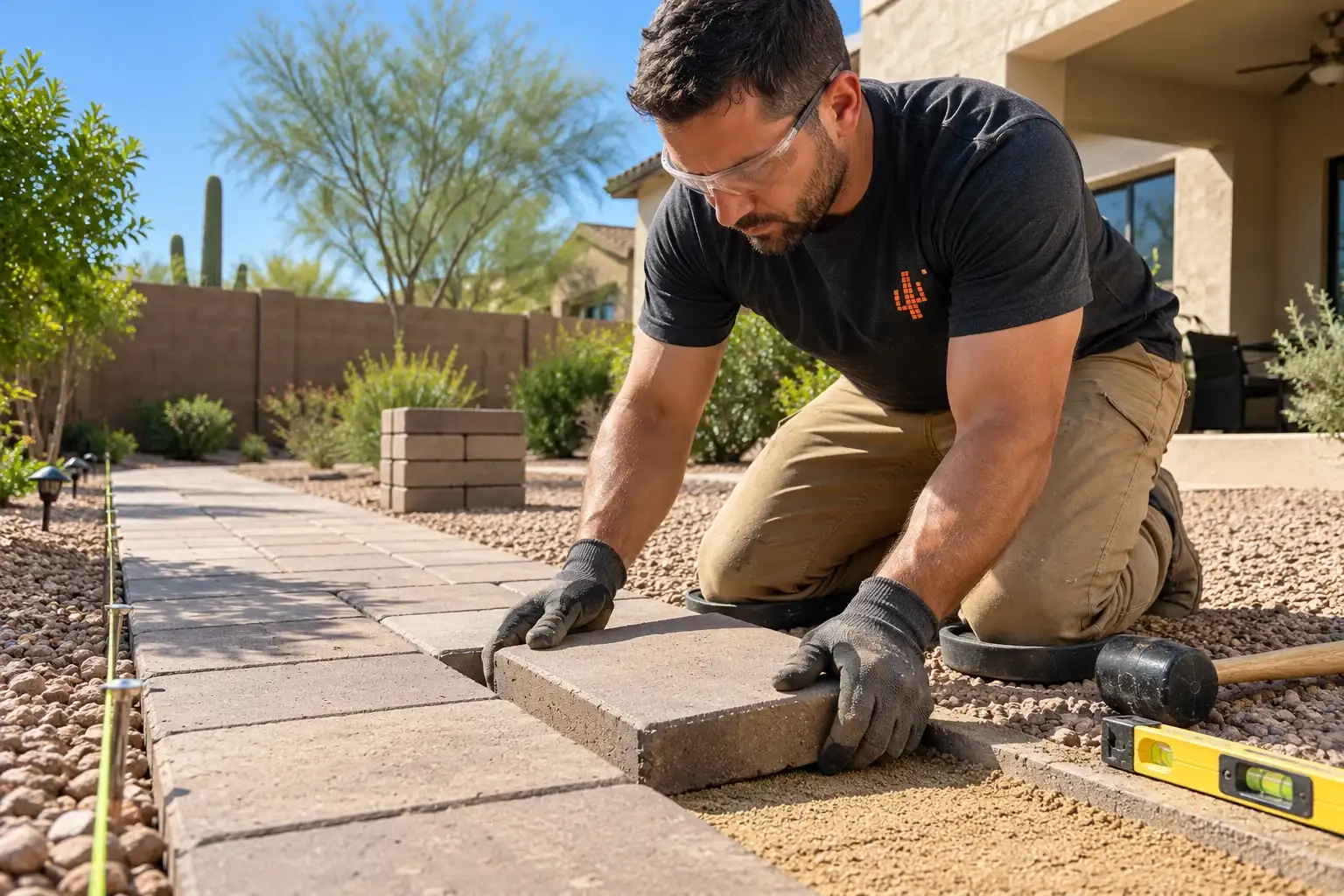
A floor made of small pieces instead of one slab. Concrete or stone pavers sit over an excavated base of compacted crushed rock, on a thin layer of bedding sand, with the joints swept full of sand or a polymer product. The whole system is designed to flex. When the ground moves, each unit can shift a little without breaking, and a single cracked or stained paver can be lifted and swapped. That flexibility is the point. The cost of it is the labor: excavation, compaction in lifts, and setting every unit by hand, all of which takes longer than a pour. Pavers also drain through their joints, which matters in the monsoon. A properly built paver patio lets some storm water through instead of sheeting it all toward the house, and that one behavior changes the drainage design. The units themselves are nearly indestructible, and everything that goes wrong with a paver patio goes wrong underneath it.
Hardscape
A concrete patio: what it actually is
One monolithic pour. Forms are set, the area is poured usually four inches thick, and the slab cures as a single piece. The surface is finished by hand, and control joints are cut or tooled into it so that when the slab inevitably cracks, the crack happens along a line instead of across the middle. Those joints are the giveaway. Concrete wants to crack, and the joints are an admission of it. The trade is speed and price. A pour happens in a day or two, and the material itself costs less than pavers. The finish fights the sun. A broom finish stays cooler underfoot than a dark stamped or stained surface, and in a city where surfaces run well above air temperature, the finish is a comfort decision as much as a look. What it cannot do is move. When the soil under it swells and shrinks, the slab has no joints that flex. It cracks, or it tilts.
Hardscape
Where pavers fail here
Phoenix soil does two things to a paver patio. Expansive clay swells and shrinks with moisture, and a base that was not excavated and compacted in lifts settles into low spots that hold monsoon water. The monsoon is the other half. A short, hard storm drops water faster than the ground absorbs, and the runoff sheets across the patio surface. If the patio was raised or sloped without a drainage plan, that water is now aimed at the house or the neighbor, which is exactly the complaint that brings people back a year later. On flood irrigated lots in older central Phoenix neighborhoods, the soil under the patio gets soaked on a schedule, and a thin base turns into a wavy patio after two flood seasons. Dark pavers add their own Phoenix problem: they absorb heat all day, and by late afternoon they are too hot for bare feet. The joints have their own issue. Ants move into the sand joints and mine them from below, and the monsoon washes the joint sand out of the low spots. A patio that loses its joint sand loses its lock, and the units start to wander. Rock versus mulch covers the same heat math for groundcover.
Hardscape
Where a concrete patio fails here
The same soil movement that pavers shrug off is what breaks slabs. When the clay under a patio swells in the wet season and shrinks in the dry season, a rigid slab cannot follow. It cracks, or one corner drops. Control joints help, but a crack off the joint line is permanent and runs from edge to edge. Phoenix heat makes it worse. A slab expands in the sun, and expansion without room to move means cracks at the corners and heaves at the edges. The monsoon punishes bad grading harder than anything: a raised slab that sheds water toward the house is a foundation problem, not a patio problem, and it starts the first storm season. UV fades and sealer failure come with the heat, so a slab that looked crisp in March looks chalky by October. The crack is not the end, but it is the beginning of the end. A crack that opens lets monsoon water down into the base, the base washes, the slab settles further, and the crack widens. The first crack usually makes a second one. Stamped concrete has all the same physics plus a pattern to ruin.
Costs
What it costs and what drives the number
Concrete costs less per square foot than pavers, and the gap widens on big patios. Pavers close the gap over time because repairs are local: one unit, not one slab. What drives the paver number: excavation depth, caliche that has to be jackhammered, base material hauled in, and access. Central Phoenix alleys are narrow, and pallets of pavers often get hand carried the last stretch, which shows up in the quote. What drives the concrete number: thickness, finishing, and whether the existing ground has to be cut out first. Both move with square footage and with grading. There is also the old surface. Cutting out and hauling an existing slab, or excavating caliche for a paver base, is the line that moves the most between quotes. The landscaping guide covers the whole yard around the patio, and the home page links it all together. The landscaping cost page lays out the line items that swing either one.
Good to know
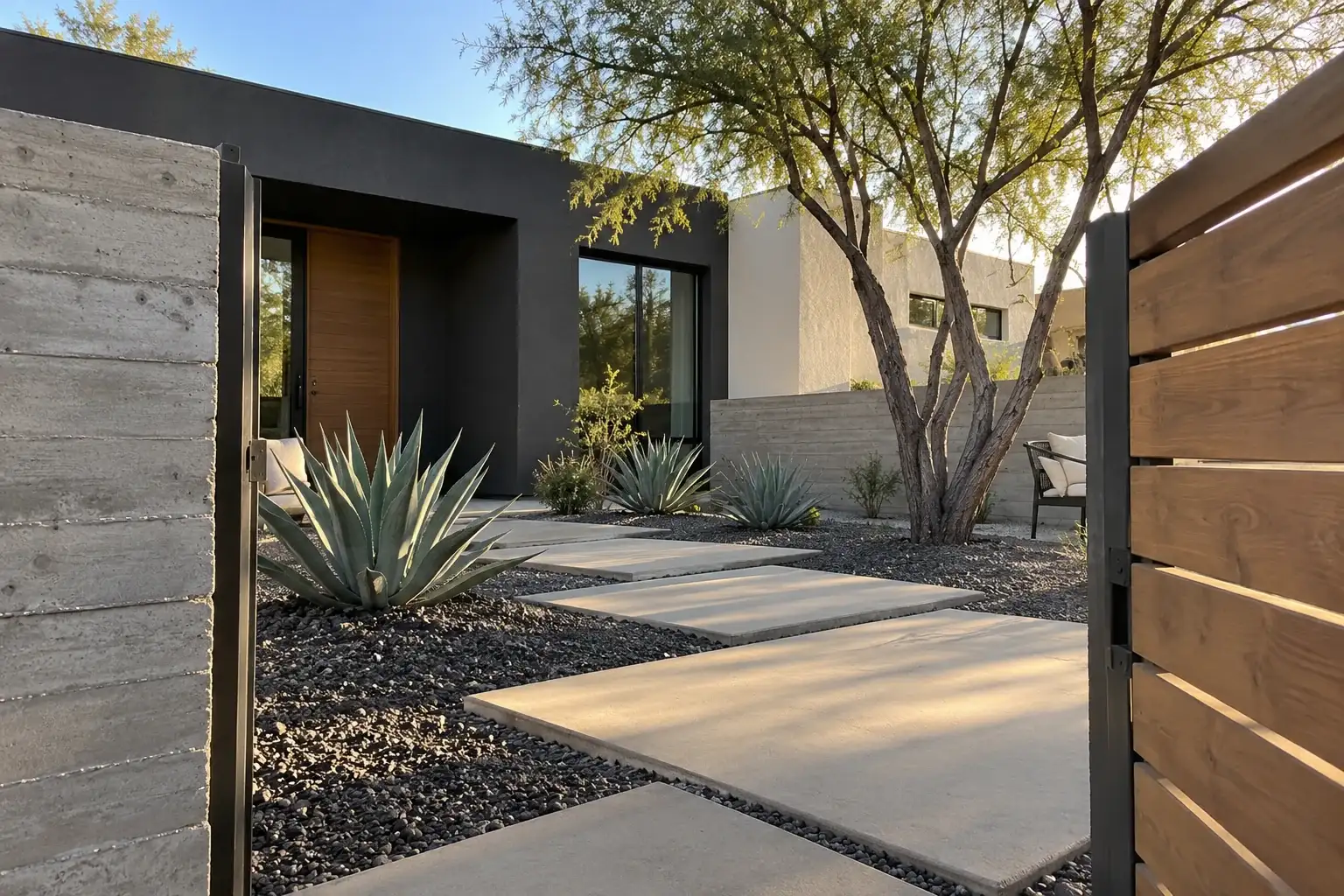
What good work looks like in Phoenix
- Grading for the monsoon before anything goes in. Where storm water goes is decided on paper, not discovered in July.
- Specifying the base for the soil, not for the brochure. Expansive clay and caliche each need a different depth of excavation and compaction.
- Planning access. On alley lots in central Phoenix, the delivery route is part of the design, and the cost is known before the pallets arrive.
- Picking the surface for the afternoon. Lighter colors and shade patterns matter in a city where surfaces run far above air temperature.
6 questions
Pavers vs a concrete patio: your questions
Still have a question? Call (747) 243-2089 and describe the yard.
Do pavers crack in Phoenix heat?
The units rarely crack. They absorb heat, so dark pavers get hot underfoot, but the system flexes with the soil instead of fighting it.
Does a concrete patio crack in Arizona soil?
It usually does, sooner or later. Expansive clay swells and shrinks, and a rigid slab follows the ground until it cannot, which is what the control joints are for.
Which is cooler to walk on in summer?
Both get hot, and color matters more than material. Light colored pavers and light concrete stay more tolerable than dark surfaces, and neither stays cool.
Can you repair one paver?
Yes. Lift the damaged unit, reset the bedding, drop a replacement in. A slab repair means patching, and the patch never matches.
Which costs more, pavers or concrete?
Concrete costs less per square foot up front. Pavers cost more to install but less to live with, because repairs are local instead of slab wide.
Does the HOA regulate patio materials?
Often. Front yard and courtyard areas fall under HOA design rules in many Phoenix neighborhoods, and approval comes before the work.