Guide 08 · 5 min read
Xeriscape vs gravel in Phoenix, AZ
Xeriscape is a design method that uses adapted plants and smart irrigation. Gravel is just a groundcover. In Phoenix, gravel alone is not xeriscape, and a yard covered in gravel ends up hotter than either.
Good to know
The short answer
Xeriscape is a system: adapted plants, water grouped by need, efficient irrigation, and as little turf as the yard actually uses. Gravel is a material you might use inside that system. A yard of gravel with nothing living in it is a heat sink, not a landscape. The right pick depends on the plant list, the HOA, and how much of the yard you actually want to walk on.
Planting
Xeriscape: what it actually is
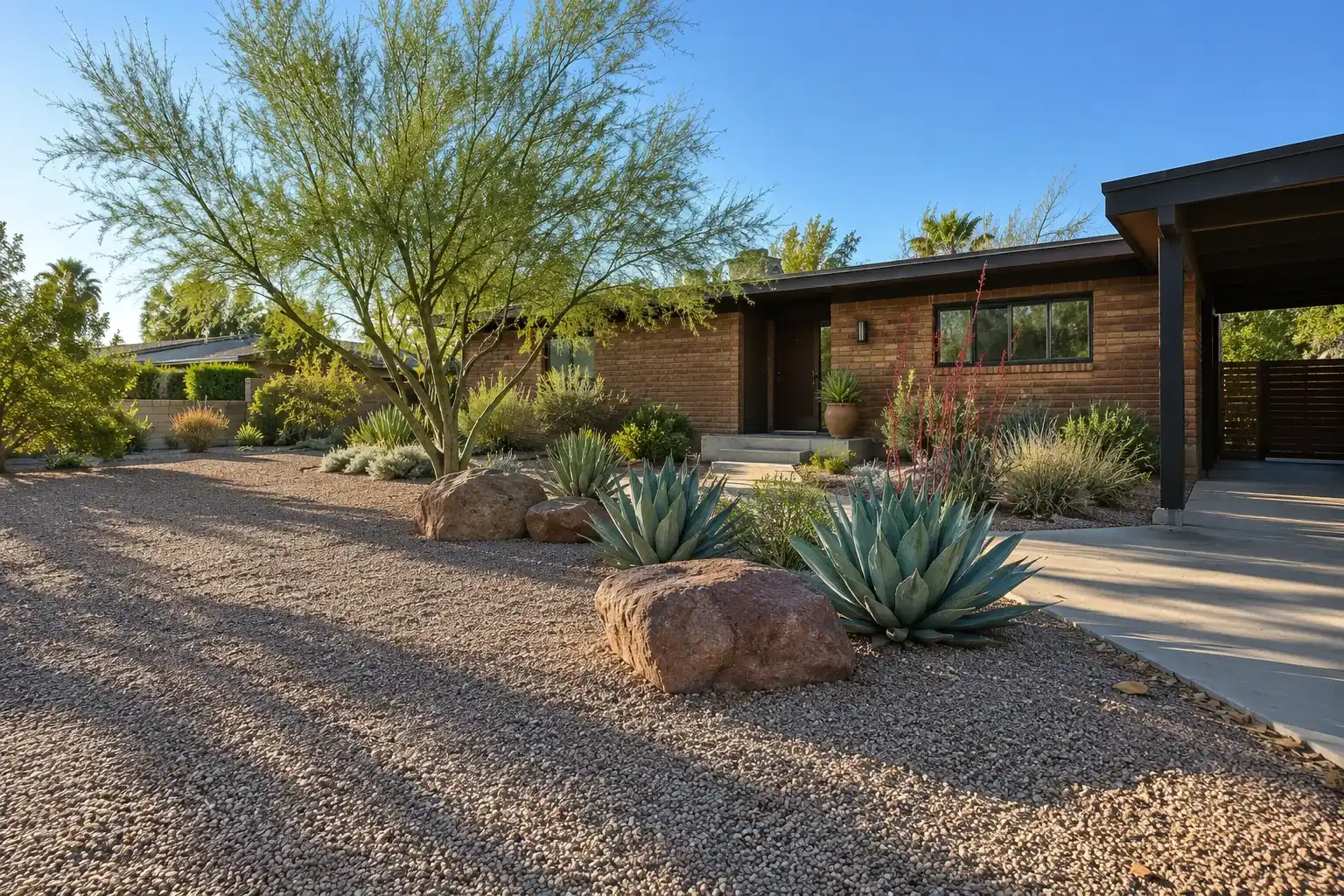
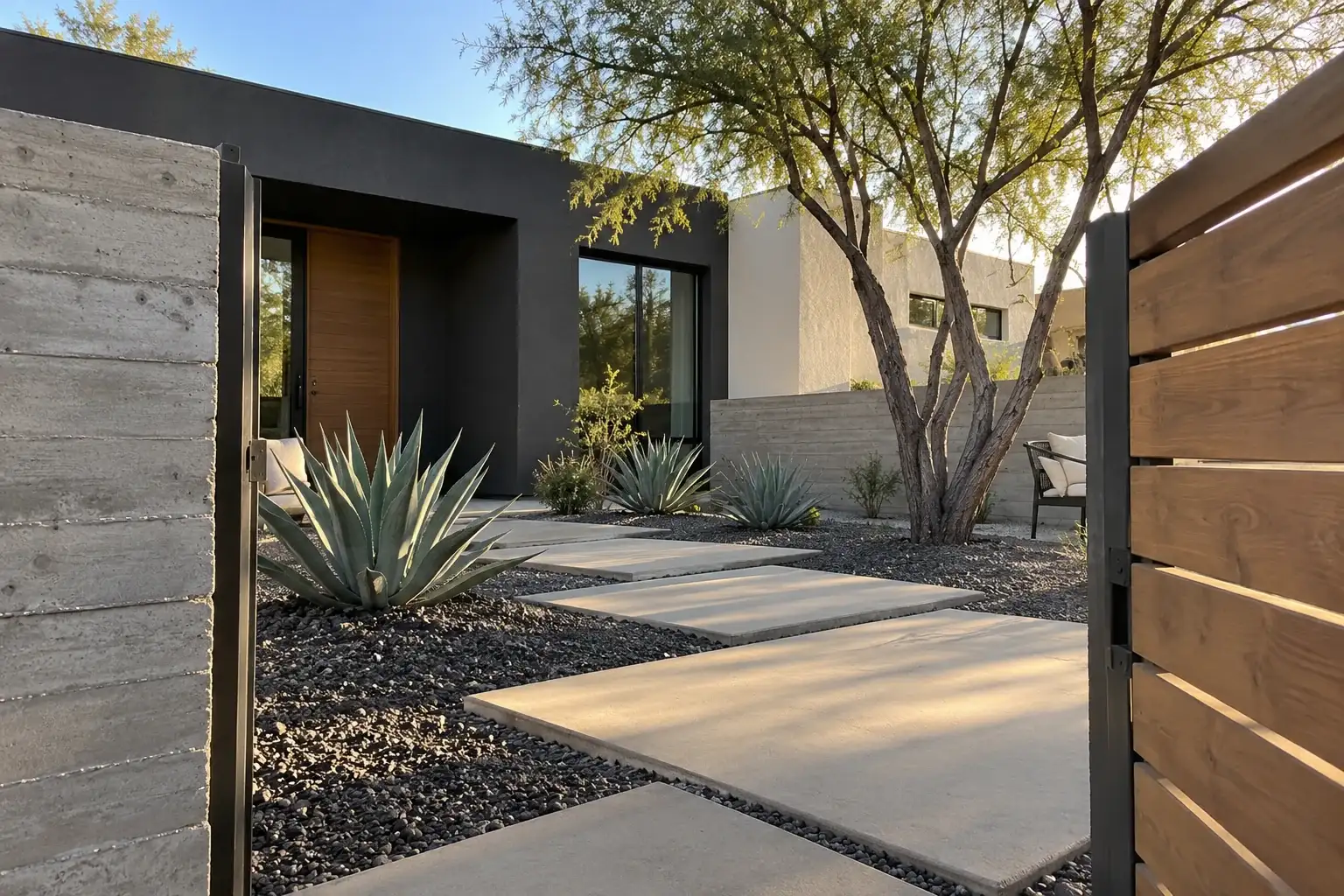
A way of designing, not a single product. Xeriscape starts from the desert it is in. Plants are chosen for heat and alkalinity, because zone 9b rewards plants adapted to those conditions and punishes everything else. Water is grouped into zones, so thirsty plants do not sit next to desert plants and drag the whole system up to lawn settings. Irrigation runs low and slow at the root zone instead of broadcasting into the air. Mulch or rock covers the bare soil, and turf shrinks to whatever is actually used. Done right, a xeriscape uses far less water than a conventional yard and looks like it belongs in Phoenix. Done wrong, it is a rock yard with a sticker on it. A real xeriscape is also built for the flood. On irrigated central Phoenix lots the design works with the flood schedule, using the deep soak instead of fighting it.
Good to know
Gravel: what it actually is
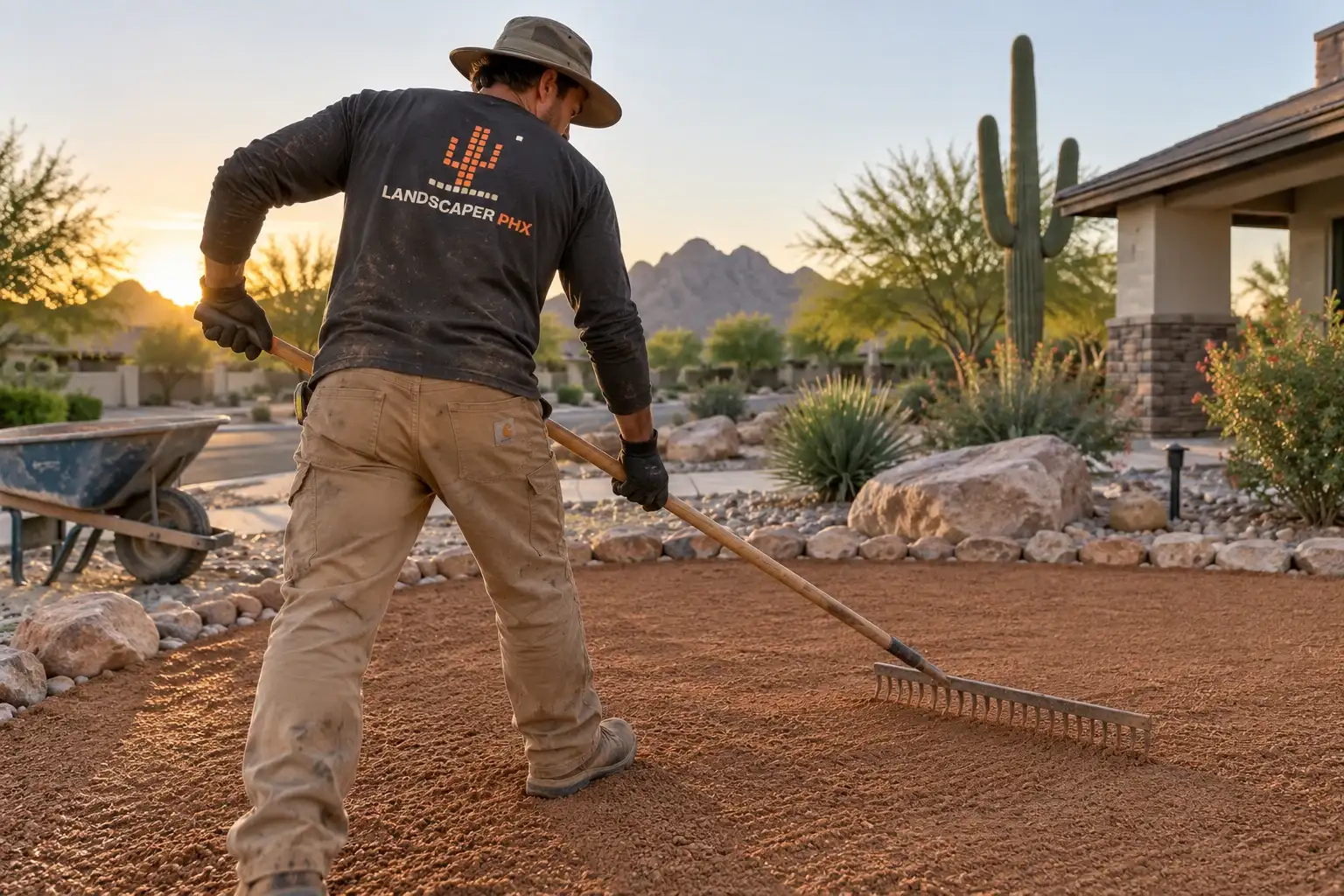
Screened crushed rock spread over the ground, usually over fabric, usually a few inches deep. It is inert. It does not grow, does not shade, does not hold moisture, and does not die. What it does is absorb solar energy all day and give it back as heat through the evening. Gravel is a legitimate part of a xeriscape, as a cover for open ground and a path surface. It is not a xeriscape by itself. The distinction matters because the word gets used to sell a yard that is nothing but gravel, and that yard is the hottest, driest, most lifeless version of the options. Gravel also reads as finished to every HOA in the Valley, which is part of its appeal, but the approval still has to come first.
Planting
Where xeriscape fails here
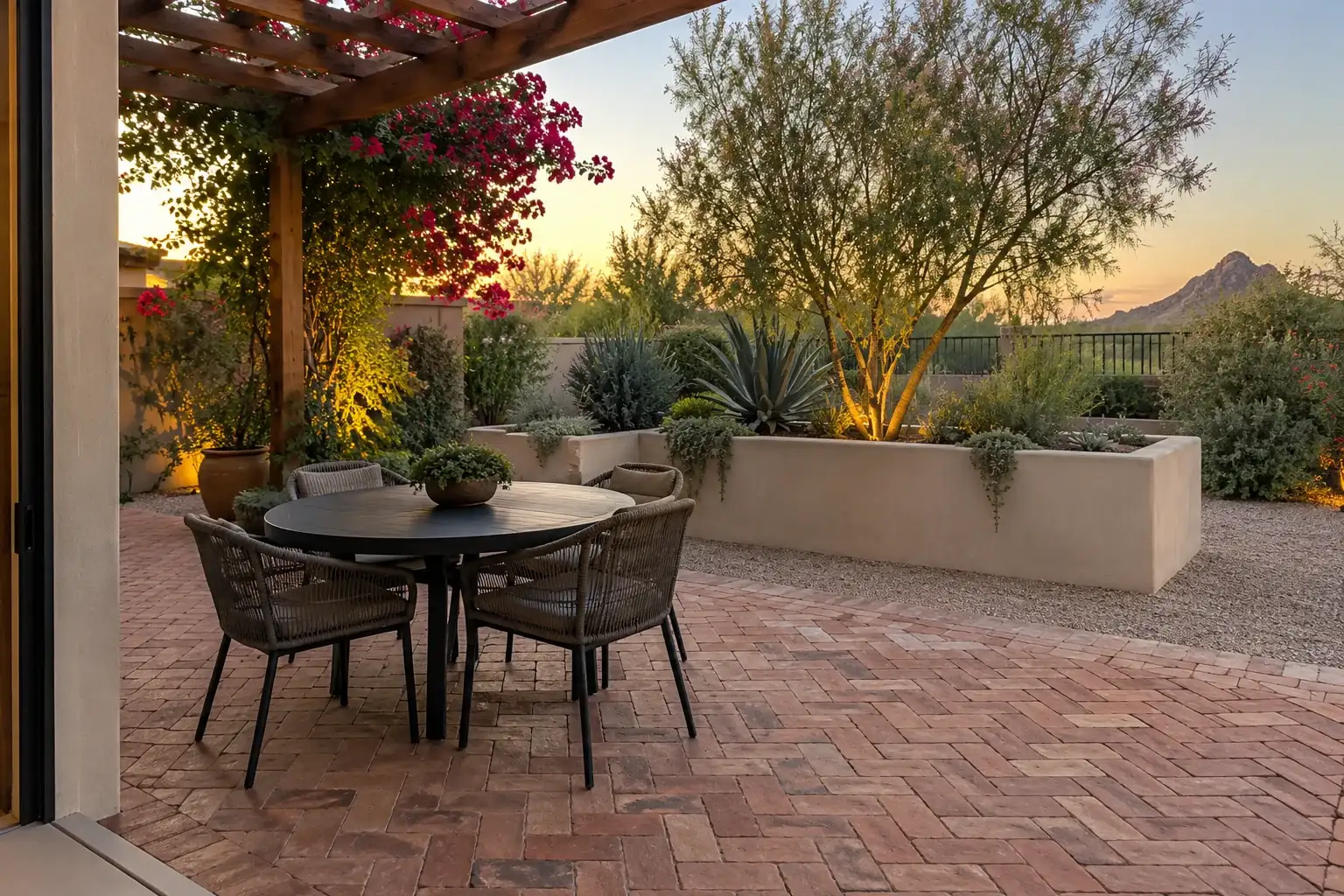
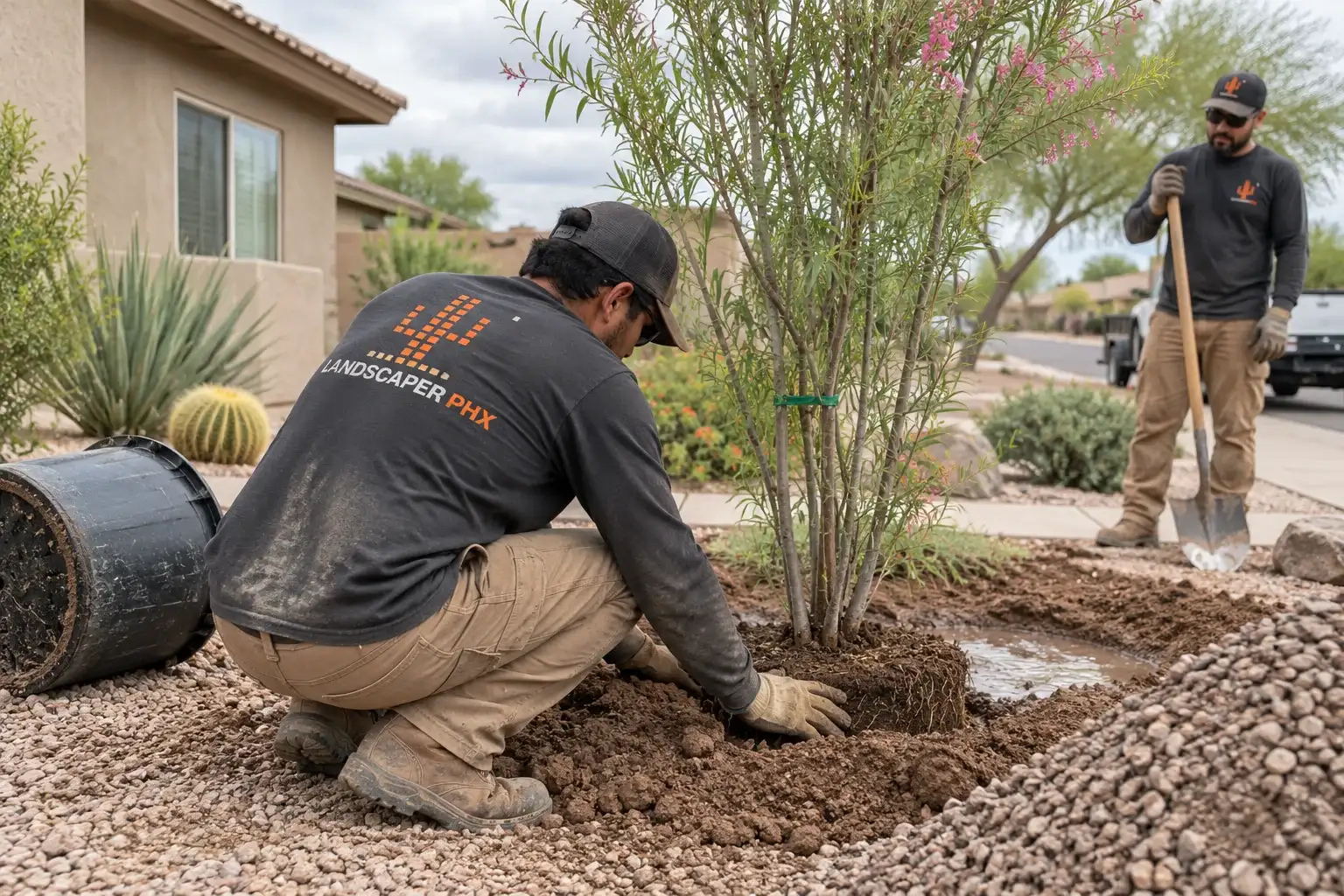
Xeriscape in Phoenix fails when it is done as a rock yard with good intentions. The classic mistake is the conversion that keeps the old sprinklers. Heads sized for a lawn get left in place after the turf comes out, so shrubs get lawn water: drowned on one side, starved on the other, and dead in a season. The second mistake is the plant list. Zone 9b plants live on heat tolerance and alkalinity, and a list picked from a catalog instead of the desert cooks against reflected heat from a west wall or a rock bed. Trees planted too deep fail in year three, when the buried root flare girdles the trunk, which reads as a mystery death but is a planting error. The pacing matters too. A xeriscape planted all at once in May asks every plant to root through its first summer at the same time, and the ones that fail look like a design problem. The shoulder seasons give the roots their window. Then there is the HOA. Front yard plant lists and turf limits are common in Phoenix, and a xeriscape that skips the approval gets flagged and torn out. The HOA cost story is here.
Mistakes
Where gravel fails here
Phoenix has the hottest surface temperatures in the Valley, and gravel is a heat factory. Full gravel coverage absorbs and re-radiates heat, the soil under it bakes, and plants set into it usually die in their second summer from reflected heat and dry root zones. Gravel also migrates. Without edging and compaction, it walks out of the beds, into the pool, across the driveway, and into the neighbor's yard, a little further with every monsoon. The monsoon adds the drainage problem: storm water hits a gravel yard and runs, faster than desert soil can absorb, toward the house or the neighbor. On flood irrigated lots in older central Phoenix neighborhoods, a gravel yard still gets its scheduled flood, and the water rolls across the rock instead of soaking into anything living. The weed story comes back too. Weeds grow through gravel wherever the fabric is thin or torn, and pulling them out of rock in July is the hobby nobody asked for. Rock versus mulch covers the same mechanics for mixed beds.
Costs
What it costs and what drives the number
A true xeriscape costs more to build than a gravel yard and costs less to run. The plant budget, the irrigation conversion, and the soil work are the up front lines, and the water bill is where it pays back. Gravel is cheaper to install by the yard, until you count the plants it kills and the labor of moving it out later. What drives both: square footage, how much existing turf has to come out, and access. Central Phoenix alleys complicate gravel delivery, because the rock arrives by the truckload and the truck cannot always reach the yard. The water side moves with how much of the old sprinkler system gets replaced with drip. The payback line is the water bill, and it is real, but it arrives over years, not months. The comparison that matters is not one install price against the other; it is the install plus ten years of water against the yard you have now. The cost page walks through both paths. The landscaping guide covers the whole conversion, and the home page links everything on this site. If the sprinkler question comes first, drip versus sprinklers is where it gets decided.
Good to know
What good work looks like in Phoenix
- Designing from the plant list first. A xeriscape is a system, and the plants decide the water, not the other way around.
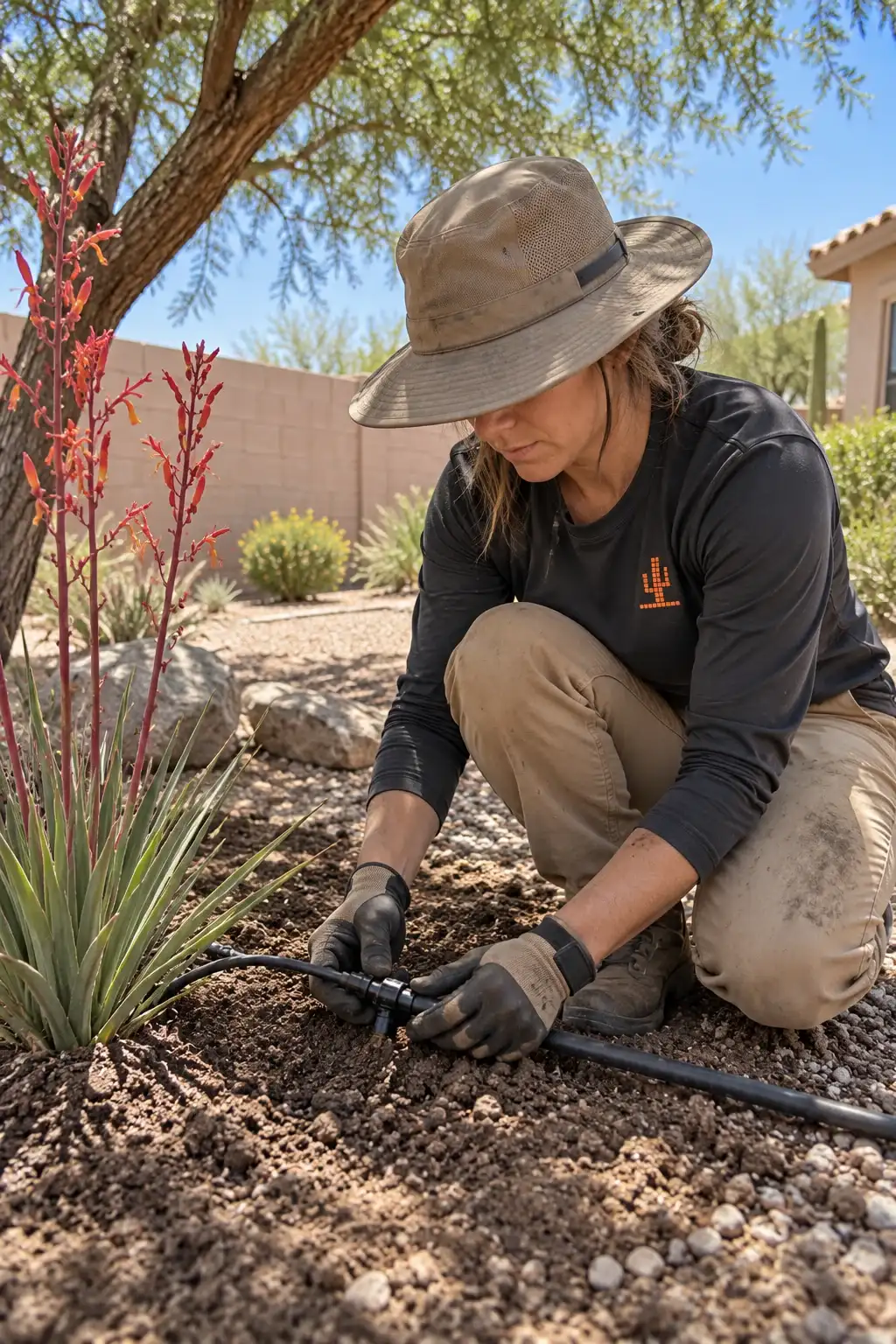
- Converting the irrigation with the plants. Lawn sprinklers get replaced or zoned separately, so shrubs stop getting lawn water.
- Edging and compact any gravel. Rock that stays put is a cover; rock that migrates is a liability.
- Running the HOA paperwork before the work. A front yard design that gets approved first does not get torn out later.
6 questions
Xeriscape vs gravel: your questions
Still have a question? Call (747) 243-2089 and describe the yard.
Is gravel the same as xeriscape?
No. Gravel is a groundcover. Xeriscape is a design system built from adapted plants, zoned water, and efficient irrigation, and gravel is at most one part of it.
Does a gravel yard save water in Phoenix?
It saves the water that grass would have used, and it costs you the plants that would have shaded the soil. The water savings are real, and so is the heat.
Why do plants die in rock beds?
Reflected heat from below and sun from above. A plant that scrapes through its first summer in a gravel bed usually dies in its second, unless it was picked for exactly those conditions.
What is the biggest xeriscape mistake in Phoenix?
Keeping the lawn sprinklers after the conversion. Heads sized for grass put lawn water on shrubs, and the yard drowns on one side and starves on the other.
Does the HOA allow xeriscape?
Most do, but many require the plant list to be approved first. Approval comes before the work, not after, and the paperwork is cheaper than a redo.
Does gravel help with monsoon flooding?
Usually the opposite. Storm water runs faster across gravel than across planted ground, which is why the grade and the drainage get designed first.