Guide 06 · 5 min read
Pavers vs stamped concrete in Phoenix, AZ
Stamped concrete gives you the paver look at a slab price, and then it cracks. Pavers cost more up front and move with the soil, which is the whole difference in a city where the ground shifts every wet season.
Good to know
The short answer
Stamped concrete is a poured slab pressed with a pattern, and the pattern is only skin deep. When the slab cracks, and Phoenix slabs crack, the crack runs straight through the stamp and there is no hiding it. Pavers are separate units, so movement shows up in the joints and can be fixed by relaying a few pieces. Stamped is the cheaper look-alike. Pavers are the real system. The right pick depends on the soil, the slab conditions, and how the water drains.
Hardscape
Pavers: what it actually is
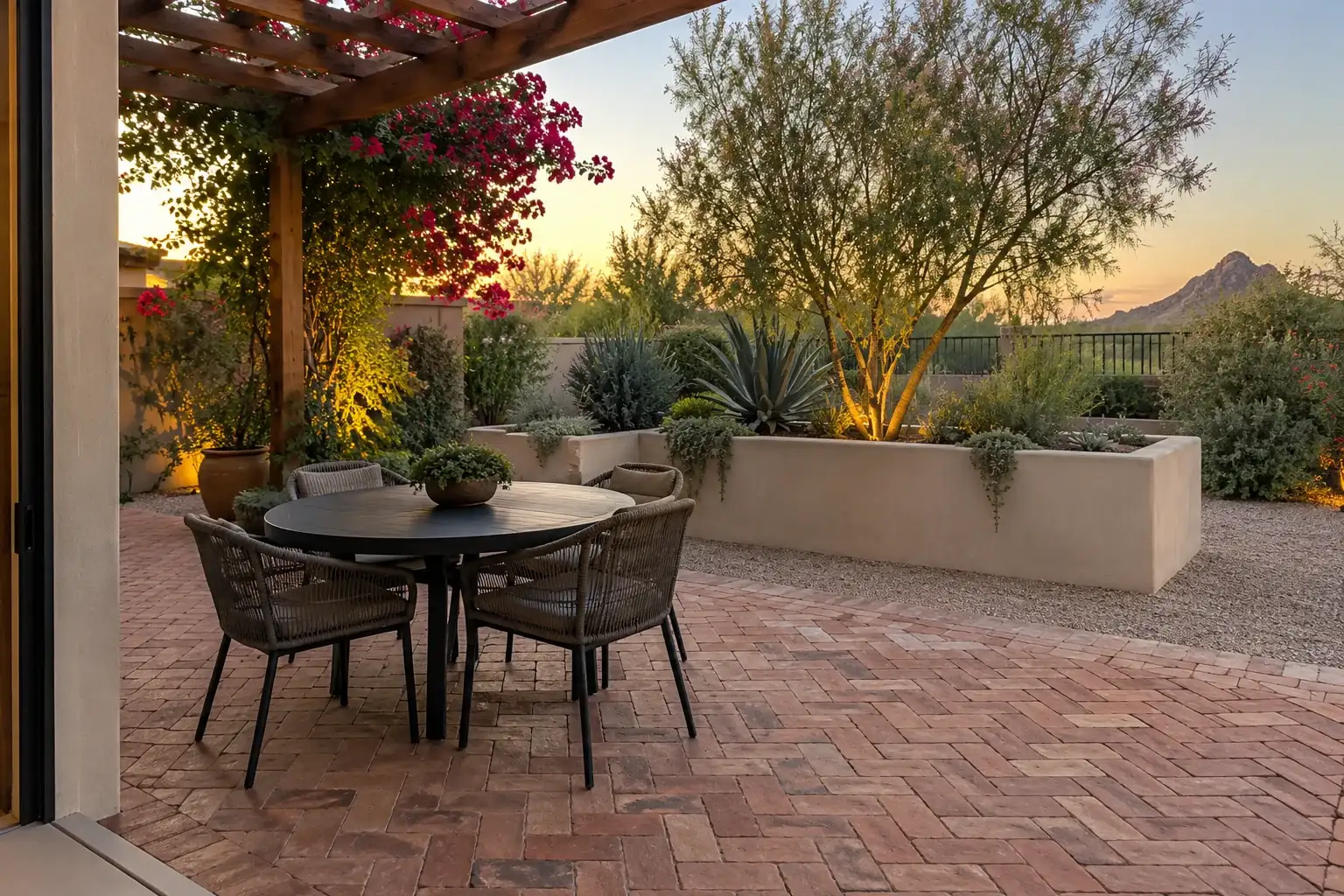
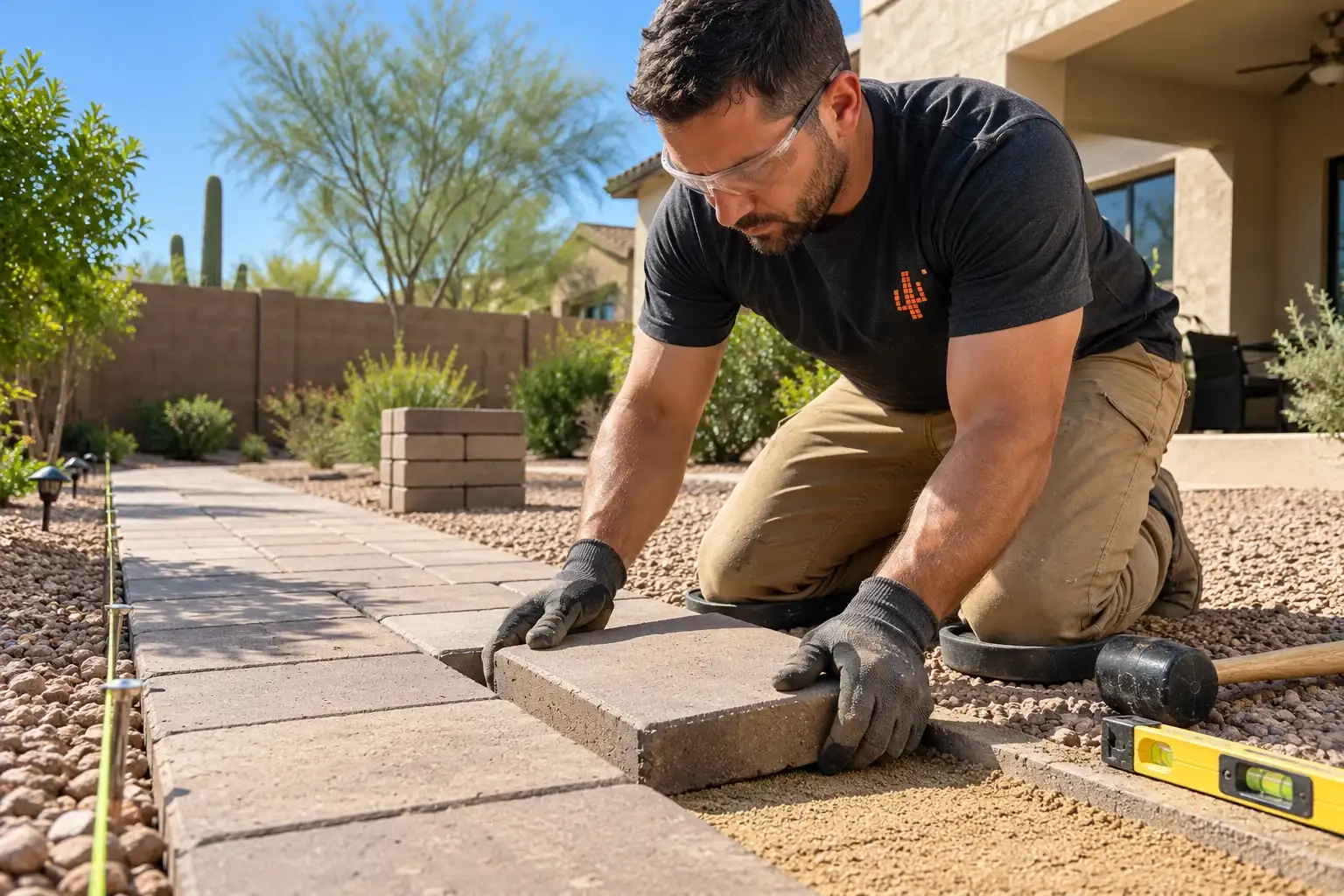
A floor of individual units. Concrete or stone pavers sit over an excavated, compacted base, on a bedding layer, with sand swept into the joints. Every joint is a real seam, which is the point. The units can shift a fraction without breaking, and a damaged paver lifts out and gets replaced. Pavers also come in colors that hold up, because the color runs through the unit instead of sitting on top. The sun still fades everything, but it fades a paver slowly and a stamp quickly. The pattern is not painted on. It is a pattern of actual pieces, and the joints run all the way through. What that costs is labor: excavation, compaction in lifts, and setting every unit by hand, on a schedule a pour never needs.
Good to know
Stamped concrete: what it actually is
A poured slab in costume. Concrete goes down as one continuous pour, then mats are pressed into the wet surface to imprint a texture, and color is worked in with a release agent or a hardener. The result looks like stone or pavers, and the surface cost lands below real pavers. The catch is what the stamp is. It is an impression in the top eighth of an inch. The joints are cosmetic lines, not real seams, and underneath the pattern there is still one rigid slab. When the ground moves, the slab cracks, and the crack does not care where the pretty lines are. It crosses them. The color lives in the surface layer, and the surface layer is exactly what the sun and the traffic wear down first. A stamped patio is a finish that is also the structure, and nothing about that combination likes a Phoenix summer.
Hardscape
Where pavers fail here
Pavers in Phoenix fail mostly at the base and the joints. Expansive clay swells and shrinks through the year, and a base that was not excavated and compacted in lifts settles into low spots that hold monsoon water. The monsoon is the second failure point. Storm water runs faster than the ground absorbs, joints wash out, and a patio that was raised without a drainage plan aims the runoff at the house or the neighbor. On flood irrigated lots in older central Phoenix neighborhoods, the ground under the patio gets soaked on a schedule, and a thin base goes wavy after a couple of flood seasons. Then there is the afternoon heat: dark pavers absorb it all day and hand it back as soon as you step outside. The same heat math shows up in the rock versus mulch decision. The base is the whole story. A paver patio with a deep, compacted base rides out the clay's swelling and shrinking, while the same units on a shallow base settle, heave, and pool water. The difference is invisible on the day the two patios are finished.
Mistakes
Where stamped concrete fails here
Every slab problem Phoenix has, plus a pattern to ruin. Expansive clay swells in the wet season and shrinks in the dry season, and a rigid slab cannot follow. It cracks, and the crack runs through the stamp. Control joints help, but a crack that wanders off the joint line is permanent, and no color touch-up makes a crack disappear from a stamped pattern. The color fails on its own schedule. The release agent and the sealer take the UV directly, and the fade is uneven: the sun side goes chalky while the shaded side keeps its color, and the patio turns two tone. Resealing helps for a while, then the cycle starts again. Phoenix heat adds its own damage: the slab expands, corners spall, and UV chews through the color coat and the sealer faster than the national averages assume. The monsoon punishes bad grading the hardest. A stamped patio that sheds water toward the house is a foundation problem wearing a patio costume. The monsoon also finds every low spot, because the texture hides the slope. Water pools between the cosmetic joints, evaporates in the heat, and the sealer under the puddles breaks down first, which is how the fade starts. If you want the plain slab version of the same tradeoff, pavers versus a poured concrete patio is the cleaner comparison.
Costs
What it costs and what drives the number
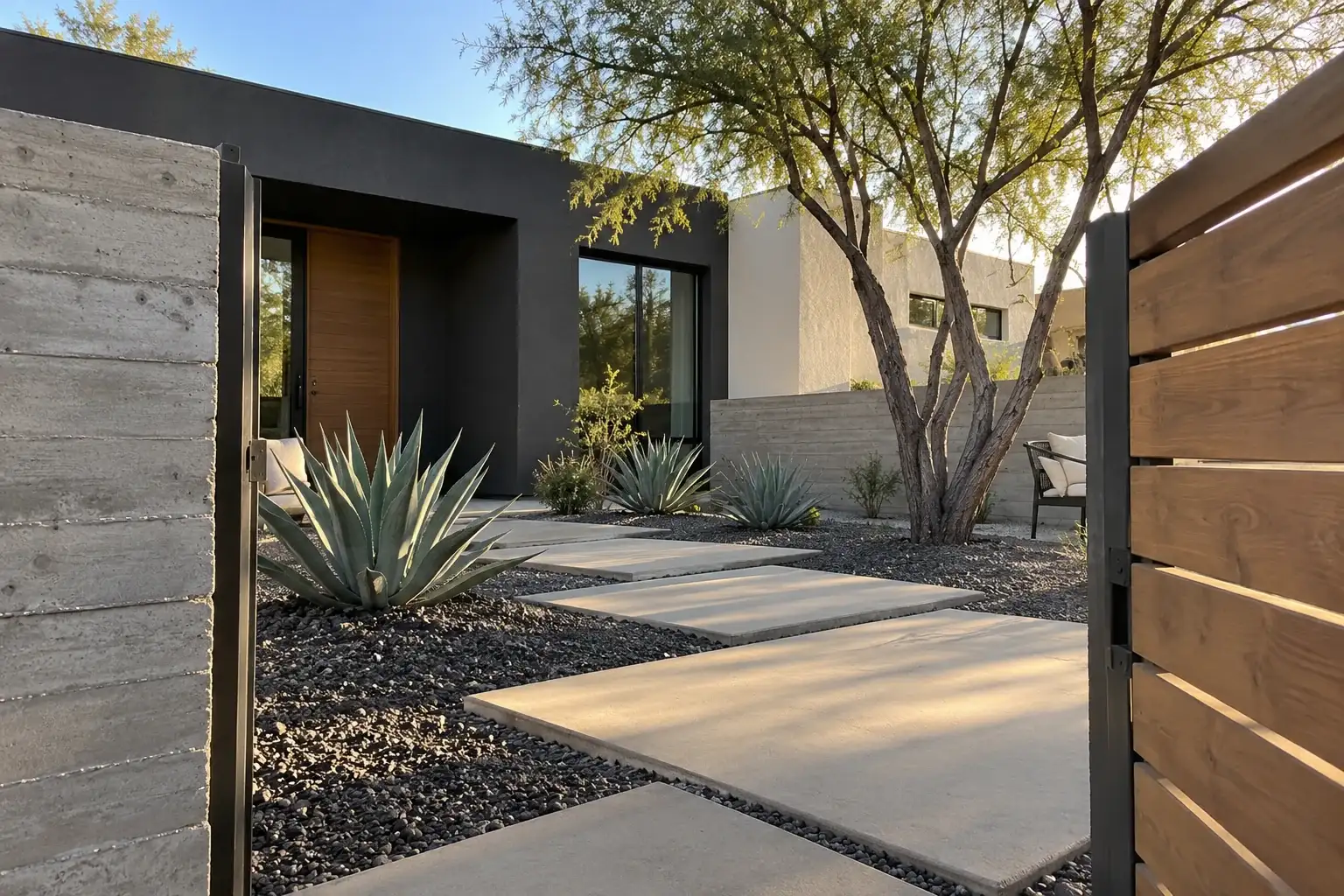
Stamped concrete costs less per square foot than pavers, sometimes by a wide margin, and that is its entire pitch. Pavers cost more to install and less to repair, because the repair is one unit instead of one slab. What drives the stamped number: slab thickness, coloring, and sealer, plus whatever rework the cracks eventually force. What drives the paver number: excavation depth, caliche that needs jackhammering, base material, and access. Central Phoenix alleys are tight, and pallets hand carried the last stretch add labor that a concrete truck never sees. The sealer is a recurring line too. A stamped patio in Phoenix gets resealed on a schedule because the sun eats the top coat, and a paver patio does not carry that line. Over ten years the rework narrows the gap the brochure priced. Both ranges move with square footage. The cost page walks through the line items on both sides. The landscaping guide covers the rest of the yard, and the home page ties it together.
Good to know
What good work looks like in Phoenix
- Telling you what a stamp cannot do before you pay for it. The pattern is cosmetic, and the cracks will not respect it.
- Grading for the monsoon first. Water direction is decided before the forms or the base go in.
- Specifying the base for the soil. Expansive clay, caliche, and flood irrigated ground each need a different depth of excavation and compaction.
- Planning the delivery for the alley. On central Phoenix lots, the route in is part of the quote, not a surprise on install day.
6 questions
Pavers vs stamped concrete: your questions
Still have a question? Call (747) 243-2089 and describe the yard.
Does stamped concrete crack more than pavers?
Yes. A stamped patio is one rigid slab, so soil movement cracks the whole piece and the crack runs through the pattern. Pavers move at the joints instead.
Can you fix a crack in stamped concrete?
You can patch it, but the patch never matches the stamp. The color and texture read as a repair, and the surrounding slab keeps moving.
Which looks better in five years?
Usually pavers. A stamped finish fades under Phoenix UV and sealer wears in the heat, while a paver surface keeps its color and can be cleaned unit by unit.
Which is cheaper?
Stamped concrete costs less per square foot up front. Pavers cost more to install and less to live with, since repairs stay local.
Does stamped concrete get too hot in Phoenix?
It gets hot, like every hard surface here. Lighter colors stay more tolerable, and shade changes the afternoon more than the material does.
Does the HOA allow stamped concrete?
Many Phoenix HOAs regulate patio finishes in front yards and courtyards, and some prefer one look over another. Approval comes before the work, not after.