Guide 07 · 5 min read
Why does artificial turf get too hot to walk on in Phoenix?
It is late afternoon in July, and the dog is standing at the back door refusing to go out. You step onto the turf barefoot and pull back. The air is hot, sure. The turf is something else. It burns. That is the complaint, and it is not a defective product. It is physics, and in Phoenix it happens every day from about May through September.
Climate
The mechanism: what the turf does with the sun
A living lawn cools itself. Grass pulls water out of the soil and releases it through the blades, and that evaporation holds the lawn close to air temperature. Artificial turf cannot do that. It has no water to release.
Instead, it absorbs. The blades and the infill catch solar radiation all day, and they hold it. The backing underneath is a solid layer that blocks the one escape route the system would otherwise have, which is conduction down into the cooler soil. Heat goes into the surface and has nowhere to leave except back up. So the surface runs well above air temperature by afternoon, and it keeps radiating into the evening, after the real grass next door has already cooled. Infill matters because it is the mass that stores the heat. A heavier, denser infill soaks up more energy over the day and lets it go more slowly, which is why the choice of infill shows up on your feet in August.
Color and material make it worse. Dark blades absorb more than light ones. Rubber infill holds heat longer than sand. And Phoenix does not help: the city sees the hottest surface temperatures in the Valley, so the starting point every morning is already brutal.
Climate
Why Phoenix turf gets hotter than the same turf elsewhere
The national brochure assumes a mild summer. Phoenix is zone 9b, with the brutal sun and the long season that zone implies. Surfaces here run well above air temperature in summer as a matter of course, and that is the environment the turf sits in, not an exception to it.
The base makes the problem worse when it is done wrong. Turf laid over compacted caliche with no drainage is a sealed sandwich. The caliche under the yard stops water from moving down, the backing stops heat from moving down, and the whole system cooks from both sides. Add the fact that caliche jobs are exactly where excavation gets skipped, because jackhammering is expensive, and you have the hot turf complaint concentrated in the places with the hardest ground.
The monsoon adds the last piece. Storm water hits the surface, cannot soak in, and sheets across the backing. The standing water heats up in the sun. So an afternoon in August can give you a turf surface that is too hot to walk on and a puddle that is warm to the ankle. The drainage plan and the heat problem are the same problem.
Planning
What to check before you blame the product
If your turf is too hot, walk through this list.
Check the infill. Sand runs cooler than rubber. If the yard came with dark blades and rubber infill, that is the hottest combination the product catalog offers, and it is a choice, not a defect.
Check the color. Light blades with light infill reflect more than they absorb. It is still a manufactured surface in the desert, but the difference between dark and light is the difference between painful and merely warm.
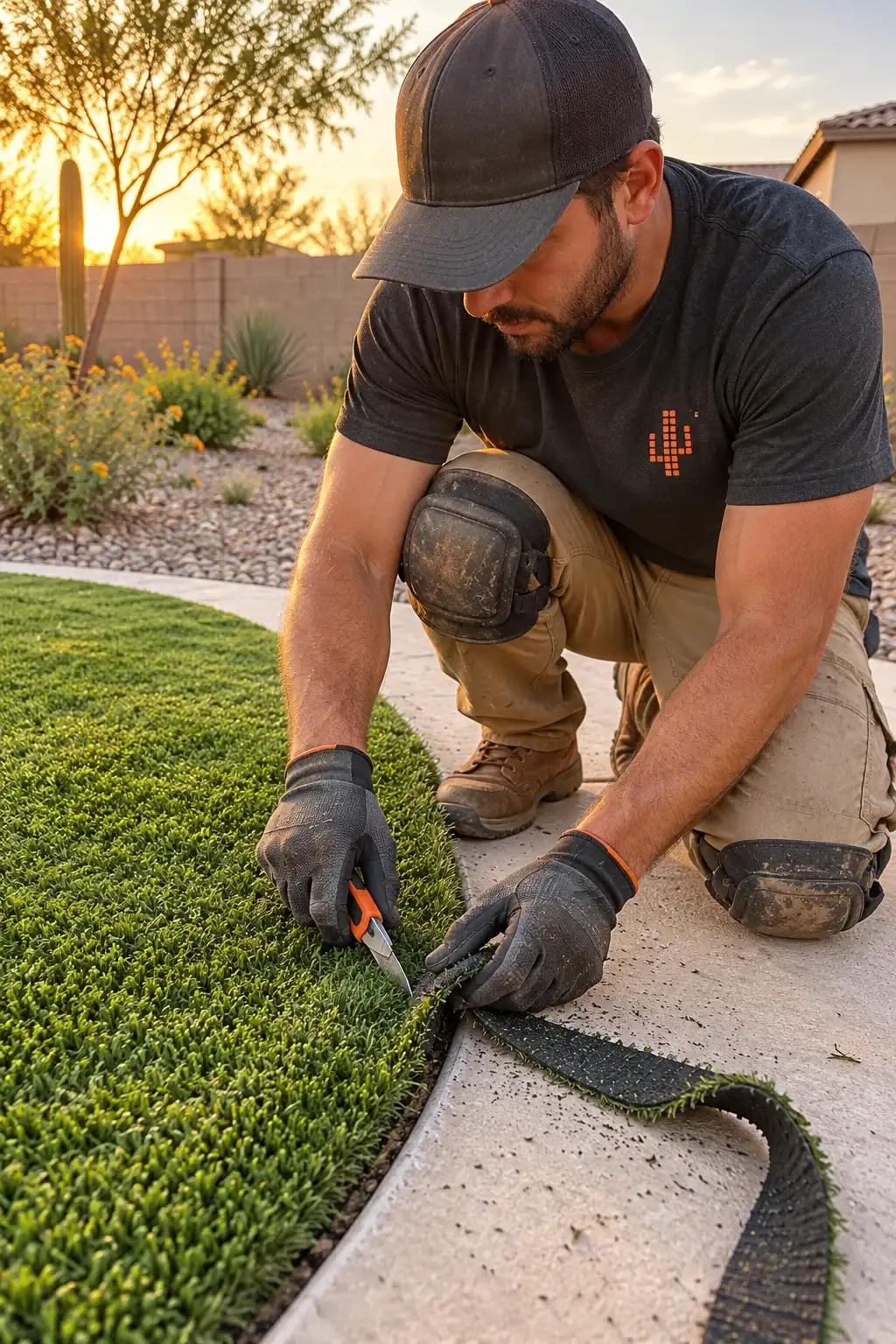
Check the base. If the turf went over unexcavated caliche, the surface heat is baked in until the base gets rebuilt. No amount of hosing it down fixes a sealed base, because the water evaporates in minutes and the heat returns right after.
Check the shade. A canopy, a pergola, or a tree changes the afternoon completely. Turf in full west sun is the worst case, and the same turf under afternoon shade is a different product. Check the afternoon pattern, not just the yard. A lot in full sun from noon to sunset is a different problem than one shaded by the neighbor's tree from three o'clock on, and the same product fails one and passes the other.
Check the drainage. If monsoon water pools on the backing, the puddle is cooking on top of a cooking surface, and the fix is grading and drainage, not the turf.
For the full comparison of turf against real grass, the heat is only one line in the ledger. And if you are weighing turf against sod, the heat difference between the two is the biggest single argument for sod.
Good to know
What can actually be done about it
The honest answer is that you can reduce the heat, not eliminate it. A manufactured surface in a Phoenix summer will always run hotter than living grass. What a good install does is keep it from running as hot as it possibly can.
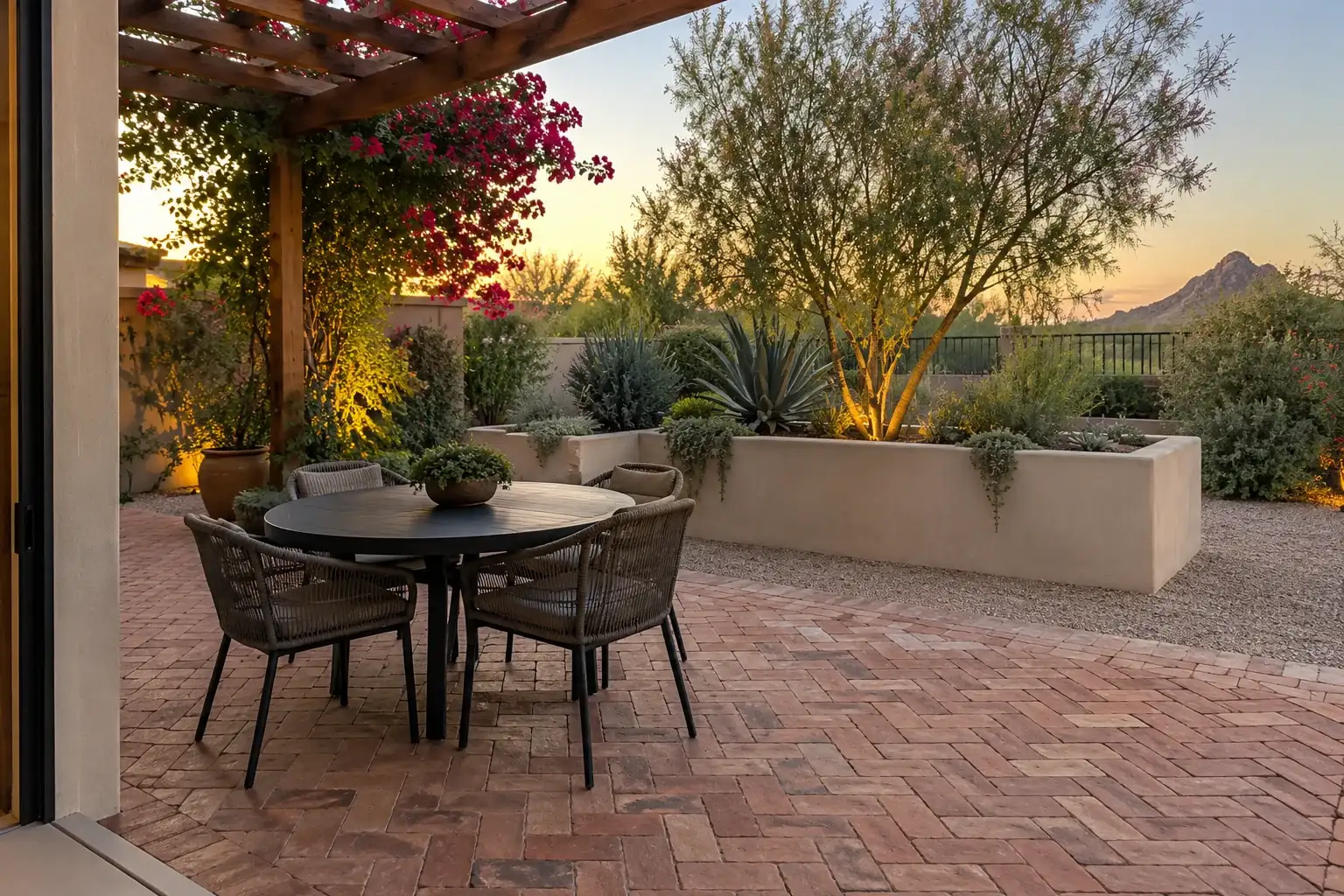
The base gets excavated to the right depth instead of skimmed over the caliche, so the ground under the turf can actually move heat and water. The infill gets chosen for the climate, lighter where the yard takes full sun. The grading sends monsoon water away from the surface instead of letting it pool and heat up. And the design adds shade where people actually walk: the path from the door to the pool, the strip where the dog does its business, the kids' play corner. Shade is the cheapest air conditioning a yard has.
None of that appears in a brochure photo. All of it decides whether the yard gets used in August or abandoned until October. And decide where the yard actually gets used. A small, shaded strip of cool cover where the dog does its business, with turf on the rest, beats a full turf yard in direct sun every single afternoon.
Costs
How much a hot turf yard costs to fix
The number varies with what is actually wrong. If it is the infill and the color, the fix is a topcoat change, and that is the low end. If it is the base, the turf comes up, the caliche gets excavated, and a real base goes in, and that is a new install, not a repair. If it is drainage, the grading work gets priced on its own, and it often means reworking more than the turf itself.
The cost page breaks down the turf line items, but the rule of thumb for the heat problem is simple: the fix price depends on how much of the original install gets redone, and the cheapest version of the fix is never the one that works. Start with the landscaping guide if the whole turf question is still open, and the home page links the rest of this site.
6 questions
Why does artificial turf get too hot to walk on: your questions
Still have a question? Call (747) 243-2089 and describe the yard.
How hot does artificial turf get in Phoenix?
Hot enough that barefoot walking hurts by afternoon, and dogs and kids avoid it. Surfaces run well above air temperature in summer, and turf holds that heat into the evening.
Does watering the turf cool it down?
For a few minutes. The water evaporates fast in Phoenix, and the surface goes right back to absorbing sun. It is a rinse, not a fix.
Is there artificial turf that stays cool?
There are lighter colors and cooler infills that run less hot, but no turf matches living grass in summer. The products reduce the problem; they do not remove it.
Does the base make turf hotter?
A base over compacted caliche with no drainage traps heat and water, and the surface runs hotter than turf on a properly excavated base.
Can shade fix a hot turf yard?
It is the most effective fix. A canopy or a tree over the walked areas changes the afternoon completely, and it costs less than redoing the install.
Is the heat a defect I can claim?
Usually not. The heat is how manufactured surfaces behave in a desert climate, which is why the infill, the color, and the base get chosen before the turf goes down.